
Cold weather walking keeps your heart rate honest without a treadmill queue. The goal is warmth you can adjust, feet that grip, and a pace you can sustain—not a wardrobe that could climb Ben Nevis.
Cold weather walking is one of the cheapest ways to hit public health targets for moderate activity. NHS guidance for adults still points to about 150 minutes of moderate movement weekly, plus strength on two days. CDC language matches that floor for US adults. A brisk lunch loop counts when you can talk but not sing.
This guide is for urban walkers, dog loops, and park paths—not expedition leaders. It links kit to safety signs you should not ignore. It will not promise fat loss or cure winter blues. It will help you dress, plan, and stop with evidence-led calm.
Cold weather walking: and who should plan extra care
Cold weather walking suits most healthy adults who already walk in milder months and want to keep the habit through autumn and winter. It also suits people building toward the walking for cardio fitness targets without joining a gym. Start with shorter loops and add minutes only when layers and footing feel sorted.
Asthma can flare in cold dry air. NHS asthma pages recommend using your personal action plan and warming up gradually. Some people cover the mouth with a loose scarf to humidify air. That is a comfort tweak, not a medical order. Ask your clinician if cold air triggers are new or worsening.
Heart disease, peripheral artery disease, Raynaud's, balance problems, or recent illness need a personal plan. The American Heart Association still encourages activity in cold weather with sensible clothing and awareness of symptoms. That is not permission to ignore chest pressure or unusual breathlessness. Call emergency services for those signs.
Older adults benefit from daylight walks for routine and bone-loading steps, but ice risk rises. Choose gritted routes, shorter laps, and footwear with grip. A friend or daylight hour beats a heroic dusk lap on untreated paths.
Layering for cold weather walking without overpacking
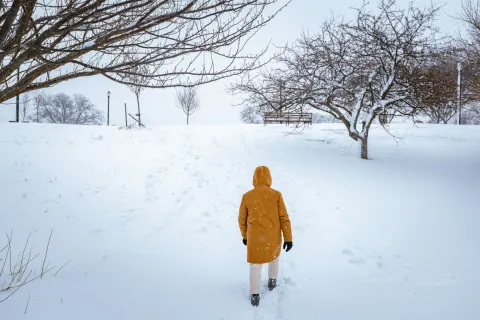
Think in three thin roles: base, warmth, shell. The base moves sweat off skin. Merino or synthetic tops beat cotton for long loops. The warmth layer is a fleece or light puffy you can tie around your waist. The shell blocks wind and light rain.
Cold weather walking heats you faster than you expect once pace steadies. Overdressing leads to wet base layers and a chill when you stop for a crossing. Start slightly cool for the first five minutes. You should feel comfortable—not roasting—after ten.
Legs often need one layer plus wind pants in sleet. Arms and torso change more with effort. Gloves and hat are small but high impact. A bare head loses heat quickly in wind. Swap thin liner gloves for waterproof mitts if hands swell or sting.
UK commutes often mean drizzle and mud splashes. US cities may swing from dry cold to slush. Packable shells fit office drawers. US walkers on cleared sidewalks may skip heavy boots until ice appears. Match kit to the forecast you will actually face, not the worst photo on the news.
Footwear traction and footing on wet or icy paths
Most cold weather walking injuries are slips, not frostbite on short urban routes. Shoes with worn smooth soles fail on wet leaves and black ice. Look for rubber that still flexes in cold and tread blocks that channel water.
Micro-spikes or slip-on cleats help on packed snow or rural paths. They are awkward on bare pavement and some shop floors. Put them on at the trailhead, not at your flat door. Remove them before entering shops or train stations to avoid damaging floors and your dignity.
Walk with a shorter stride on uncertain ground. Keep hands out of deep pockets so you can balance. If you use trekking poles, tip carbide points carefully on ice. Poles help rhythm on hills; they do not replace watching the pavement.
Dog walkers: icy kerbs and canal towpaths in the UK freeze before roads. US parking lot berms hide ice under fresh snow. Give yourself ten extra minutes so you are not rushing on hidden glassy patches.
Visibility lights and being seen in low winter sun
Short days mean cold weather walking often happens in dim light. Drivers scan for movement. Wear one high-visibility element: jacket stripe, belt, or armband. A small rear blink light clipped to a bag helps on unlit paths.
Choose routes with crossings and lamps when you can. Face traffic on roads without pavements. US rural shoulders and UK lane edges both need alert ears—not just eyes—if you wear hoods or hats that narrow side vision.
Pollution can rise on still cold mornings in cities. Check local air quality if you have lung or heart conditions. Our air pollution and outdoor exercise guide explains when to move timing or route without abandoning walks entirely.
Pace breathing and the talk test in cold air
Cold weather walking should stay moderate unless you are training for a specific event. Use the talk test: speak a sentence without gasping. If you are only grunting, slow down or shed a layer before you speed up again.
Deep cold can make air feel sharp. A gentle nasal inhale and longer exhale may feel easier than sprint breathing. That is comfort, not a breathing cure. Persistent wheeze or chest tightness means stop and follow your clinician plan.
Wind in your face raises effort. Turn for the return leg or pick sheltered streets. Hill repeats are optional spice, not required for health counts. WHO and NHS both care that minutes accumulate, not that every walk feels like a time trial.
Hydration and fuel that cold weather walking hides
Thirst drops in cold weather walking even while you lose fluid through breath and sweat under layers. Drink before you leave and again when you return. A small bottle in a pocket beats assuming snow equals hydration.
Our everyday hydration guide applies in winter too. Warm tea before a loop is fine if it does not replace water across the day. Alcohol before icy walks is a poor trade for warmth.
Eat a light snack if the loop exceeds forty-five minutes and you last ate hours ago. Half a banana or a small handful of nuts is enough for most people. You are not fuelling a marathon. You are preventing a shaky finish at the door.
Sleep debt from short days makes walks feel harder. Cold weather walking on four hours of sleep is a mood patch, not recovery. Pair outdoor minutes with a sleep hygiene routine that actually matters when clocks shift.
| Conditions | Base and mid | Shell and extremities | Footing |
|---|---|---|---|
| Cool dry (about 8–12 °C / 46–54 °F) | Long-sleeve synthetic tee, light fleece optional | Wind-resistant jacket, gloves in pocket | Regular trainers with decent tread |
| Cold wind (about 0–7 °C / 32–45 °F) | Base plus fleece or thin insulated jacket | Hat, full gloves, neck buff | Trail shoes or boots with fresh tread |
| Near freezing wet | Wicking base, warm mid, avoid cotton socks | Water-resistant shell, waterproof gloves | Boots with grip; consider cleats on ice patches |
| Dim light any temperature | Same as above plus reflective element | Small front/rear light if unlit path | Slower pace, shorter stride on ice |
A sample week of cold weather walking
Monday: twenty-five minutes at lunch, flat route, one more layer than you think for the first five minutes. Tuesday: rest or indoor strength at home. Wednesday: thirty minutes after work with reflective band before dusk. Thursday: fifteen-minute brisk walk plus stairs at the office if weather turns foul.
Friday: repeat Monday route and note whether gloves were enough. Saturday: forty-minute park loop with a friend; chat pace confirms moderate effort. Sunday: easy twenty minutes or rest if ice warnings hit your area.
Total moderate minutes land near ninety to one hundred twenty without heroics. Add another loop week two if sleep and joints feel fine. Progress is minutes and consistency, not a single frozen Sunday march.
Track footing notes on your phone calendar. “Black ice on bridge” saves the next you from the same skid. That is data, not drama.
UK versus US notes
UK winters often mean wet cold, shorter daylight, and gritted motorways but slick side streets. Layer for drizzle and carry a packable shell in a work bag. Bank holidays may empty parks of maintenance; check towpath boards after storms.
US climates vary by state. Midwest wind chill can bite through jeans; Southwest mornings may be icy while afternoons feel mild. Dress for the walk hour, not the noon forecast. Fahrenheit or Celsius, the layering logic stays the same.
Healthcare access differs, but emergency numbers do not. UK 999 and US 911 both apply to chest pain or collapse on a path. Save local non-emergency lines for minor falls without head injury if you need advice.
Troubleshooting numb toes shivers and wet socks
Toes that numb in the first ten minutes may mean shoes too tight with thick socks. Loosen laces, wiggle toes, or choose wider winter shoes. Numbness that returns every walk deserves a clinician check for circulation or nerve issues.
Shivering while moving means add a layer or shorten the loop. Shivering after you stop is normal cooldown if you swap wet base layers quickly at home. Persistent uncontrollable shivering with confusion is a hypothermia warning—seek warm shelter and urgent care.
Wet socks from puddles chill feet fast. Waterproof socks or gaiters help on rural UK paths. US slush puddles at kerbs do the same damage. Keep a dry pair at work if your commute includes walking.
Fogged glasses annoy but rarely harm. Anti-fog wipes or slightly lower mask/scarf breath flow helps. Slow at kerbs when vision clears slowly.
Safety stops when cold weather walking turns medical
Stop and seek urgent care for chest pain, pressure, or unusual breathlessness. NHS heart attack symptom pages and American Heart Association cold exercise advice both emphasise not dismissing pain because you were “only walking.”
Hypothermia signs include slurred speech, clumsiness, and drowsiness. NHS hypothermia information describes warming strategies and when to call emergency services. Get indoors, remove wet clothes, and warm the core—not just hands—while help is on the way if symptoms are severe.
Frostbite on short urban walks is less common than slips, but extremities that stay white, hard, and numb after rewarming need same-day assessment. Do not rub snow on skin; warm gradually.
If you fall and hit your head, even without loss of consciousness, follow local concussion advice and avoid another icy walk that day. Balance can stay off for hours.
Cold weather walking myths that waste money and nerve
Myth: you must burn more calories to “earn” hot drinks afterward. Reality: walks support health and mood; pairing every loop with sugary treats undoes steady nutrition without making you warmer.
Myth: heavy cotton hoodies are fine if you walk fast. Reality: cotton stays damp and pulls heat away when you slow for crossings. Myth: sunglasses are only for summer. Low winter sun glare off wet roads matters too.
Myth: if you are not sweating, you are not working. Cold weather walking often hides sweat under shells. Use pace and talk test, not drip count.
Myth: treadmills are always safer. They remove ice risk but also remove daylight and bone-loading variety. Many people blend both through winter.
Warming up and cooling down on freezing mornings
Cold weather walking still deserves two minutes of easy pace before you push hills. Ankle circles and shoulder rolls on the doorstep reduce stiff starts. Do not hold static stretches on icy steps; save long holds for indoors after the loop.
Cooldown is walking the last five minutes easy, then changing wet layers indoors. Standing still in a car park in sweaty clothes invites chill. If you ride public transport home, unzip one layer before the bus heater makes you dizzy.
Indoor strength on two days weekly still matters in winter. Walks cover moderate cardio; squats or band rows cover muscle health that NHS and CDC mention alongside steps. Cold weather walking is not an excuse to skip legs until spring.
Keep a simple log of minutes and route surface. When January ice repeats on the same bridge, you will know to leave five minutes early or carry cleats that day only. Planning beats bravado every time.
Putting it into a normal week
Write the plan on a calendar you already open. Name the days, the minutes, and the place. A vague intention to “move more” or “sleep earlier” collapses when work runs late. A named block survives better, even when it shrinks to twenty minutes.
Review once a week, not every hour. Ask what you actually did, what blocked you, and what one change would make next week easier. Keep the change small enough that you can repeat it when energy is average, not only when motivation is high.
Share the plan with one person if accountability helps, or keep a private note if privacy helps. The method matters less than the return visit. Health habits grow from returns, not from a perfect first attempt.
If pain, dizziness, chest pressure, or unexplained breathlessness shows up, stop and seek urgent care. General guides cannot examine you. Personal medical advice still belongs with a clinician who knows your history.
Use UK and US public guidance as the floor, then personalise with professional help when you have a condition, take medicines, or are returning from injury. Modest consistency beats dramatic overhauls that last four days.
Medical note. This article is general information, not a diagnosis or a personal treatment plan. It does not replace advice from a GP, pharmacist, registered dietitian, physiotherapist, or other qualified clinician. Seek urgent help for severe, sudden, or rapidly worsening symptoms. UK readers can use NHS 111 for urgent advice; US readers can use local urgent care or emergency services when needed.
Frequently asked questions
How cold is too cold for a regular walk?
Do I need special walking poles in winter?
Should I walk faster to stay warm?
Are cotton base layers ever okay?
Can cold weather walking replace gym cardio?
Sources
- 1. Physical activity guidelines for adults aged 19 to 64
- 2. Adult physical activity guidelines
- 3. Cold weather exercise safety
- 4. Physical activity fact sheet
- 5. Hypothermia
Guidance changes. Figures were checked against the sources above at the time of review; always confirm current advice with your GP, pharmacist or clinician.
Was this useful?
Anyone can react — no account needed.


Discussion
0 comments · Name and email only · Email is never shown