
PCOS and weight stories online often sell a special diet that will “reset hormones” in a fortnight. NHS-style care is slower. It is also more modest. Food, movement and sleep can help some symptoms. They do not cure the condition.
Polycystic ovary syndrome is a hormone condition. The NHS now also uses the name PMOS. Periods can be irregular. Hair and skin can change. Some people gain weight, or find loss harder. That is real. It is not a character flaw.
PCOS and weight: what the condition actually does
PCOS is not a cluster of cysts you must starve away. Many people with the name have extra follicles on a scan. The scan does not set the food rules. The condition often comes with higher male-type hormones and a body that responds less well to insulin. That mix can raise hunger for some people. It can also make fat sit more around the middle.
NICE clinical knowledge summaries say lifestyle care should come first, or sit beside medicines. That means eating patterns you can keep, regular activity, and support if weight is high. It does not mean a 1,200 kcal shake week. It does not mean cutting every carbohydrate from Monday’s plate.
MedlinePlus and NIH pages describe the same picture. PCOS can affect periods, fertility, skin and long-term risk of type 2 diabetes. Weight is one piece. Lean PCOS exists. If your BMI is already in a healthy band, chasing a smaller number is not the job. Symptom care and screening still matter.
A GP diagnoses PCOS with history, blood tests and sometimes a scan. Do not diagnose yourself from a social-media list. Tiredness and a rounder waist have many causes.
What a 5% change looks like in real food
NICE-linked PCOS advice notes that a loss of as little as 5% of total body weight can lower insulin resistance and testosterone in people who carry extra weight. Translate that. If you weigh 80 kg (about 12 stone 8 lb, or 176 lb), 5% is 4 kg, about 9 lb. That is months of steady habits, not a ten-day cleanse.
The CDC’s general weight-loss pages still use a planning pace of about 1 to 2 lb (0.5 to 1 kg) a week for people who are trying to lose. Many people with PCOS move slower. That is fine. Clothes and periods can change before the scale does.
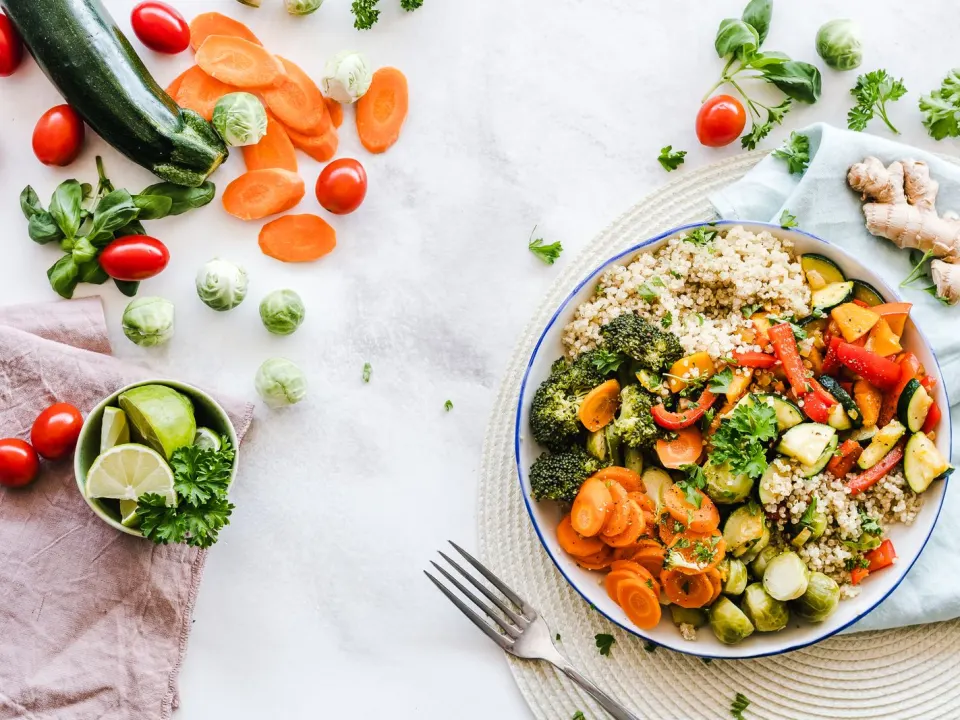
Put the 5% into meals. Swap a 400 kcal morning pastry and juice for 200 g plain Greek yoghurt, a handful of berries and 30 g oats. That breakfast is not magic. It is protein plus fibre you can repeat on a workday. A Tuesday supper of 150 g cooked beans, a fist of rice and two handfuls of frozen mixed vegetables beats a nameless “hormone bowl” from a shop.
Walking still counts. A 30-minute walk at a pace where you can talk covers about 2.5 to 3 km for many adults. UK and US activity guidance clusters around 150 minutes of moderate activity a week. Five 30-minute walks hit that. You do not need a boutique class named after your ovaries.
| Step or claim | What official sources support | Everyday example |
|---|---|---|
| About 5% weight change | NICE CKS: may improve insulin and hormone markers if you have extra weight | 80 kg to 76 kg over months, not a weekend |
| First-line care | Healthy eating, activity and weight care before or with medicines | Regular meals plus 150 minutes of walking a week |
| A special PCOS diet | No single diet is proven best as first-line NHS care | Ordinary plate: protein, veg, some starchy food |
| CDC gradual pace | About 1 to 2 lb (0.5 to 1 kg) a week as a general planning figure | Judge eight weeks, not Wednesday’s scale |
Claims that go beyond the evidence
The internet loves a villain. Dairy, gluten or “all carbs after 6 pm” take turns. Some people feel better when they change one of those. That is a personal trial, not a law of PCOS. NICE does not name a mandatory keto plan. NHS pages ask for a healthy, balanced diet and regular activity if you have extra weight.
Inositol and “hormone reset” powders sit in a grey zone. A few supplements have research. They are not first-line NHS treatment. Skip unlicensed kits unless your clinician has a reason.
Ultra-processed snacks can still crowd out protein and fibre. That matters for hunger, not because a packet “causes PCOS”. Our ultra-processed foods guide explains the NOVA groups without a purge of every tin.
Harder is not the same as impossible. Lean PCOS is also real. If you are already a healthy weight, protect muscle and periods. Do not open a deficit because a chart looks neat.
Sleep, protein and strength without a crash plan
Short nights push appetite for many adults. PCOS does not cancel sleep rules. A regular wake time and caffeine that stops by mid-afternoon still help. See our sleep hygiene checklist. Better sleep will not erase PCOS. It can make the next day’s meals less chaotic.
Protein at meals can steady hunger. 200 g cottage cheese, two eggs on toast, or 120 g cooked fish with potatoes are ordinary amounts. Our everyday protein guide lists food portions rather than scoops.
Strength work twice a week supports muscle. Sit-to-stands or a backpack row can be enough to start. Our strength training over 50 guide keeps sessions cautious. If food rules take over the day, stop. Beat in the UK and NEDA in the US are starting points. Urgent fear of harm is a 999 or 911 issue.
When medicines and clinics enter the picture
NHS pages note that metformin is sometimes offered for tiredness and weight problems in this condition. The combined pill or a hormonal coil may help irregular periods. None of these is a DIY order. Start only with a prescriber.
Weight-loss medicines exist for some people who meet BMI rules. They are not a PCOS-specific cure. If a specialist team offers one, ask what happens when you stop. Book a clinician if periods are scarce, if you are trying to conceive, or if thirst suggests diabetes.
Behaviour examples you can try without miracle claims
Approaches related to PCOS and weight are more useful when they name behaviours, not guaranteed kilogram outcomes. Weight changes slowly for most people, fluctuates with fluid and hormones, and responds differently across ages, medicines and health conditions. Aim for patterns you can repeat on an ordinary Tuesday — not a transformation promise.
Concrete behaviour examples (pick one or two, not all):
- Protein-forward breakfast: eggs on toast, Greek yoghurt with fruit, or tofu scramble — then notice afternoon snack urgency for a week.
- Fibre swap: keep the meal you already like; add beans, veg or whole grains so the plate is more filling without a dramatic “diet overhaul.”
- Liquid audit: list weekday drinks; replace one sugary or alcoholic item with water, tea or a smaller pour, three days this week.
- Walk anchor: ten minutes after lunch or dinner on workdays; mark it on the calendar like a meeting.
- Kitchen default: put washed fruit or pre-cut veg at eye level; move ultra-palatable snacks out of easy reach if that reduces autopilot eating.
None of these “melt fat” on a schedule. They change the environment and the average day, which is how sustainable weight-related habits usually work.
How to judge progress without chasing the scale alone
| Signal | What to notice | Caution |
|---|---|---|
| Weekly average weight | Trend over 3–4 weeks if you choose to weigh | Daily swings are mostly fluid; do not punish a single morning |
| Waist or how clothes fit | Same method, same time of day | Not everyone should focus on measurements — skip if it harms mood |
| Energy and training | Can you complete planned walks or sessions? | Persistent exhaustion means the plan may be too aggressive |
| Hunger and mood | Manageable appetite, not constant preoccupation | Obsession, secrecy or compensatory purging needs clinical help |
If you have a history of disordered eating, are pregnant, underweight, frail, or living with a condition where weight loss is not appropriate, do not start a deficit because an article suggested it. Ask a clinician what “healthy” means for you. Stigma in healthcare is real — you can ask for respectful, behaviour-focused care and a second opinion if needed.
Medical context: questions to take to a clinician
When PCOS and weight intersects with hormones, medicines or surgery, behaviour tips are only one layer. Ask: Is weight change expected with this condition or medicine? What labs or reviews matter? What rate of change is safe for me? Which symptoms mean I should call sooner? Bring a current medicine list, including over-the-counter and supplements.
Do not stop prescribed medicines because of weight effects without medical advice. For surgical or medication-assisted pathways, follow the service’s dietetic and activity guidance; internet macros rarely match peri-operative needs.
Safety boundaries for any weight-related plan
Stop and seek care if you notice fainting, chest pain, severe dizziness with exertion, signs of an eating disorder, or mood collapse tied to restriction. Children, teens, and people with certain chronic illnesses need specialist guidance — adult internet plans do not transfer safely. No article can guarantee weight loss, a clothing size, or disease reversal.
Medical note. This article is general information, not a diagnosis or a personal treatment plan. It does not replace advice from a GP, pharmacist, registered dietitian, physiotherapist, or other qualified clinician. Seek urgent help for severe, sudden, or rapidly worsening symptoms. UK readers can use NHS 111 for urgent advice; US readers can use local urgent care or emergency services when needed.
Frequently asked questions
Does everyone with PCOS need to lose weight?
Is a low-carb or dairy-free plan required?
How fast should I expect the scale to move?
Can I take metformin without a diagnosis?
Sources
- 1. NHS: Polyendocrine metabolic ovarian syndrome (PMOS / PCOS)
- 2. NICE CKS: Polycystic ovary syndrome, management in adults
- 3. MedlinePlus: Polycystic ovary syndrome
- 4. CDC: Steps for Losing Weight
Guidance changes. Figures were checked against the sources above at the time of review; always confirm current advice with your GP, pharmacist or clinician.
Image credits
- Photo: Photo by Ketut Subiyanto on Pexels / Openverse
- Photo: Photo by Gustavo Fring on Pexels / Openverse
- Photo: Photo by Ella Olsson on Pexels / Openverse
Was this useful?
Anyone can react — no account needed.




Discussion
0 comments · Name and email only · Email is never shown