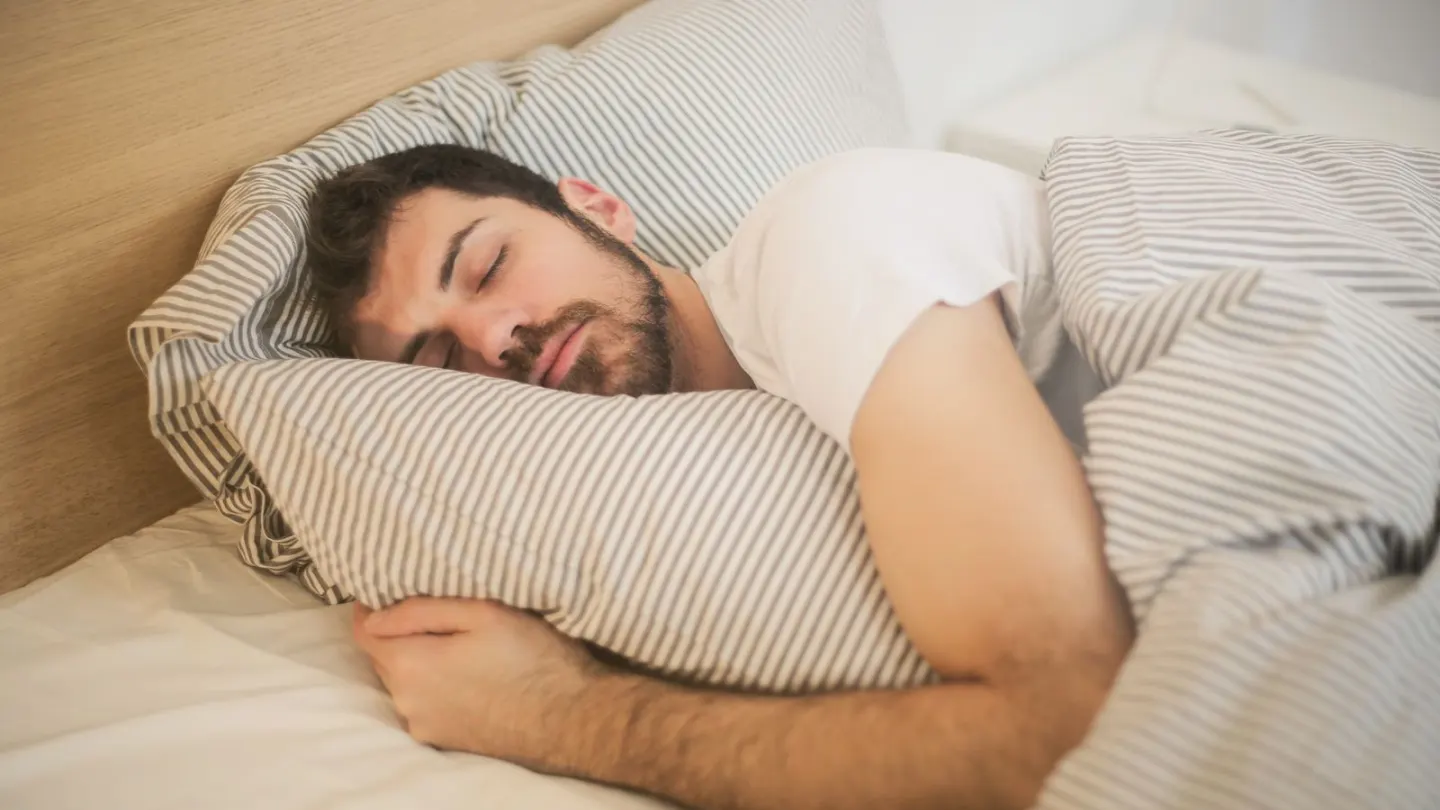
Sleep anxiety is the extra layer of worry that shows up when the lights go off. You watch the clock. You rehearse tomorrow. You decide that a bad night will ruin the week. NHS insomnia pages treat that loop as common. They do not ask you to “try harder” to sleep. They ask you to change the conditions and the rules you bring to bed.
Perfect sleep is not a realistic nightly target. Adults differ. NHS advice still clusters around 7 to 9 hours for most grown-ups, with real variation. CDC pages say the same ballpark. A 90-minute night is a problem. A 6 hour 40 minute night after a late train is often just a late train. Sleep anxiety turns the second case into a crisis.
Sleep anxiety: name the loop before you buy a gadget
The loop is simple. You fear not sleeping. Arousal goes up. Sleep gets harder. The clock proves you were right. Tomorrow you go to bed earlier to “catch up”, then lie awake longer. NHS pages on insomnia describe this pattern without blaming you. The first job is to stop adding fuel: extra caffeine, extra clock checks, extra alcohol “to knock out”.
A wearable that grades your night can feed the same loop. If a score of 64 ruins breakfast, hide the score for a fortnight. How you function at 11 a.m. is a better signal than a colour ring. Our sleep hygiene that actually matters guide keeps the list short on purpose.
Mind’s information on sleep and mental health is honest about two-way traffic. Anxiety disrupts sleep. Poor sleep makes anxiety louder. That does not mean a lavender spray is treatment. It means a bedtime plan and a care plan can sit together.
A wind-down that fits a rented flat
Pick a 40-minute runway, not a spa. Same start time most nights, even if you only hit it five nights out of seven. Dim the overhead light. Finish the last caffeinated drink at least 8 hours before bed if you can. For a 11 p.m. target, that is 3 p.m. NHS caffeine-and-sleep advice is in that spirit. CDC sleep pages also flag caffeine and alcohol as disruptors.
Screens are not evil. Endless news and work email at 10:45 p.m. are unhelpful. If you watch something gentle, set an end time. Put the phone to charge outside the bedroom if you can do so safely. If you need it as an alarm, use bedtime mode and turn it face down.
Breathing can help the last ten minutes. Keep it short. Six slow breaths is a tool, not a sleep spell. See breathing exercises for stress. If silence ramps fear, a quiet radio story is allowed. Mindfulness beginners evidence is optional, not homework.
| Clock | Action | Why it is there |
|---|---|---|
| 8 hours before bed | Last coffee, energy drink, or strong tea | Caffeine lingers; NHS flags it as a sleep disruptor |
| T minus 40 minutes | Dim lights, stop work email | Lower arousal before the mattress |
| T minus 10 minutes | Same short wind-down: wash, stretch, six breaths | A cue the body can learn |
| If awake and tense after about 20 minutes | Leave bed, low light, dull activity, return when sleepy | NHS insomnia advice to break the bed-equals-frustration link |
The 20-minute rule without turning it into a drill
NHS insomnia materials often suggest getting up if you cannot sleep and you feel annoyed. Do a dull thing in low light. Read a paper book. Fold laundry. Avoid bright kitchen LEDs if you can. Go back when sleepy, not when the clock hits a lucky number. Do not turn this into a stopwatch contest. About 20 minutes is a feel, not a punishment.
Clock-watching is optional torture. Turn the clock away. If you must know the time for medication, keep one dim display and do not do maths about hours left. Sleep anxiety loves arithmetic. Give it less data.
Alcohol, naps, and weekend catch-up
A nightcap can help you drop off and then fragment the second half of the night. NHS alcohol-and-sleep pages are blunt about this. If you drink, stop well before bed and keep it modest. Do not use a second drink as a sleep medicine.
A 20-minute nap before 3 p.m. can save a dangerous afternoon drive. A 90-minute nap at 5 p.m. can steal the night. If sleep anxiety is the main issue, skip late naps for two weeks and see if bedtime eases. Weekend lie-ins of 3 hours can slide the body clock. A 45-minute extra in the morning is a kinder catch-up.
Movement still helps. A daytime walk is better than a 9 p.m. HIIT session that leaves you wired. Our mental health help UK US guide is the next stop if worry is bigger than bedtime.
When to stop self-managing the night
See a GP in the UK or a primary care clinician in the US if insomnia lasts weeks, if you gasp or snore heavily, or if mood and work are sliding. Sleeping tablets are a clinical decision. Do not borrow them. Nightmares after trauma, panic that peaks in the dark, or thoughts of harm need proper care, not a stricter lights-out.
Call 999 or 911 for immediate danger. In the US, 988 is the crisis line. In the UK, NHS 111 and local crisis teams exist for urgent mental-health need that is not a 999 emergency.
Practical coping steps you can use the same day
Supportive practices around sleep anxiety work best when they are specific and short enough to use on a difficult afternoon — not only on a calm Sunday. Start with a body-first step (slow breathing, a brief walk, water, food if you have skipped meals), then a thought-labelling step (name the worry in one sentence), then one tiny action that moves life forward by five minutes. The order matters: high arousal makes clever planning harder.
- 90-second settle: Longer exhale than inhale (for example breathe in for 4, out for 6) while feeling your feet on the floor. Stop if you feel dizzy and return to normal breathing.
- Name and narrow: Write one line — “I am worried about X before Friday” — then ask whether the next useful step is information, a conversation, or rest.
- Move for mood, not punishment: Ten minutes of easy walking or gentle mobility often softens stress physiology without demanding a full workout.
- Contact cue: Send one message to a person who usually responds kindly, or sit in a shared space if silence is feeding rumination.
These steps are coping skills and habit supports. They are not a diagnosis, not exposure therapy on their own, and not a replacement for treatment when anxiety, depression, trauma symptoms, or substance use are disrupting work, relationships, sleep or safety.
Help-seeking: when self-help should hand over
Decide your hand-over rules in advance, while you are relatively steady:
- Mood, worry or sleep problems lasting more than a couple of weeks and limiting daily life
- Panic-like symptoms that keep recurring, or fear of exercise sensations that stops you moving
- Thoughts of self-harm, feeling unsafe, or using alcohol/drugs to get through the day
- Grief, burnout or body-image distress that is getting heavier despite routines
UK: start with a GP, NHS talking therapies referral routes where available, NHS 111 for urgent advice, or 999 if there is immediate danger. US: primary care, employee assistance programmes where offered, the 988 Suicide & Crisis Lifeline for crisis support, or 911 for emergencies. Local crisis lines and trusted people remain part of a safety plan.
When you book help about sleep anxiety, bring three concrete examples from the last fortnight (what happened, how long it lasted, what you tried). That helps a clinician faster than a vague “I feel stressed.” Ask about options: watchful waiting, guided self-help, therapy, medicine review, or combined approaches — and about expected follow-up.
Skill practice without turning it into another performance metric
Breathing, mindfulness and journaling help some people reduce arousal and create distance from sticky thoughts. Keep sessions short and regular: five minutes most days beats a rare forty-minute attempt. If sitting still increases distress, try walking mindfulness or a simple “notice five sounds” drill instead. For worry loops, schedule a ten-minute daytime “worry window,” jot items, then postpone rehearing them at bedtime — a common behavioural technique discussed in guided self-help.
Stop a practice that consistently spikes panic or dissociation and choose a grounding alternative, ideally with professional guidance. Tracking mood can be useful; obsessive scoring every hour usually is not. Review weekly: Did sleep improve? Did you contact someone sooner? Did you still go to work or training?
A calm review after seven days
Once a week, ask only:
- Which coping step did I actually use when stress rose?
- Did I avoid something important (work, people, movement) because of how I felt?
- Is it time to contact a professional based on my pre-agreed hand-over rules?
Keep notes factual and brief. Share them in appointments. If someone you trust notices withdrawal, irritability or exhaustion you are minimising, take that observation seriously.
Medical note. This article is general information, not a diagnosis or a personal treatment plan. It does not replace advice from a GP, pharmacist, registered dietitian, physiotherapist, or other qualified clinician. Seek urgent help for severe, sudden, or rapidly worsening symptoms. UK readers can use NHS 111 for urgent advice; US readers can use local urgent care or emergency services when needed.
Frequently asked questions
Does sleep anxiety mean I have insomnia?
Should I go to bed earlier to catch up?
Is melatonin a good first step?
What if I panic when I feel tired?
Sources
- 1. NHS: Insomnia
- 2. CDC: About sleep
- 3. NHS: Why lack of sleep is bad for your health
- 4. Mind: Sleep problems
Guidance changes. Figures were checked against the sources above at the time of review; always confirm current advice with your GP, pharmacist or clinician.
Image credits
- Photo: Photo by Andrea Piacquadio on Pexels / Openverse
- Photo: Photo by Max Vakhtin on Pexels / Openverse
Was this useful?
Anyone can react — no account needed.




Discussion
0 comments · Name and email only · Email is never shown