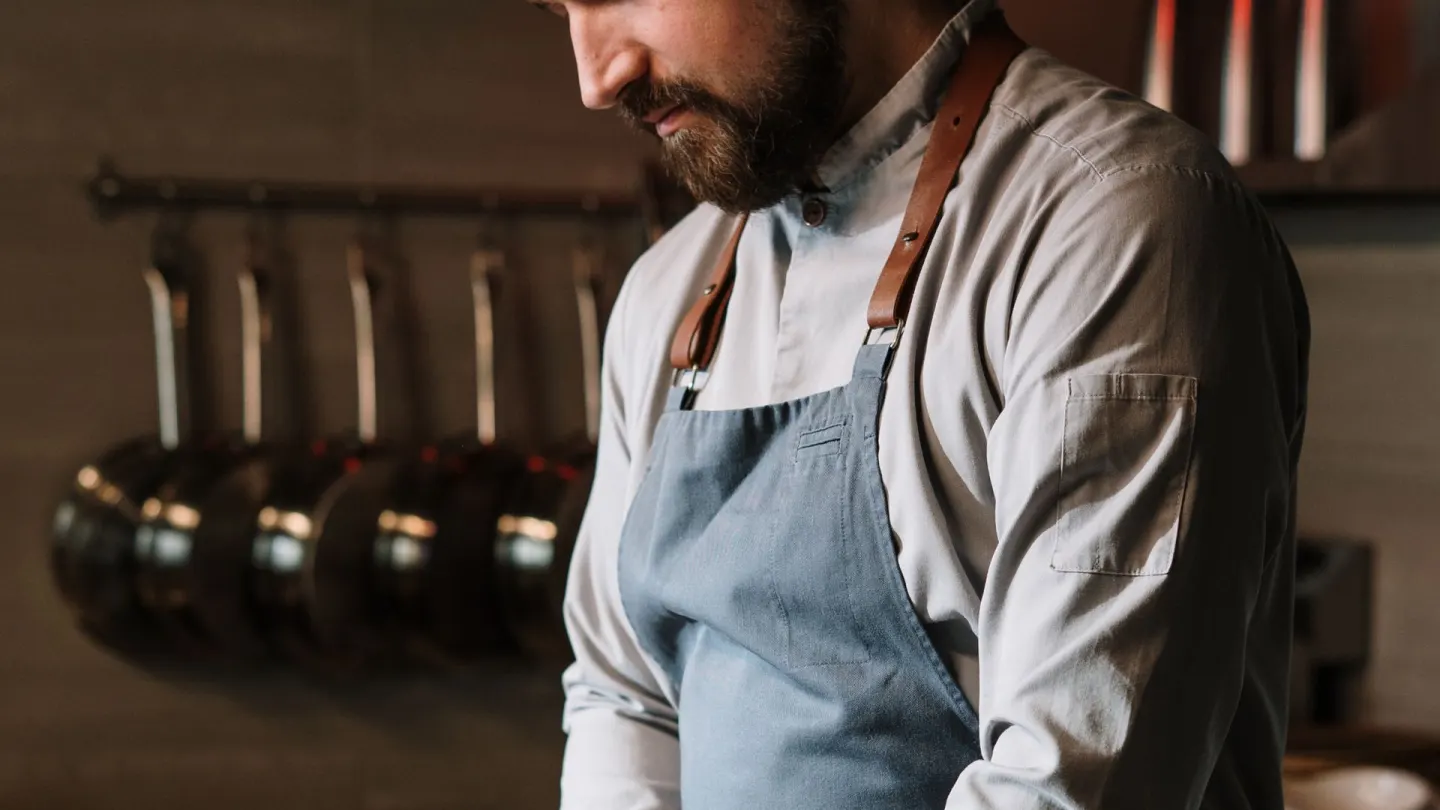
Batch cooking vegetables only works if you will eat them on Thursday. A tray of browned broccoli beats a sad box of pale cubes. Cook once. Season well. Store safely.
NHS 5 A Day still counts 80g of vegetables as one portion, about three heaped tablespoons when cooked. Frozen, tinned and leftover veg all count. The gap is not knowledge. It is the 6pm question of whether the box in the fridge looks like food.
This how-to treats batch cooking vegetables as a flavour and food-safety job. It does not promise weight change. It shows how to roast or steam a pile, how to keep texture, and how UK and US leftover rules differ by a day or two.
Why batch cooking vegetables fails by Thursday
People often roast everything pale and under-seasoned. Then they face steamed courgette with no salt on a busy night. That is not a willpower problem. It is a flavour problem. Vegetables need oil, salt, acid or herbs if you want to eat them again.
Texture matters too. Courgette turns watery. Salad leaves collapse. Broccoli, peppers, carrots, cauliflower and frozen mixed veg hold up better. Cook those for the box. Keep cucumber and lettuce for the day you eat them.
Cook a tray for two or three meals, not for the whole week. Flavour fades. Safety windows are short. A Sunday mountain that sits until Friday is how batch cooking vegetables turns into food waste, or into a food-safety risk.
Put a protein next to the veg or you will still order a sandwich. Beans, eggs, yoghurt, fish or leftover chicken make the box a meal. Our everyday protein guide is the other half of this habit.
What a portion looks like once the tray is cooked
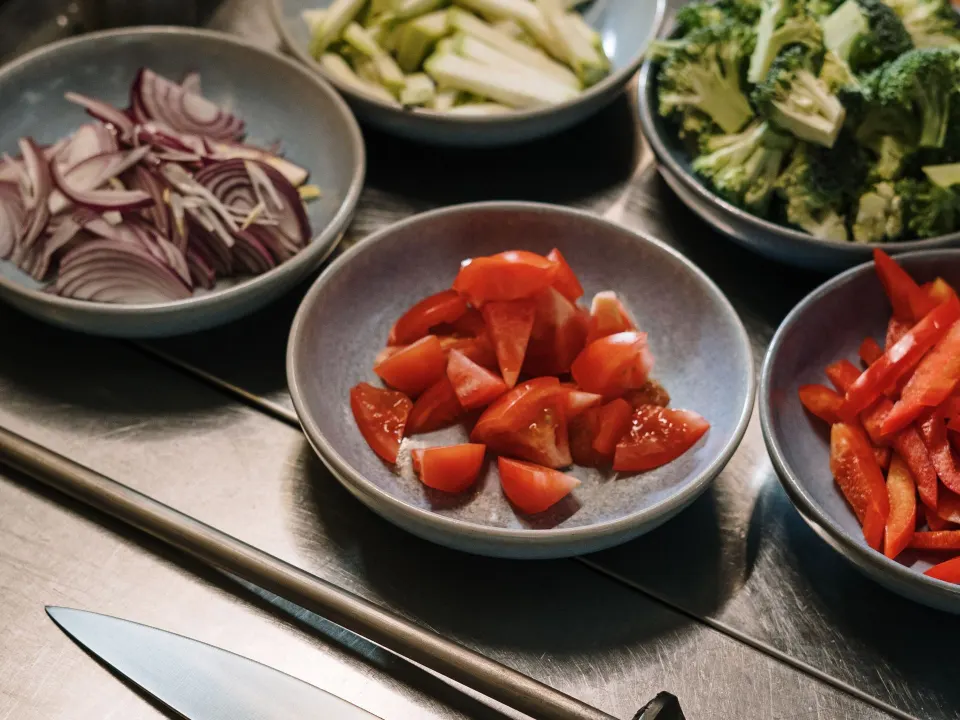
NHS 5 A Day uses 80g as one adult portion of vegetables. Three heaped tablespoons of cooked veg is the kitchen cue. A medium tomato, three heaped tablespoons of peas, or a side of broccoli florets can each be a portion. Variety across the week still matters more than one hero vegetable.
US MyPlate talks in cups. In general, one cup of raw or cooked vegetables, or two cups of raw leafy salad, counts as one cup from the vegetable group. Many adults are asked for about two to three cups a day, depending on age and sex. Use the frame that matches your country’s plate, then fill the box.
Potatoes, yams and plantain do not count toward UK 5 A Day. They still sit in the starchy group. Sweet potato does count as a vegetable in NHS 5 A Day. Frozen peas and tinned tomatoes count. Our portion-size guide helps with the rice or bread beside the veg.
Oil is a teaspoon job, not a free pour. Coat the tray, then stop. Vegetables should look shiny, not swimming. Extra oil adds energy fast and can make leftovers greasy by day two.
| Step | United Kingdom | United States |
|---|---|---|
| Time at room temperature | Cool, then fridge within 1–2 hours | Fridge within 2 hours (1 hour if above 90°F) |
| How to cool a big tray | Split into smaller, shallow boxes | Split into shallow containers so food chills faster |
| Fridge life | Eat leftovers within 2 days, or freeze | Often 3–4 days at 40°F or below |
| Reheat | Steaming hot all the way through | 165°F / steaming hot throughout |
| Fridge temperature | 0 to 5°C | 40°F or below |
Roast, steam or pan: methods that still get eaten
Roasting at a hot oven browns edges. That browning is why people finish the box. Toss florets and sliced peppers with a little rapeseed or olive oil. Spread them out. Crowd the tray and you steam them instead. Twenty to thirty minutes is typical for broccoli or cauliflower florets. Taste. They should be tender with some chew, not mush.
Frozen vegetables are already portioned. They count toward 5 A Day. Tip a bag of frozen mixed veg into a hot pan with garlic. Or roast from frozen on a tray. You skip the chopping. You still need salt and lemon at the end.
Steaming is gentle and keeps colour. It can taste bland on day two. Dress steamed veg while they are hot: a teaspoon of oil, lemon, herbs, or a spoon of pesto. Cold steamed broccoli with nothing on it is the classic uneaten leftover.
A pan of onions and peppers can sit under eggs in the morning. That is batch cooking vegetables without a Sunday meal-prep video. Cook once. Use twice. Stop there if that is what you will repeat.
Flavour so leftover vegetables still taste like dinner
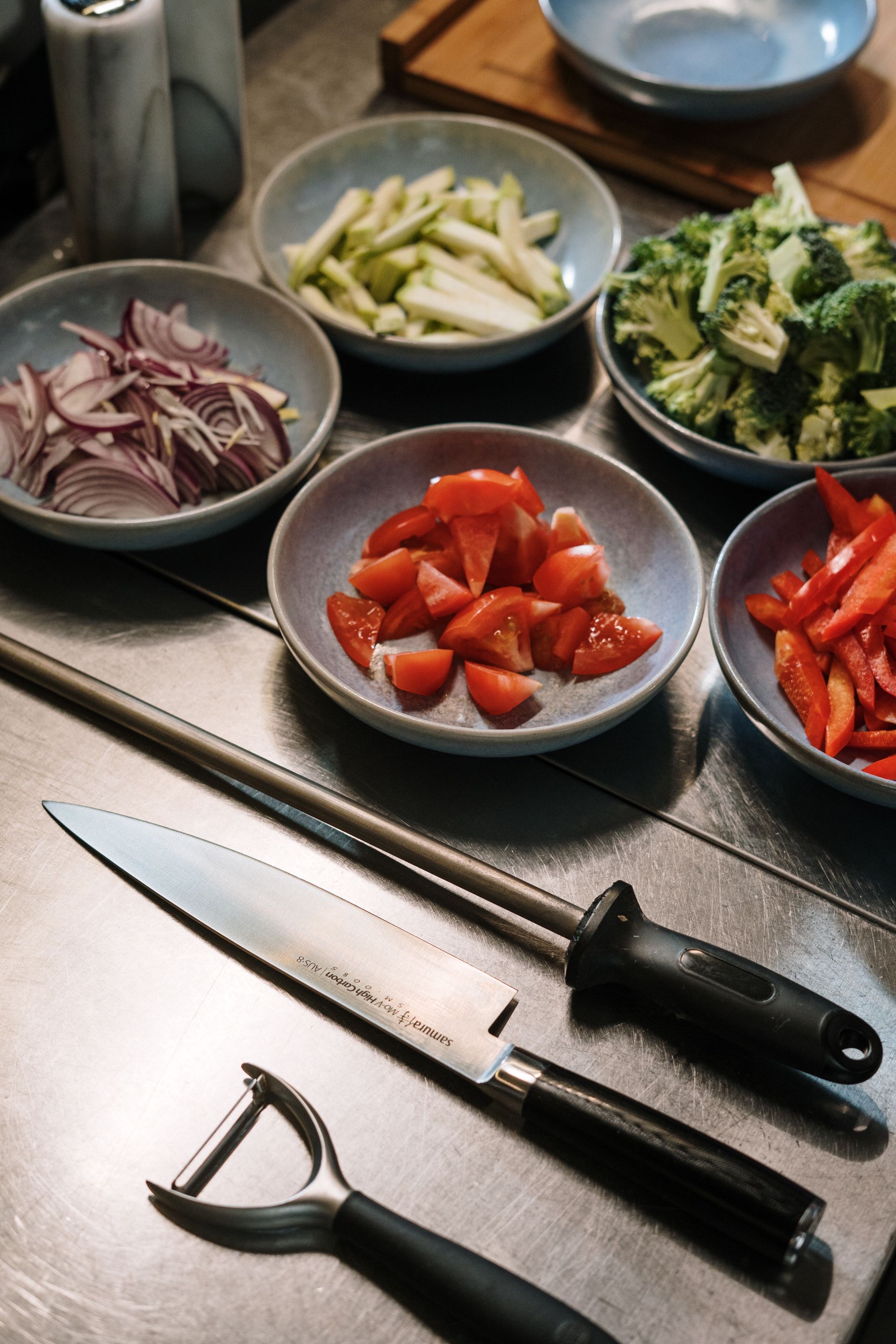
Salt, acid and herbs do more than extra oil. Lemon juice, vinegar, chilli flakes, cumin or parsley can rescue a tray. Add fresh acid when you reheat, not only when you first cook. A squeeze of lemon on day two is a 10-second upgrade.
Keep sauces on the side if you can. A box of roasted carrots in a lake of dressing turns soggy. Pack yoghurt, salsa or a mustard vinaigrette in a small pot. Stir it through when you eat. Tinned tomatoes and a rinsed tin of beans can turn leftover roast veg into a stew in one pan.
Read labels on shop sauces. Some pasta sauces and pestos are high in salt or sugar. Our food label guide shows the salt line. A homemade squeeze of lemon does not need a label.
Mix textures at the table. Add a handful of leaves, a spoon of seeds, or leftover grains. The batch is the vegetable base. The plate can still change each night so you do not get bored.
Cool, store, reheat: make the leftover rules visible
Hot food should not sit on the counter all evening. GOV.UK leftover advice is to cool cooked food and get it into the fridge within one to two hours. Split a big tray into smaller boxes so the centre chills. A deep tub of hot veg stays warm too long.
In the UK, eat fridge leftovers within two days, or freeze them. In the US, CDC leftover advice is often three to four days in a fridge at 40°F or below. If your household spans both sets of advice, the shorter UK window is the cautious one for cooked vegetables.
Reheat until steaming hot in the middle. US pages give 165°F for leftovers. Do not reheat the same portion more than once. If you packed three boxes, reheat one box. Leave the others cold until their turn.
Rice mixed with vegetables follows rice rules, which are stricter in UK advice: cool fast and eat the next day. Frozen leftover veg can wait longer. Label the box with the date. If it smells off, throw it away. Smell is not a perfect test, but it is a stop sign. Keep water on the table. Our everyday hydration guide still applies when fibre goes up.
Seek urgent care for severe vomiting, bloody diarrhoea, or signs of dehydration after leftovers. Food poisoning is a clinical issue. A meal-prep plan cannot examine you. People with a weakened immune system, pregnancy, or kidney disease should follow personal clinical advice on leftovers, not a general fridge calendar.
A sticky note on the box helps more than a perfect plan. Write the cook day. Eat the oldest box first. If Thursday arrives and the veg still looks fine, turn it into soup with stock and a tin of tomatoes. That is still batch cooking vegetables. It is also how you stop the last portion from becoming compost.
Practical detail that sharpens the advice
Name the meals where batch cooking vegetables will show up this week—breakfast, a packed lunch, and one dinner you already know how to cook. Specificity beats vague intention. Keep fruit, vegetables and a protein food visible at those meals.
Worked examples that make sense of batch cooking vegetables
Start from the article’s own emphasis on batch cooking vegetables. Translate it into one breakfast, one lunch and one dinner you could eat this week without speciality shops. If a tip only works with unlimited time or expensive powders, rewrite it until it fits a normal weekday.
Key ideas already flagged in this piece include: Cook vegetables you already like, in a way that still tastes good cold or reheated, rather than a giant mix you never chose. NHS 5 A Day: about 80g of vegetables is one portion. Potatoes do not count. Pulses count only once a day. Cool cooked vegetables and get them into the fridge within one to two hours. Divide big trays into shallow boxes so they chill faster.. Keep those ideas visible on a note on the fridge or in your phone groceries list.
UK and US readers may see different units on packs (kJ vs kcal, salt vs sodium, ml vs fl oz). Convert once for the products you buy often, then stop redoing arithmetic at every meal while you practise batch cooking vegetables.
Common pitfalls specific to this topic
Common pitfalls include all-or-nothing restarts, buying supplements before fixing drinks and takeaway frequency, and copying athletes’ intakes without matching their training. Adjust one food environment cue at a time while you refine batch cooking vegetables.
UK and US context for everyday decisions
UK and US guidance often agree on patterns (more plants, varied protein foods, attention to salt, sugar and saturated fat) even when units differ. Use local labels and local clinical services when personalising batch cooking vegetables.
Frequently asked questions
Can I batch cook salad leaves?
Do frozen vegetables count toward 5 A Day?
How much oil should I use on a tray?
Is it safe to eat leftover roast vegetables cold?
How do I stop leftover broccoli smelling in the fridge?
Sources
- 1. 5 A Day: what counts?
- 2. The Eatwell Guide
- 3. How to chill, freeze and defrost food safely
- 4. Preventing food poisoning
- 5. Vegetables
- 6. Healthy diet
Guidance changes. Figures were checked against the sources above at the time of review; always confirm current advice with your GP, pharmacist or clinician.
Image credits
- Photo: Photo by Klaus Nielsen on Pexels / Openverse
Was this useful?
Anyone can react — no account needed.



Discussion
0 comments · Name and email only · Email is never shown