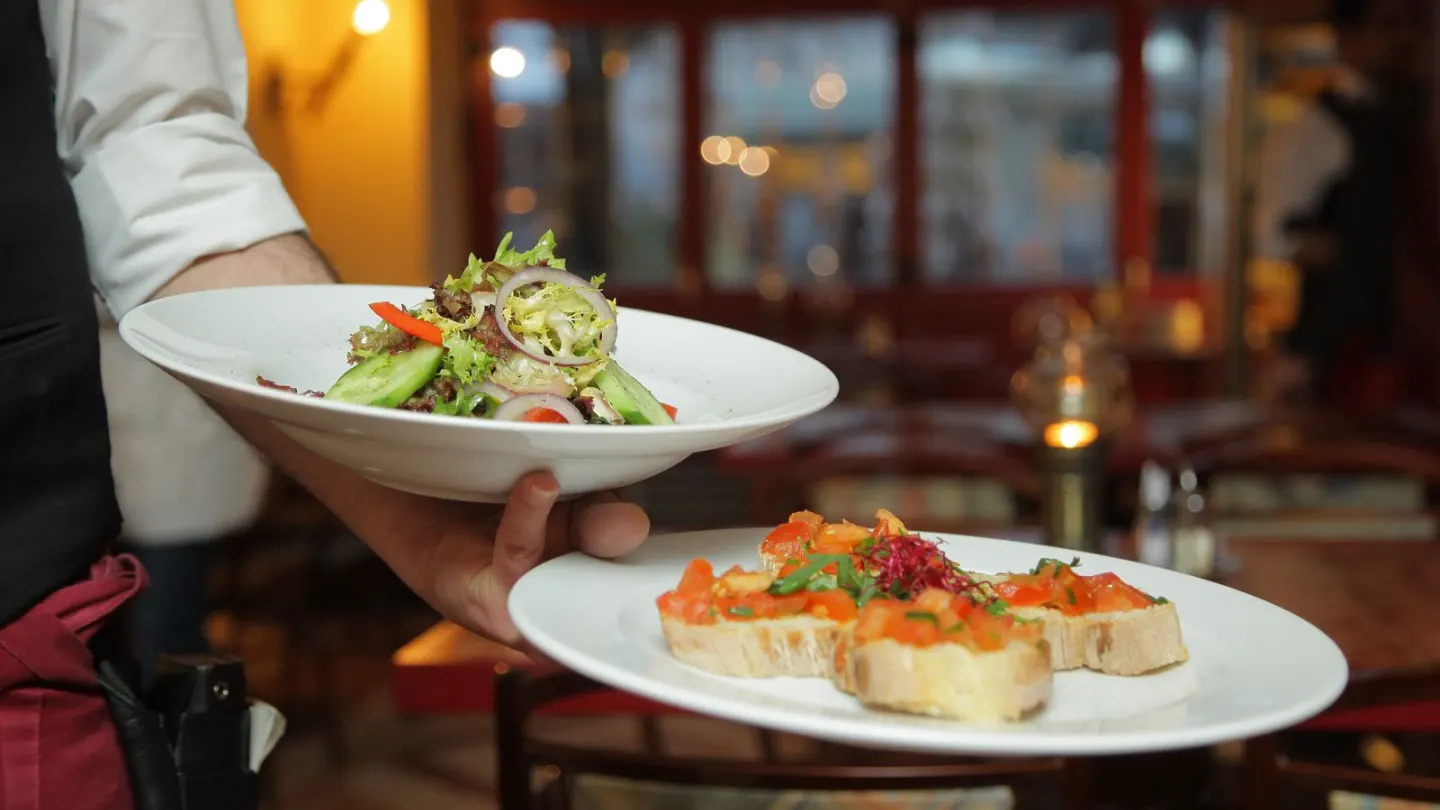
Calorie labelling on a menu is a comparison tool, not a verdict on your meal or your body. Used once, calmly, it can help you choose. Used as a running score, it can crowd out hunger, company and enjoyment.
England and the United States both require many large food chains to show energy on menus. The rules differ, and so do the daily figures printed beside the dishes. This guide explains calorie labelling in both places, then shows how to read a number without turning dinner into homework.
How calorie labelling works in the UK and US
Calorie labelling in England started on 6 April 2022. It covers qualifying businesses with 250 or more employees that sell food for immediate eating, including cafes, restaurants, takeaways, many supermarket cafes and delivery apps. Menus must show energy in kilocalories (kcal) next to the item and the portion. They must also show the statement that adults need around 2,000 kcal a day.
That 2,000 kcal line is a population prompt. It is not your personal budget. The NHS still cites about 2,000 kcal a day for an average woman and about 2,500 kcal for an average man as broad examples. Your size, age, movement and health can sit well above or below those figures. See our guide to daily calorie needs before you treat a menu as a target.
In the United States, federal menu rules apply to restaurant-type chains with 20 or more locations doing business under the same name. Calories appear on menus and menu boards. Extra nutrition facts must be available on request. The familiar 2,000-calorie line is general nutrition advice, not a prescription. CDC research has long noted that many people underestimate restaurant meals, which is one reason labels exist.

What the numbers on a menu actually mean
The number is energy for the stated portion. It is not a health grade. A 700 kcal grilled salmon plate with potatoes and greens can support protein and fibre. A 700 kcal milkshake can be mostly sugar and fat. Calorie labelling will not tell you that difference. You still need to look at the food.
Watch the portion note. A pizza listed at 1,100 kcal may be the whole pie or two slices. Delivery apps often list a default size larger than you would plate at home.
Drinks move the total fast. A large flavoured latte can sit around 250 to 350 kcal. A regular cola in a large cup can add about 180 to 220 kcal. An americano or plain tea is close to zero. Swapping the drink is often easier than swapping the main.
Use hand-based portion cues when the label is missing. A palm of protein, a fist of starch, and a large pile of vegetables still work in a pub. Labels help most when two similar dishes sit side by side.
| Setting | Who must show energy | Unit and daily line | Useful reading tip |
|---|---|---|---|
| England, out of home | Businesses with 250 or more employees selling food for immediate consumption | kcal, plus “adults need around 2,000 kcal a day” | Compare two mains. Ignore the daily line if it does not fit you. |
| United States, chain restaurants | Establishments with 20 or more locations under the same name | Calories, with 2,000 calories a day as general advice | Ask for the full nutrition sheet if you need protein, salt or allergens. |
| NHS population examples | Not a legal menu rule | About 2,000 kcal (average woman) and 2,500 kcal (average man) | These are starting ranges, not personal medical targets. |
A calm way to use calorie labelling at the table
Decide before you sit down what the label is for. One useful job is a simple swap. Another is spotting a drink or dessert that is far larger than you expected. That is enough. You do not need to add every side in your head.
Try this pattern on a weekday lunch. You have 45 minutes. The board lists a chicken Caesar wrap at 640 kcal and a large cola at 190 kcal. The same counter lists a grilled chicken wrap at 480 kcal and water at 0. If you want the Caesar wrap, keep it and drop the cola. You save 190 kcal without a new diet. Walk 20 minutes back to work. That walk is movement, not a punishment for lunch.
On a Friday night, a 12-inch pepperoni pizza may read 2,160 kcal for the whole pie. If it is cut into eight slices, three slices are about 810 kcal. Add a side salad at 90 kcal. Share the rest. Put the menu away once the food arrives. Conversation is part of the meal.
Breakfast chains often pair a muffin at about 420 kcal with a large sweet coffee at 280 kcal. That pairing can top 700 kcal before 9 a.m. Porridge with milk and a banana at home is often nearer 350 kcal.

When calorie labelling is the wrong tool
England’s rules allow a customer to request a menu without calorie information. Staff should still offer the labelled menu by default. If you live with an eating disorder, or you feel pulled into checking every number, use that option. The NHS eating-disorder pages are a better next step than a new tracking app.
Do not apply adult board figures to a child. Growth and sport change needs. Pregnancy, recovery from illness and a history of restrictive eating also change the question. If a label makes you skip meals, stop using it.
Everyday swaps that change the total without a diet
Think in tens of minutes and ordinary plates, not in perfect tracking. A baked fish, boiled potatoes and peas plate might land near 550 to 650 kcal in a canteen. A large battered fish and chips portion can sit well over 1,000 kcal. You can still eat chips. Share them, or pair a smaller portion with extra peas.
Sauces matter. A tablespoon of mayonnaise is about 90 kcal. Ask for dressing on the side and use half.
After the meal, a 20-minute walk counts toward weekly activity. The NHS and CDC both treat brisk walking as moderate movement. Our walking for cardio fitness guide keeps the pace conversational. Walking does not erase a pudding. It can help mood and the next night’s sleep.
Waist size, blood pressure and how you feel still matter more than one labelled lunch. If you are using numbers as a health screen, pair them with BMI and waist circumference context rather than a restaurant receipt.
Behaviour examples you can try without miracle claims
Approaches related to calorie labelling are more useful when they name behaviours, not guaranteed kilogram outcomes. Weight changes slowly for most people, fluctuates with fluid and hormones, and responds differently across ages, medicines and health conditions. Aim for patterns you can repeat on an ordinary Tuesday — not a transformation promise.
Concrete behaviour examples (pick one or two, not all):
- Protein-forward breakfast: eggs on toast, Greek yoghurt with fruit, or tofu scramble — then notice afternoon snack urgency for a week.
- Fibre swap: keep the meal you already like; add beans, veg or whole grains so the plate is more filling without a dramatic “diet overhaul.”
- Liquid audit: list weekday drinks; replace one sugary or alcoholic item with water, tea or a smaller pour, three days this week.
- Walk anchor: ten minutes after lunch or dinner on workdays; mark it on the calendar like a meeting.
- Kitchen default: put washed fruit or pre-cut veg at eye level; move ultra-palatable snacks out of easy reach if that reduces autopilot eating.
None of these “melt fat” on a schedule. They change the environment and the average day, which is how sustainable weight-related habits usually work.
How to judge progress without chasing the scale alone
| Signal | What to notice | Caution |
|---|---|---|
| Weekly average weight | Trend over 3–4 weeks if you choose to weigh | Daily swings are mostly fluid; do not punish a single morning |
| Waist or how clothes fit | Same method, same time of day | Not everyone should focus on measurements — skip if it harms mood |
| Energy and training | Can you complete planned walks or sessions? | Persistent exhaustion means the plan may be too aggressive |
| Hunger and mood | Manageable appetite, not constant preoccupation | Obsession, secrecy or compensatory purging needs clinical help |
If you have a history of disordered eating, are pregnant, underweight, frail, or living with a condition where weight loss is not appropriate, do not start a deficit because an article suggested it. Ask a clinician what “healthy” means for you. Stigma in healthcare is real — you can ask for respectful, behaviour-focused care and a second opinion if needed.
Food and drink levers with realistic expectations
Protein and fibre often help fullness; liquid calories and alcohol are easy to under-count. Read UK front-of-pack traffic lights or US Nutrition Facts with portion size in mind — the package is rarely the portion you pour. Meal replacements can be a short structured tool under professional guidance for some people; they are not required for health and are a poor forever plan if they leave you without cooking skills or social flexibility.
Very low calorie approaches and aggressive deficits need medical oversight because of nutrient risk, gallstones, lean-mass loss and rebound. If a product or influencer promises rapid permanent loss without behaviour change, treat that as marketing, not evidence.
Safety boundaries for any weight-related plan
Stop and seek care if you notice fainting, chest pain, severe dizziness with exertion, signs of an eating disorder, or mood collapse tied to restriction. Children, teens, and people with certain chronic illnesses need specialist guidance — adult internet plans do not transfer safely. No article can guarantee weight loss, a clothing size, or disease reversal.
Medical note. This article is general information, not a diagnosis or a personal treatment plan. It does not replace advice from a GP, pharmacist, registered dietitian, physiotherapist, or other qualified clinician. Seek urgent help for severe, sudden, or rapidly worsening symptoms. UK readers can use NHS 111 for urgent advice; US readers can use local urgent care or emergency services when needed.
Frequently asked questions
Does every cafe in the UK have to show calorie labelling?
Is the 2,000 kcal line on US and English menus my personal target?
How can I use calorie labelling without obsessing?
What if calorie labelling makes me anxious or I have an eating disorder?
Sources
- 1. Calorie labelling in the out of home sector: implementation guidance
- 2. Understanding calories
- 3. Restaurant Menu Labeling Use Among Adults — 17 States, 2012
- 4. New calorie labelling rules come into force to improve nation’s health
Guidance changes. Figures were checked against the sources above at the time of review; always confirm current advice with your GP, pharmacist or clinician.
Image credits
- Photo: Photo by Pixabay on Pexels / Openverse
- Photo: Photo by fauxels on Pexels / Openverse
- Photo: Photo by Klaus Nielsen on Pexels / Openverse
Was this useful?
Anyone can react — no account needed.




Discussion
0 comments · Name and email only · Email is never shown