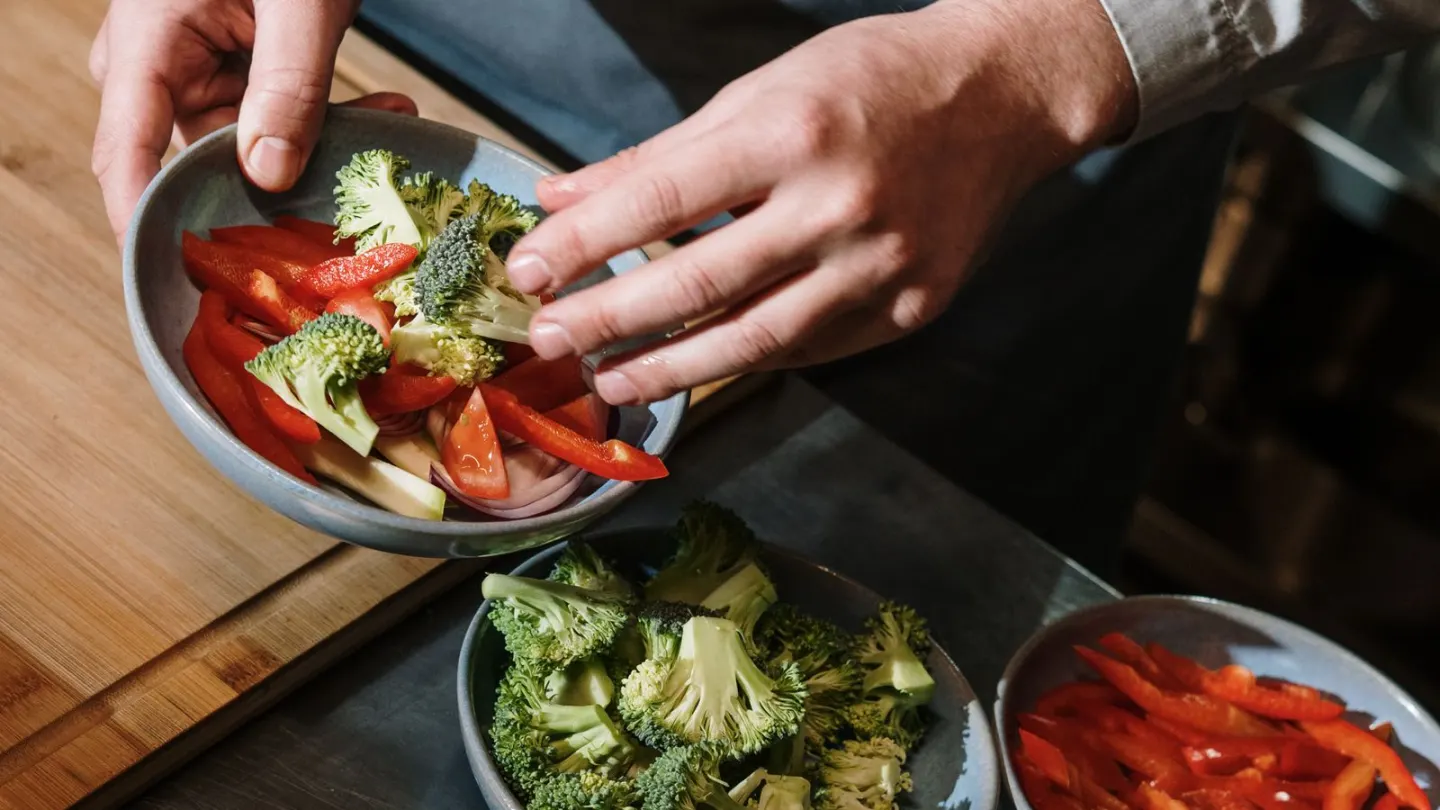
Portion control at home is mostly how you serve food, not a set of lab scales. A smaller plate, leftover boxes, and NHS 5 A Day spoons can quiet second helpings without weighing every gram of rice.
NHS tips already say do not finish your plate if you are full. Save leftover food for the next day. Eatwell still wants vegetables, starch, protein, and only a little oil. Those rules work in a rented kitchen with one frying pan. They do not need a food lab.
Why portion control at home fails on the sofa
The pan stays on the hob. You eat standing up. The bag of crisps is the serving dish. That pattern is not a character flaw. It is a setup. Your eyes never see a start or a stop. Portion control at home is mostly putting a boundary around the food before you sit down.
NHS language is practical. Do not finish the plate if you are full. Leftovers can live in a box. That box is the plan for tomorrow’s lunch. It is not a failed dinner. Children in the house make this easier to say out loud. Adults can use the same sentence.
Energy needs still vary. See daily calorie needs before you copy a neighbour’s plate. NHS examples of about 2,000 kcal a day for an average woman and about 2,500 kcal for an average man are starting ranges. Size, movement, and health shift them. A larger, active adult may need a bigger fist of starch. That is not “cheating.”
Use Eatwell and 5 A Day as the plate map
The Eatwell Guide is a picture, not a weighing protocol. Starchy foods such as potatoes, bread, rice, or pasta should make up just over a third of what you eat. Choose higher fibre versions when you can. Fruit and vegetables take a large share. Protein foods sit in another section: beans, fish, eggs, meat. Dairy or alternatives in modest amounts. Oils and sugary foods in small amounts, less often.
5 A Day gives spoon numbers you can use without scales. A portion is about 80 g. One medium apple, banana, or pear. Three heaped tablespoons of cooked carrots, peas, or sweetcorn. Two broccoli spears. Seven cherry tomatoes. Three heaped tablespoons of beans count, but only once toward the five. Potatoes do not count as 5 A Day. They still count as useful starch.
Juice and smoothies are capped at 150 ml a day toward 5 A Day. Dried fruit is about 30 g, or a heaped tablespoon of raisins, and is better with a meal for teeth. These are NHS portion facts, not a diet brand.
| Food | Home cue | Official note |
|---|---|---|
| Cooked vegetables | Three heaped tablespoons per 5 A Day portion | About 80 g; pile two portions on the plate if you like |
| Fresh fruit | One medium apple or banana | Two small fruits such as plums also count as one portion |
| Protein | A palm of chicken, fish, tofu, or a tin of beans | Eatwell: include beans, fish, eggs, or meat |
| Starch | A fist of rice, pasta, or potatoes | Just over a third of the plate on the Eatwell picture |
| Leftovers | Box them before you sit down | NHS: save leftover food for the next day |
Serve at the counter, then sit
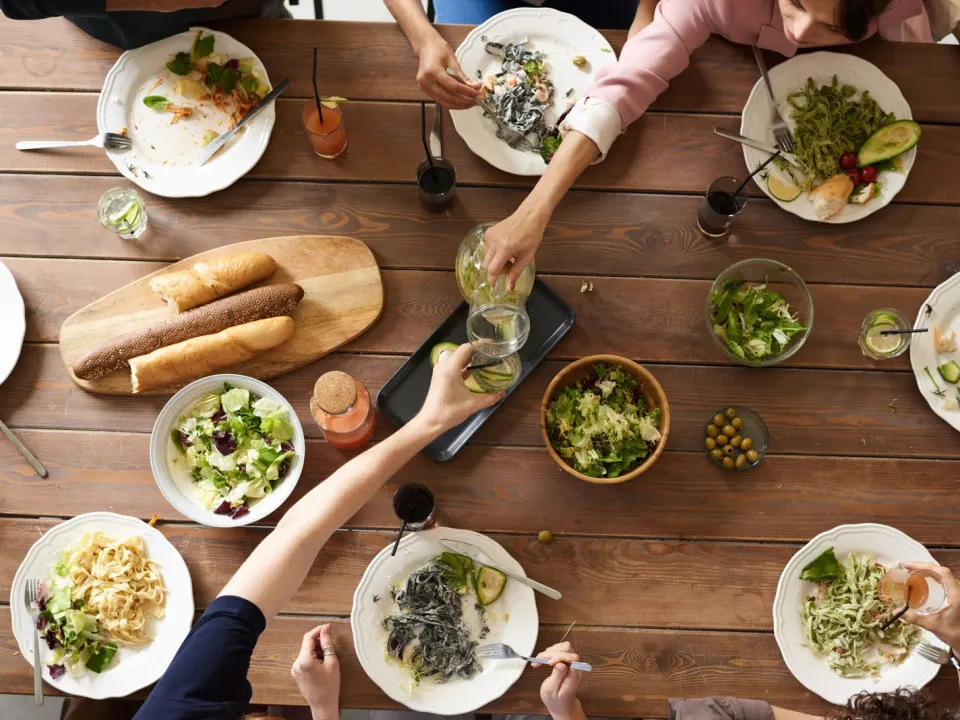
Dish up at the hob or the counter. Put the extra in a box while the food is still in the pan. Sit at a table if you have one. If you eat at a desk, still use a plate. The bag and the tub stay in the kitchen. This single habit does more than a new spice mix.
Hands remain legal. Our portion-size guide without weighing uses the same palm, fist, and handful cues. Use them here as a weight-management routine, not as a nutrition lecture. A palm of protein at lunch and dinner is a useful default. See the everyday protein guide for foods you already buy.
Smaller plates can help some people see a full plate with less food. They are not magic. A smaller plate piled in a mound is still a large portion. Flatten the food. Leave a rim of plate showing. If you are still hungry after 15 to 20 minutes, add more vegetables first.
Drinks, oils and the quiet extras
Oils are energy dense. Eatwell says eat them in small amounts. A teaspoon in the pan is different from a free pour. Spray or a measured spoon is enough for most weekday frying. Nut butters need a teaspoon on toast if the jar usually becomes a well.
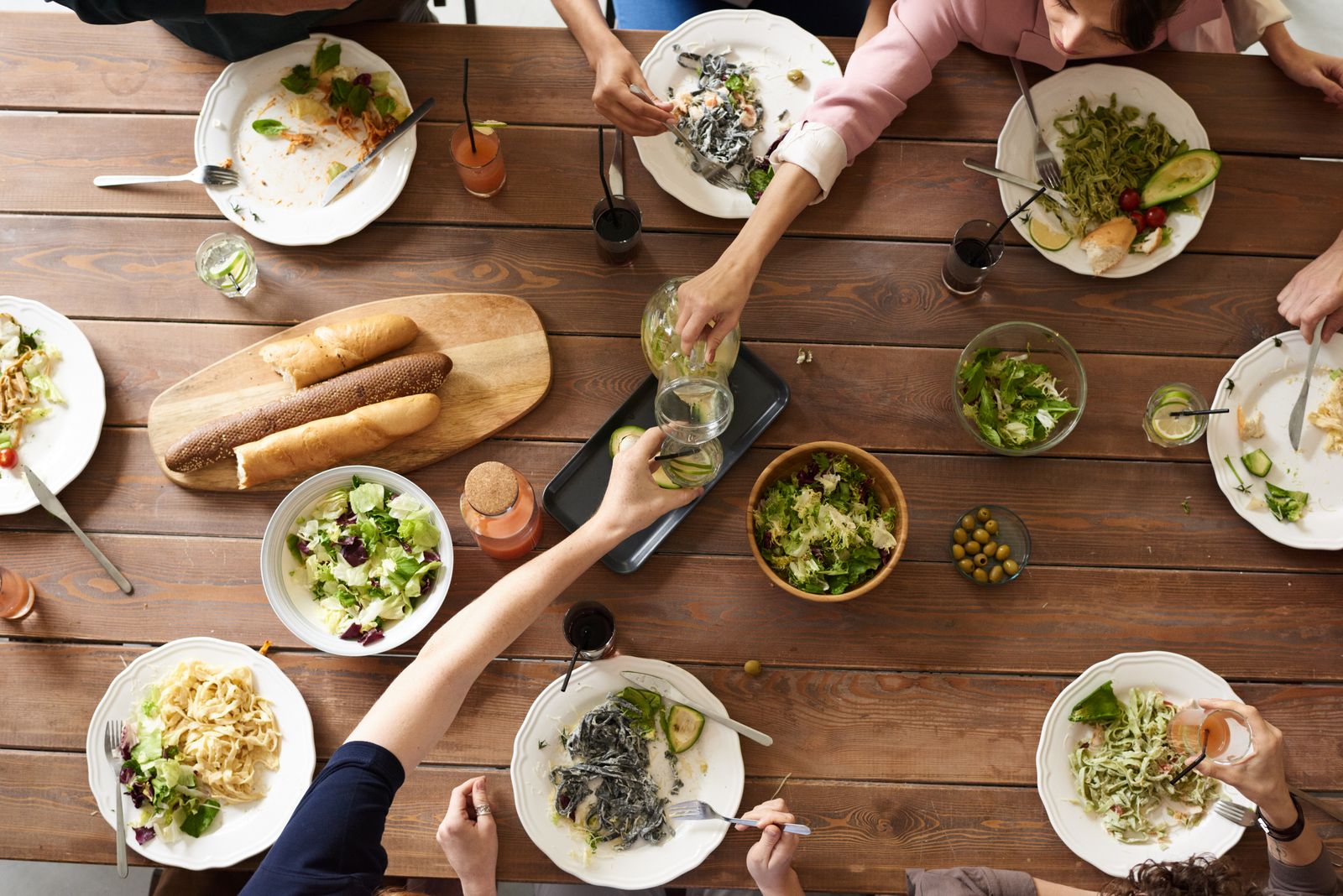
Drinks count at home too. Water, tea, and coffee without syrup are the easy default. A 330 ml cola is extra energy you do not feel as food. Alcohol at the kitchen table adds up the same way it does in a pub. You do not need to ban it. You do need to pour it into a glass and sit down.
Packet snacks work better in a bowl. Count a small handful of nuts, not the bag. If the household shares food, a communal tin with a scoop is kinder than a secret ban. Review after two weeks. Keep what reduced chaos.
How this sits with weight and health checks
Portion habits support a slow pace if loss is appropriate. NHS and CDC still talk in 0.5 to 1 kg, or 1 to 2 lb, a week as planning figures. NIDDK uses a 5% drop from starting mass over about six months as one example first goal. Kitchen cues cannot promise those numbers. They can make a week less chaotic.
Waist and BMI are context, not a daily verdict on your lunch. Our BMI and waist circumference guide covers limits. If weighing every gram makes you skip social meals, that method has failed even if the spreadsheet looks tidy.
Seek a GP or primary care clinician if you have diabetes, kidney disease, a complex medicine list, or a history of disordered eating. Home portion tricks cannot see those constraints. Stop any routine that makes you faint, freeze at the fridge, or hide food.
Behaviour examples you can try without miracle claims
Approaches related to portion control at home are more useful when they name behaviours, not guaranteed kilogram outcomes. Weight changes slowly for most people, fluctuates with fluid and hormones, and responds differently across ages, medicines and health conditions. Aim for patterns you can repeat on an ordinary Tuesday — not a transformation promise.
Concrete behaviour examples (pick one or two, not all):
- Protein-forward breakfast: eggs on toast, Greek yoghurt with fruit, or tofu scramble — then notice afternoon snack urgency for a week.
- Fibre swap: keep the meal you already like; add beans, veg or whole grains so the plate is more filling without a dramatic “diet overhaul.”
- Liquid audit: list weekday drinks; replace one sugary or alcoholic item with water, tea or a smaller pour, three days this week.
- Walk anchor: ten minutes after lunch or dinner on workdays; mark it on the calendar like a meeting.
- Kitchen default: put washed fruit or pre-cut veg at eye level; move ultra-palatable snacks out of easy reach if that reduces autopilot eating.
None of these “melt fat” on a schedule. They change the environment and the average day, which is how sustainable weight-related habits usually work.
How to judge progress without chasing the scale alone
| Signal | What to notice | Caution |
|---|---|---|
| Weekly average weight | Trend over 3–4 weeks if you choose to weigh | Daily swings are mostly fluid; do not punish a single morning |
| Waist or how clothes fit | Same method, same time of day | Not everyone should focus on measurements — skip if it harms mood |
| Energy and training | Can you complete planned walks or sessions? | Persistent exhaustion means the plan may be too aggressive |
| Hunger and mood | Manageable appetite, not constant preoccupation | Obsession, secrecy or compensatory purging needs clinical help |
If you have a history of disordered eating, are pregnant, underweight, frail, or living with a condition where weight loss is not appropriate, do not start a deficit because an article suggested it. Ask a clinician what “healthy” means for you. Stigma in healthcare is real — you can ask for respectful, behaviour-focused care and a second opinion if needed.
Eating cues: hunger, stress and social settings
For patterns around portion control at home, separate physical hunger from urgency driven by stress, fatigue or habit. A short pause — water, toilet, two minutes of slow breathing — does not ban food; it gives you a choice. If you still want the food, eat it attentively rather than in a blur at the screen. After stressful days, decide the evening plan before you get home: a ready meal plus veg, or a takeaway with a protein and salad add-on, beats fridge grazing.
Weekend and restaurant meals can fit a long-term approach: share mains, box half early, or keep alcohol to a planned number of drinks. “Repair” means returning to normal meals and walking the next day — not punishing workouts or skipping food, which often rebound.
Safety boundaries for any weight-related plan
Stop and seek care if you notice fainting, chest pain, severe dizziness with exertion, signs of an eating disorder, or mood collapse tied to restriction. Children, teens, and people with certain chronic illnesses need specialist guidance — adult internet plans do not transfer safely. No article can guarantee weight loss, a clothing size, or disease reversal.
Medical note. This article is general information, not a diagnosis or a personal treatment plan. It does not replace advice from a GP, pharmacist, registered dietitian, physiotherapist, or other qualified clinician. Seek urgent help for severe, sudden, or rapidly worsening symptoms. UK readers can use NHS 111 for urgent advice; US readers can use local urgent care or emergency services when needed.
Frequently asked questions
Do I need digital scales for portion control at home?
Will a smaller plate make me lose weight?
How do I handle second helpings in a family?
What if I am still hungry after a smaller portion?
Sources
- 1. NHS: 5 A Day portion sizes
- 2. NHS: The Eatwell Guide
- 3. NHS: Tips to help you lose weight
- 4. NIDDK: Treatment for overweight and obesity
- 5. NHS: Understanding calories
Guidance changes. Figures were checked against the sources above at the time of review; always confirm current advice with your GP, pharmacist or clinician.
Image credits
- Photo: Photo by Klaus Nielsen on Pexels / Openverse
- Photo: Photo by Foodie Factor on Pexels / Openverse
- Photo: Photo by fauxels on Pexels / Openverse
Was this useful?
Anyone can react — no account needed.


Discussion
0 comments · Name and email only · Email is never shown