
Commute stiffness is what you carry from the car seat into the first hour at a desk. You do not have to keep that shape. A short reset beats sitting down in the same slump.
A drive holds you in one place. Hips stay bent. The lower back rests on a seat that may not fit. Shoulders creep toward the wheel. Then you sit again. NHS pages on back pain still say to keep active where you can. HSE says to vary display work. Those two ideas meet at the office door. Undo the commute before you freeze it in a chair.
Why commute stiffness lingers at the desk
A car seat is a sitting spell. So is a train bench. So is a bus. You then add a desk spell. Tissues that have been still do not love a second freeze. You feel it as a tight lower back, stiff hips, or a neck that does not want to turn to the mirror.
That feeling is common. It is not, on its own, proof of damage. NHS back pain guidance still centres on staying active and continuing ordinary tasks. NICE guidance on low back pain likewise emphasises activity and exercise, not bed rest, as usual first care. A commute does not rewrite that.
What the commute does is steal your first walk. People drop into email while the coat is still on. The car slump becomes the desk slump. Shoulders stay high. The chin stays forward. Two hours later the stiffness has a new home.
Traffic adds tension. Hands grip. Jaw clenches. That is a stress pattern as well as a joint pattern. You cannot "release" it with one heroic twist in the car park. You can change the next ten minutes. That is enough of a plan.

A door-to-desk reset that takes ten minutes
Park. Get out. Stand tall without forcing a military pose. Look at something far away. Unclench the jaw. Shake the hands. Then walk. Use the long way from the car park, the extra loop around the block, or the stairs if they are safe for you.
Fill a bottle. Visit the bathroom. Hang the coat. Those chores are not wasted time. They are the movement the drive removed. WHO and CDC adult activity guidance still counts walking as useful movement. You do not need a gym kit for this bit.
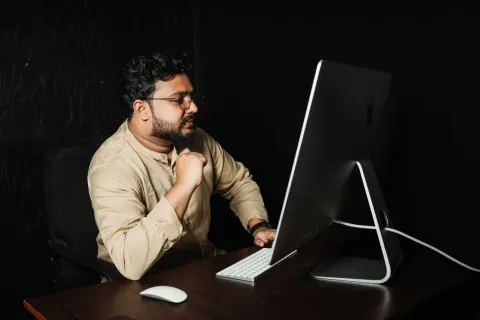
Then set the desk. Sit back. Support both feet. Bring the keyboard close. Place the screen ahead, about an arm's length away. The desk ergonomics checklist is the full order. Do not skip it because you are "already late". Two minutes of fit can spare two hours of perch.
Open one task, not twelve. Work sitting for a short first block. Then stand or walk again. If you have a sit-stand desk, use it as a change, not as a new freeze. The standing desk transition plan explains how to add upright time without loading the feet all at once.
| When | Do this | Why it helps |
|---|---|---|
| On arrival | Stand, look far, walk the long way in | Breaks the seated spell before email starts |
| First 2 minutes at the desk | Chair, feet, keys, screen | Stops the car slump from becoming the work slump |
| First work block | 20–30 minutes sitting, then a short walk | HSE favours frequent changes over one late break |
| Mid-morning | A call on your feet, or stairs to a meeting | Uses real tasks as movement, not extra homework |
| After the drive home | Another short walk before the sofa | Avoids stacking car, desk, and couch with no gap |
What to change in the car, without driving poorly
Set the seat so you can reach the pedals without locking the knee. Sit back against the seat. Hold the wheel with easy shoulders, not a shrug. These are ordinary driving-fit notes, not racing tips. Follow the Highway Code in the UK and local law in the US. Do not stretch while the car is moving.
Stop if you feel sleepy or sore in a way that affects control. Get out at a safe place. Walk. Do not do seat yoga in live traffic. A hard shoulder is not a studio.
On trains and buses, stand for part of the trip if you can do so safely. Face the aisle. Hold a rail. Change which foot takes the load. If you must sit, uncross the legs now and then. Look out of the window. That is a neck change as well as an eye change.
Cyclists and walkers still arrive with a story in the body. A fast ride can leave the back rounded over the bars. A long walk in a heavy bag can hike one shoulder. Take the bag off both shoulders when you sit. Then reset the desk the same way.

Desk habits that stop the stiffness from settling
Keep the first sitting block honest. A timer helps some people. A kettle helps others. Pair the morning with movement snacks in the work day so you are not waiting for lunch to stand.
Look away from the screen on a regular cadence. The 20-20-20 screen-break routine is a prompt to blink, sit back, and then leave the chair when the next task allows. Eyes and neck travel together. A forward head after a drive is a common pair.
Do not stack a lunch eaten at the keys on top of the commute. Leave the floor. Even a slow corridor walk counts. NHS activity pages for adults still treat everyday walking as part of the week. You do not have to "make up" the drive with a brutal session.
If you work from home after a school run, the pattern is the same. The car is still a sit. The kitchen stool is still a sit. Use the walk from the door. Then use a real chair with a back, feet supported, screen raised. A sofa with a laptop recreates the commute in softer fabric.
When stiffness is a warning, not a habit
After a crash, do not treat pain as ordinary commute stiffness. Use emergency services if pain is severe, if you cannot move safely, or if you have a head injury. Get assessed before you "walk it off" into a full work day.
Seek urgent medical help for new difficulty with bowel or bladder control, numbness around the buttocks or genitals, or rapidly worsening weakness in the legs. Those are not desk-fit issues.
For ordinary but persistent back or neck pain, a GP, physiotherapist, or physical therapist can assess you. Occupational health can review a workplace when the pain keeps returning with the drive and the chair. Night pain, fever, or unexplained weight loss also belongs with a clinician.
Gentle movement should stay within comfort. Stop any home stretch that spreads pain, makes you dizzy, or sends symptoms down a leg or arm. A viral video is not a plan after a long drive.
Commute-to-desk undo routine (6–8 minutes)
After parking or leaving the train: 1 minute easy walk, 30-second hip flexor each side, 30-second doorway chest each side, 10 sit-to-stands or bodyweight squats, 10 scapular squeezes, and a 2-minute stroll before opening the laptop. Drivers who sit straight into video calls often stack two flexed postures without a reset.
In-car comfort without fidget theatre
On long drives, follow legal and safe break guidance. At fuel or service stops, walk and open the hips briefly. Do not stretch in live traffic lanes.
Train and bus variants
If you commute seated on transit, use the walk from the station as deliberate mobility: take stairs when safe, and avoid jumping straight to a soft sofa with a laptop.
Workday application notes for commute stiffness
Tie commute stiffness to a visible cue you already have: a kettle boil, the end of a recurring meeting, or plugging in a laptop at the start of deep work. Keep a one-line prompt on a sticky note near the screen with the first move and hold time so you do not renegotiate the routine mid-afternoon.
If symptoms during commute stiffness include numbness, progressive weakness, chest pain, or pain that wakes you at night, stop self-managing and speak with a clinician or occupational-health service. Comfort drills support ordinary stiffness; they do not replace assessment.
Revisit your desk height, screen position and break timing whenever you change chairs, monitors or work locations. A routine built for one setup can feel oddly hard in another — adjust the environment before you assume you need more aggressive stretching.
Practical checkpoints for commute stiffness
Rehearse the main drills for commute stiffness at the exact doses already listed. Change only one variable this week — range, tempo, or support — and write down the result the next morning.
Keep safety limits visible: sharp pain, dizziness, chest symptoms, or neurological changes mean stop and seek care. Modest consistency with commute stiffness beats sporadic intensity.
If your environment changed (new chair, different floor, travel), re-check setup before blaming the programme. Small environment fixes often restore comfortable technique faster than adding volume.
Frequently asked questions
Should I stretch in the car park before I go in?
Is a standing desk the answer to a long drive?
What if I cycle or walk to work instead?
Can commute stiffness mean I should rest in a chair all morning?
How soon after a long drive should I sit at the computer?
Sources
- 1. Back pain
- 2. Low back pain and sciatica in over 16s (NG59)
- 3. Working safely with display screen equipment
- 4. Physical activity
- 5. Adult activity guidelines
Guidance changes. Figures were checked against the sources above at the time of review; always confirm current advice with your GP, pharmacist or clinician.
Image credits
- Photo: Photo by Ron Lach on Pexels / Openverse
- Photo: Photo by Satoshi Hirayama on Pexels / Openverse
- Photo: Photo by Vitaly Gariev on Pexels / Openverse
Was this useful?
Anyone can react — no account needed.



Discussion
0 comments · Name and email only · Email is never shown