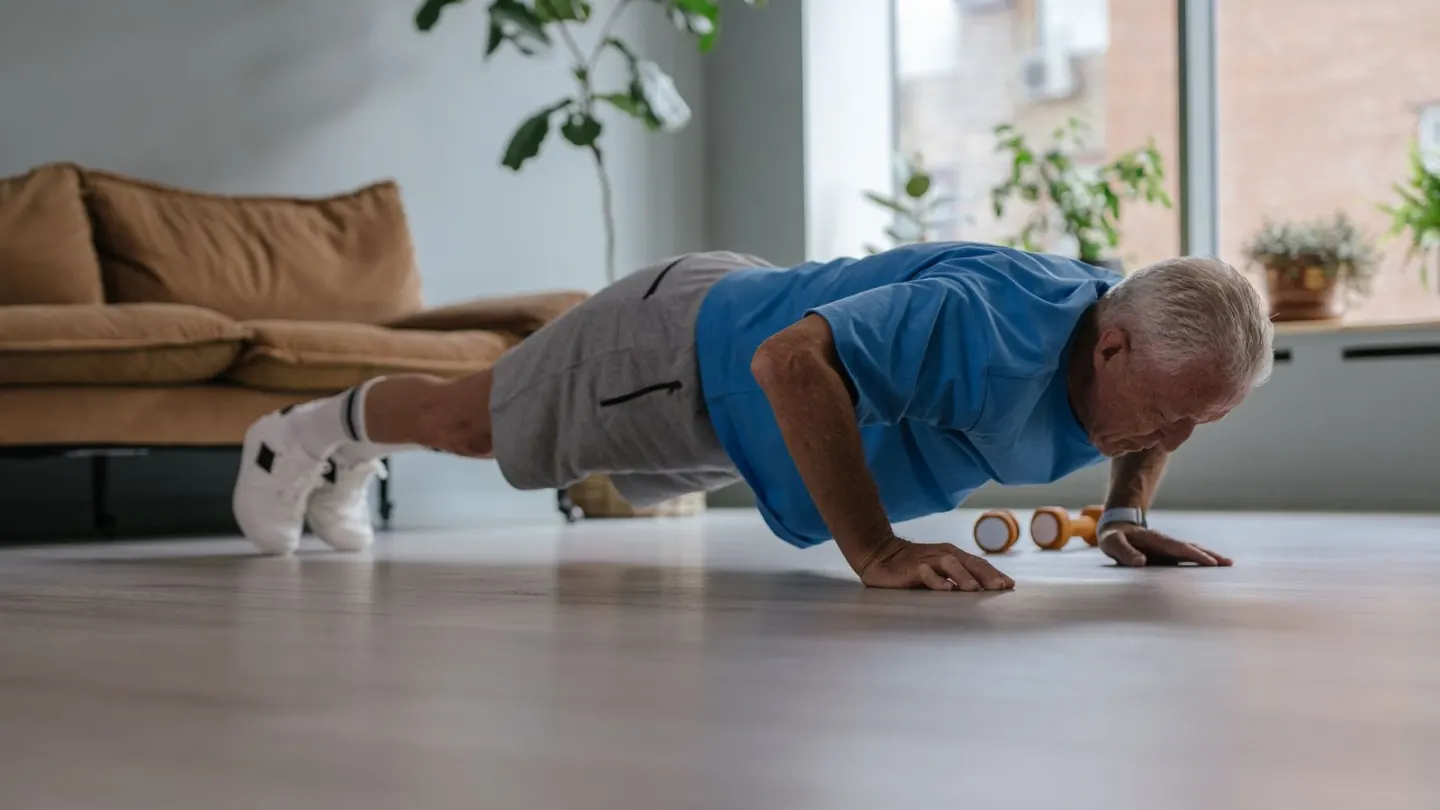
A bird dog exercise trains a still midriff while one arm and the opposite leg move. Slow reps beat fast kicks on a home mat.
The bird dog exercise is a floor drill on hands and knees. You reach one arm and the opposite leg, pause, then return. Hips stay level. The low back stays quiet. No kit is required. NHS and CDC advice still asks adults for muscle work on at least two days a week. This drill can be the core piece of that week, next to a walk.
Why a slow opposite-limb reach belongs at home
Core work is not only sit-ups. A still trunk while a limb moves is closer to carrying shopping or getting out of a car. You stay on a mat. The floor stays quiet. Neighbours are unlikely to complain.
NHS pages for adults aged 19 to 64 include muscle work for the major groups on two or more days. The CDC matches that two-day target, plus at least 150 minutes of moderate aerobic activity. The WHO uses the same aerobic floor. One floor drill does not cover the week. Pair it with a squat or sit-to-stand, a push, a row, and walking.
NHS back-pain pages stress staying active in ways you can tolerate. They do not sell a miracle move. MedlinePlus also treats regular muscle work and balance as part of healthy ageing. A slow reach is one option. It is not a diagnosis tool. It is not a promise to end back niggles.
If the building is strict, keep the rest of the session in line with a quiet apartment workout with no jumping. The bird dog exercise still fits that quiet plan.
How to do the bird dog exercise slowly
Clear table legs. Kneel on a mat. Place the hands under the shoulders. Place the knees under the hips. Spread the fingers. Soften the elbows. Keep the gaze on the floor a little ahead of the hands. Lightly brace the midriff as if zipping a coat. Do not sag the belly or hike the hips.
Slide one heel back until the leg is long, without a huge lift. At the same time, reach the opposite hand forward, thumb up or palm down. Pause for three seconds. The pelvis should stay as still as a tray of tea. Return the hand and knee. Then switch. That is one slow pair.
If the hips rock, shorten the reach. A small, still move beats a big kick. If the wrist aches, make fists and rest on the knuckles, or drop to the forearms and only move the legs. Breathe through the pause. Do not hold a breath for the whole reach.
A folded towel under the knees can help. Thick carpet can hide a sagging back. If you cannot see your shape, film one set from the side on a timer, then delete it. Look for a flat line from head to heel on the working side.
A sample bird dog exercise session
Warm up for four minutes. Cat-camel the spine ten easy times. Then rock back toward the heels. Rehearse a reach with only one leg. Then add the arm. Then start the working sets.
Choose a range you could repeat for six tidy reps each side, with two still in reserve. If the last reps need a hip hike, shorten the reach. ACSM treats regular muscle work as the useful habit. Home drills count when you can repeat them next week.
| Item | First weeks | Once the shape is still |
|---|---|---|
| Sets | 2 | 3 |
| Slow reps each side | 6 | 8 to 10 |
| Pause at full reach | 3 seconds | 5 seconds |
| Rest between sets | 60 seconds | 60 to 90 seconds |
| Days each week | 2, not back to back | 2, still not back to back |
| If the hips rock | Reach the leg only | Shorten the arm reach |
Sources: NHS physical activity guidelines for adults aged 19 to 64; CDC Adult Activity; ACSM physical activity guidelines. Numbers are this article's home plan, not a clinic protocol.
Place this drill after the warm-up and before long loaded carries. A tired midriff lets the hips twist. If you only own a band, a resistance-band full-body session can supply the other patterns on the same day.
Note the pause time, not a race for more kicks. When six still reps feel dull, add two seconds to the pause. Then add a slower return. That is the same idea as progressive overload without extra weights.
Quiet rooms, common faults and easier versions
There is no jump and no dropped weight. Keep pets out of the hand space. A sliding mat is a fault of the floor, not of you. Park it against a skirting board.
Looking up cranks the neck. Sagging through the shoulders dumps work into the low back. A huge arm swing that lifts the ribs is a different drill. If one side is messier, train that side first while you are fresh. Match the reps. Do not chase a higher kick on the easy side.
Wrist pain is common on hard floors. Use fists, a folded mat, or a forearm set-up. If even that niggles, skip the arm and only slide one heel back. That is still a useful week.
If getting to the floor is the hard part, the beginner home plan for adults over 50 shows standing options first. You can return to the mat later.
Who should skip or adapt this drill
Skip a full reach after recent wrist, shoulder or back surgery until a clinician clears it. Late pregnancy can make hands-and-knees uncomfortable. Ask a midwife, GP or physio for a side-lying option if they already know your history.
Stop for chest pain, faintness, unusual breathlessness, or pain that shoots down an arm or leg. Call 999 in the UK or 911 in the US if those symptoms are sudden. A slow rep is not an exam.
A numb hand that does not ease when you stand up needs personal advice. Online cues cannot replace that. Choose a pain-free core drill, or rest.
Bird-dog tempo and weekly dose
From all fours, reach opposite arm and leg to a long line, pause two seconds, return, then switch. Aim for 3 sets of 6–8 pauses per side, three days per week. Move slowly enough that a glass of water on your lower back would stay put in your imagination.
Making the trunk quiet
Spread the fingers, gently press the floor away, and think of growing long through the crown and heel. If the hips rock, shorten the reach. If the lower back sags, reduce how high the leg lifts. Exhale on the reach.
Progressions and regressions
Regress to sliding the hand and knee only a few centimetres. Progress by adding a three-second pause or a tiny draw-in of the reaching limbs without losing balance. Skip ankle weights until bodyweight pauses look identical every rep.
Session notes specific to bird dog exercise
Before you repeat bird dog exercise, decide the exact surface, footwear and support object you will use. Write the first set’s intended reps or seconds on paper. After the session, record only what changed: a deeper controlled squat, a quieter footfall, a longer wall-sit, or a press-up incline that felt more stable. Those notes beat vague intentions to ‘train harder’.
If a joint feels sharper during bird dog exercise than muscularly tired, shrink range or choose the regression described earlier. Home training should leave you able to climb stairs and sleep that night. Seek GP or physiotherapy advice for pain that lingers, swells, or follows a fall.
Space hard versions of bird dog exercise so similar patterns are not hammered on back-to-back days. A walk, easy mobility, or an upper-body focus can fill the gap while tissues adapt.
Practical checkpoints for bird dog exercise
Rehearse the main drills for bird dog exercise at the exact doses already listed. Change only one variable this week — range, tempo, or support — and write down the result the next morning.
Keep safety limits visible: sharp pain, dizziness, chest symptoms, or neurological changes mean stop and seek care. Modest consistency with bird dog exercise beats sporadic intensity.
If your environment changed (new chair, different floor, travel), re-check setup before blaming the programme. Small environment fixes often restore comfortable technique faster than adding volume.
One more concrete week of practice
Schedule two appointments with yourself for the skills in this article. Session one copies the doses exactly. Session two adjusts a single cue that felt weakest — depth, quiet footfall, hold time, or screen height — and keeps everything else identical.
After those two sessions, keep what was sustainable. Discard any add-on that only worked once. That is enough experimentation for one week.
Field notes that keep bird dog exercise useful
Before the next session involving bird dog exercise, decide the exact dose: duration, sets, portions or steps — whatever this article measures. Write it somewhere you will see at the start time. Vague intentions are how good advice becomes unused bookmarks.
Afterward, record one sentence on comfort and one number from the plan (load, minutes, fibre grams, glasses, intervals). That pair of notes is enough to spot patterns across a fortnight without building a complicated spreadsheet you abandon.
If the plan collides with the same obstacle twice — late meetings, sore knees, skipped breakfast — change the obstacle, not only your willpower. Move the slot, shorten the session, or prepare the meal earlier. bird dog exercise only works as behaviour in a real week.
Share the plan with one person who will ask a kind check-in question, or book it in a shared calendar. Quiet accountability beats public pressure. Re-read the sections above after two weeks and keep only the pieces you actually repeated.
Revisit the safety notes in this article whenever bird dog exercise feels rushed. Slowing the first five minutes usually saves the whole session.
Revisit the safety notes in this article whenever bird dog exercise feels rushed. Slowing the first five minutes usually saves the whole session.
Frequently asked questions
Should the arm and leg be as high as possible?
Can I do both arms and both legs at once?
How often should I practise this?
Why does my low back feel it more than my midriff?
Do I need a band around my foot?
Sources
- 1. Physical activity guidelines for adults aged 19 to 64
- 2. Adult Activity: An Overview
- 3. Back pain
- 4. Exercise for older adults
- 5. Physical Activity Guidelines
Guidance changes. Figures were checked against the sources above at the time of review; always confirm current advice with your GP, pharmacist or clinician.
Image credits
- Photo: Photo by SHVETS production on Pexels / Openverse
Was this useful?
Anyone can react — no account needed.

Discussion
0 comments · Name and email only · Email is never shown