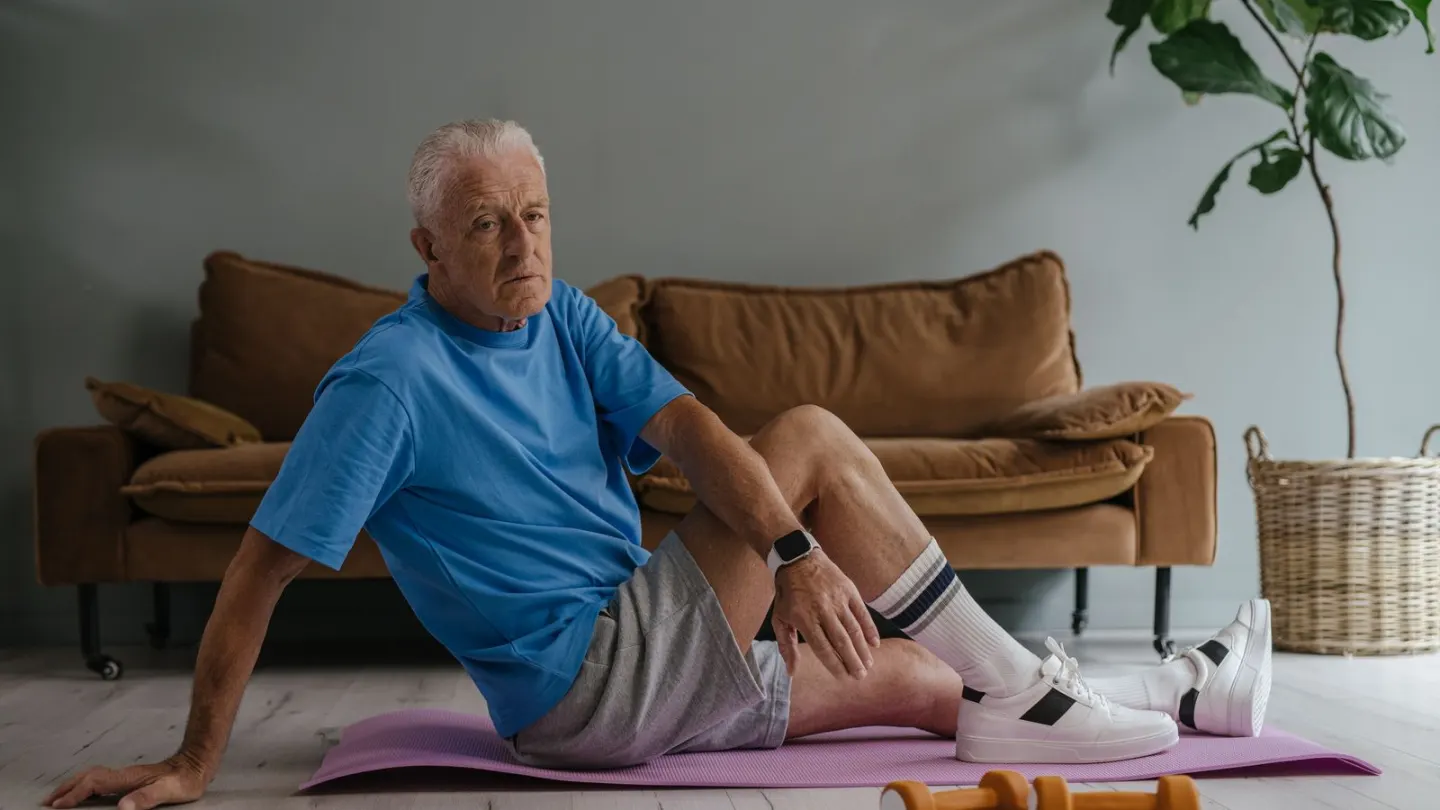
A dead bug exercise trains a quiet low back while arms and legs move. The floor is the coach. If the back peels up, shorten the reach.
The dead bug exercise is a floor drill on your back. Knees stay over the hips. One arm and the opposite leg reach away, then return. The low back stays on the mat. No kit is required. NHS and CDC advice still asks adults for muscle work on at least two days a week. This drill can be the core piece of that week, next to a walk.
Why a quiet-back floor drill belongs at home
Sit-ups can tug the neck. A floor drill with a still trunk trains the midriff in a different way. You lie down. You move one arm and the opposite leg. You try not to let the ribs flare. That skill shows up when you reach into a car or lower a shopping bag.
NHS pages for adults aged 19 to 64 include muscle work for the major groups on two or more days. The CDC matches that two-day target, plus at least 150 minutes of moderate aerobic activity. The WHO uses the same aerobic floor. One floor drill does not cover every muscle. Pair it with a squat or sit-to-stand, a push, a row, and walking.
NHS back-pain pages stress staying active in ways you can tolerate. They do not name a single magic move. MedlinePlus treats regular muscle work as part of healthy ageing. A quiet-back reach is one option. It is not a treatment plan. It is not a promise to fix pain.
If getting to the floor is new, the beginner home plan for adults over 50 shows easier positions first.
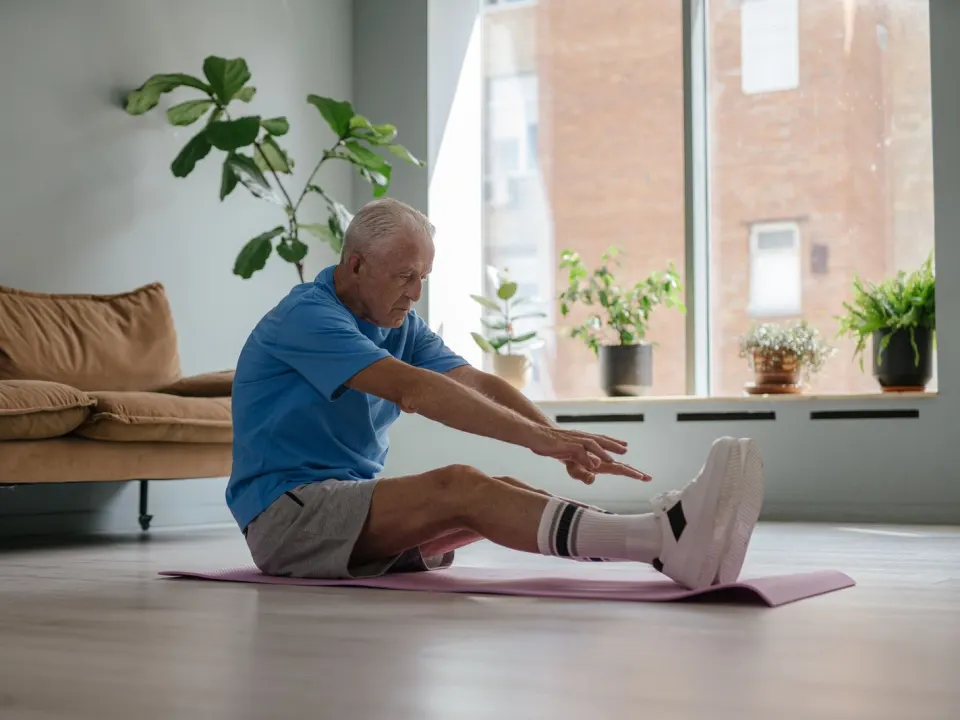
How to keep your back quiet in a dead bug exercise
Lie on a mat. Bend the knees. Lift the feet so the knees sit over the hips, shins roughly level. Reach both arms to the ceiling. Soften the chin. Gently press the low back toward the mat. You should still be able to breathe. This is the start shape.
Reach the right arm back toward the floor and the left heel forward, as if sliding toward the wall. Stop before the back peels up. Pause for two seconds. Return to the start. Then switch. Move like syrup, not like a kick. Exhale as you reach if that helps the ribs stay down.
If the back leaves the mat, you went too far. Bend the knee more. Reach a shorter arm path. Or keep both feet down and only move the arms until the skill is dull. A small, still rep beats a long, arched one.
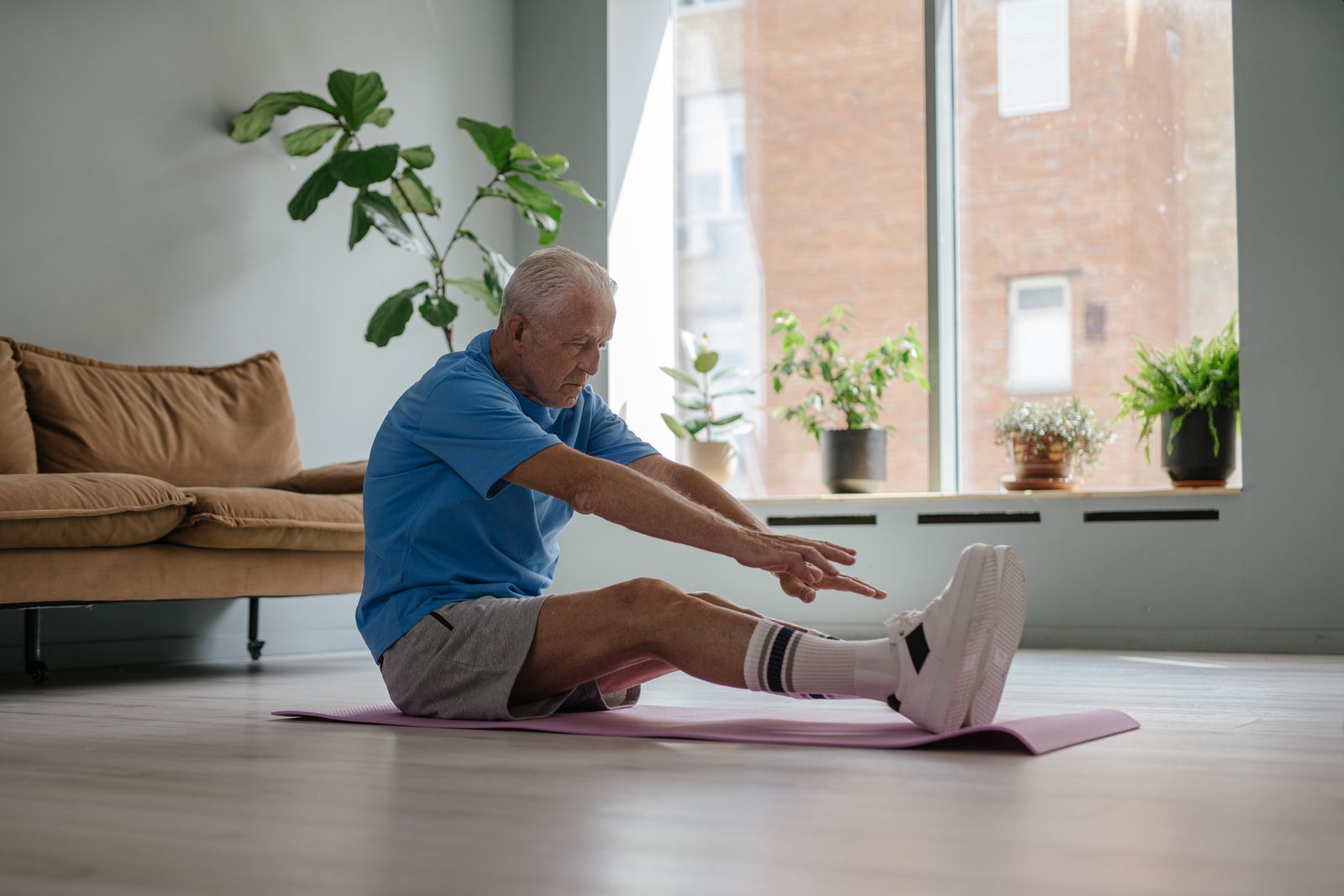
A thin towel under the head can settle the neck. A high pillow pokes the chin and can make the ribs flare. Keep pets off the mat. You need space for a full arm reach.
A sample dead bug exercise session
Warm up for four minutes. March on the spot. Then lie down and practise the start shape with both feet up. Hold it for three breaths. If that already lifts the back, keep the feet down for the working sets.
Choose a range you could repeat for six tidy reps each side. If the last reps need a wriggle, shorten the path. ACSM treats regular muscle work as the useful habit. Home drills count when they are repeatable.
| Item | First weeks | Once the back stays quiet |
|---|---|---|
| Sets | 2 | 3 |
| Slow reps each side | 6 | 8 to 10 |
| Pause at full reach | 2 seconds | 3 seconds |
| Rest between sets | 60 seconds | 60 to 90 seconds |
| Days each week | 2, not back to back | 2, still not back to back |
| If the back peels up | Feet down, arms only | Shorter leg reach |
Sources: NHS physical activity guidelines for adults aged 19 to 64; CDC Adult Activity; ACSM physical activity guidelines. Numbers are this article's home plan, not a clinic protocol.
Place this drill after the warm-up. A tired midriff lets the back arch. Follow it with a row or a band pull. A resistance-band full-body session can supply that pull if you own a band and little else.
Note whether the back stayed down, not how close the heel came to the floor. When six still reps feel dull, add a second of pause. Then lengthen the reach by a few centimetres. That matches progressive overload without extra weights.
Quiet rooms, common faults and easier versions
There is no jump and no dropped weight. The drill stays kind to downstairs neighbours. Pair the rest of the session with a no-equipment full-body circuit if you want more patterns without extra kit.
A fast kick that slams the heel is a different drill. Holding the breath for the whole set makes the ribs flare. Looking at your knees cranks the neck. Keep the gaze at the ceiling. If one side is messier, train that side first. Match the reps.
Neck strain can mean the chin is jutting. Soften it. Use a thin towel. If the neck still complains, keep the arms by the sides and only move the legs. That is still useful work.
Easier versions include feet down, one limb at a time, or a shorter reach. Harder versions include a longer pause or a light book held on the midriff as a “stay still” cue. Do not add a heavy bell on week one.
Who should skip or adapt this drill
Getting on and off the floor is part of the session. If that transfer is hard after surgery, during late pregnancy, or because of dizziness, skip this version. Ask a GP or physiotherapist (US: physical therapist) for a bed option that does not slide.
Stop for chest pain, faintness, unusual breathlessness, or pain that shoots down a leg. Call 999 in the UK or 911 in the US if those symptoms are sudden. Online cues cannot replace an exam.
A recent back, hip or neck injury needs personal advice first. A quiet back is a coaching cue, not a treatment. Some people still find even a short reach sore. Choose a pain-free core drill, or rest.
Dead-bug setup that keeps the back quiet
Lie on your back, knees above hips, shins roughly parallel to the floor, arms toward the ceiling. Press the low back gently toward the mat — think “heavy belt buckle.” Extend opposite arm and leg only as far as the back stays quiet. 6–8 slow reps per side × 3 sets.
Common mistakes and quick fixes
Arching as the heel reaches away means the lever is too long — bend the knee more or shorten the travel. Neck strain means you are reaching the chin up; keep ribs down and imagine a soft double chin. Rushing turns the drill into a bicycle crunch; use a three-second lower.
Where dead bugs sit in a home week
Use them at the start of core work or after upper-body pressing to re-set the trunk. They pair well with bird dogs on alternate days. Stop if you feel pelvic-floor pressure or pain; shorten range and seek guidance if postpartum or symptomatic.
Session notes specific to dead bug exercise
Before you repeat dead bug exercise, decide the exact surface, footwear and support object you will use. Write the first set’s intended reps or seconds on paper. After the session, record only what changed: a deeper controlled squat, a quieter footfall, a longer wall-sit, or a press-up incline that felt more stable. Those notes beat vague intentions to ‘train harder’.
If a joint feels sharper during dead bug exercise than muscularly tired, shrink range or choose the regression described earlier. Home training should leave you able to climb stairs and sleep that night. Seek GP or physiotherapy advice for pain that lingers, swells, or follows a fall.
Space hard versions of dead bug exercise so similar patterns are not hammered on back-to-back days. A walk, easy mobility, or an upper-body focus can fill the gap while tissues adapt.
Practical checkpoints for dead bug exercise
Rehearse the main drills for dead bug exercise at the exact doses already listed. Change only one variable this week — range, tempo, or support — and write down the result the next morning.
Keep safety limits visible: sharp pain, dizziness, chest symptoms, or neurological changes mean stop and seek care. Modest consistency with dead bug exercise beats sporadic intensity.
If your environment changed (new chair, different floor, travel), re-check setup before blaming the programme. Small environment fixes often restore comfortable technique faster than adding volume.
One more concrete week of practice
Schedule two appointments with yourself for the skills in this article. Session one copies the doses exactly. Session two adjusts a single cue that felt weakest — depth, quiet footfall, hold time, or screen height — and keeps everything else identical.
After those two sessions, keep what was sustainable. Discard any add-on that only worked once. That is enough experimentation for one week.
Frequently asked questions
Should my low back be flat or have a small curve?
How close should my heel come to the floor?
Can I move both legs at once?
How often should I do this?
Why is it called a dead bug?
Sources
- 1. Physical activity guidelines for adults aged 19 to 64
- 2. Adult Activity: An Overview
- 3. Physical activity fact sheet
- 4. Back pain
- 5. Exercise for older adults
- 6. Physical Activity Guidelines
Guidance changes. Figures were checked against the sources above at the time of review; always confirm current advice with your GP, pharmacist or clinician.
Image credits
- Photo: Photo by SHVETS production on Pexels / Openverse
Was this useful?
Anyone can react — no account needed.


Discussion
0 comments · Name and email only · Email is never shown