
Low impact living room HIIT keeps your heart rate up with controlled footwork — marches, step-backs, and strength holds — so you can train in flats and terraced houses without jump landings that worry neighbours downstairs.
High-intensity interval training promises efficient cardio in small spaces. Social feeds often show burpees and jump squats that echo through ceiling joists. For apartment dwellers in Bristol or Chicago high-rises, that sound matters as much as the workout. Low impact living room HIIT trades airborne landings for deliberate foot control while still lifting breathing rate into vigorous bands when effort is honest.
This how-to is practical, not a promise of weight loss or a medical clearance. It aligns with UK and US public-health ideas about mixing moderate and vigorous minutes with strength work. If you are new to exercise, manage heart conditions, or recover from injury, check with a GP or primary-care clinician before stacking hard intervals. When in doubt, choose fewer work intervals and more walking breaks.
Why low impact living room HIIT suits apartments and shared floors
Impact noise travels when stiff shoes strike hard flooring. Jumping jacks and plyometric lunges create sharp peaks neighbours notice. Low-impact intervals keep at least one foot grounded most of the time, spreading force through slower eccentric muscle actions. You can still reach vigorous heart rates with fast marches, knee drives without jump, and repeated squats to chair height.
Lease agreements and courtesy norms differ, but many UK tenants and US condo boards expect quiet after certain hours. Scheduling low impact living room HIIT before late evening helps. Combine with wider habits from our apartment quiet workout etiquette guide — towel under mat, avoid dropping weights, warn housemates when you start a timer.
Small rooms need clear floor space. Move coffee tables, tuck cables, and ensure overhead light fans will not clip raised arms. A two-metre by two-metre patch is enough for many standing circuits. Ceiling height rarely blocks marches; watch low beams in attic conversions common in UK housing stock.
Warm up without noise or jumping
Five to eight minutes of gradual movement prep reduces injury risk and raises core temperature. March in place, swinging arms easily. Add heel digs and toe taps forward. Circle ankles and wrists. Perform six to eight bodyweight squats to a comfortable depth, pausing at the bottom if knees allow.
Include hip hinges with hands on thighs — fold forward with flat back, then stand. Add gentle torso rotations without twisting into pain. If you follow our balance exercises at home, a thirty-second single-leg stand near a counter fits here without impact.
Save static stretching for after the session. Dynamic warm-ups match NHS and CDC advice to start slowly and listen to your body. If you take beta-blockers or blood-pressure medicines, warm-ups may need longer; clinicians can advise on target heart rates.
Work and rest ratios that stay neighbour-friendly
Classic HIIT uses short work and shorter rest. Beginners often start with twenty seconds hard and forty seconds easy, repeated eight to ten times — twenty minutes total with warm-up and cool-down bookends. As form stabilises, try thirty on and thirty off, then forty on and twenty off.
Hard means brisk, not sloppy. During work intervals, march faster, squat lower with control, or press hands overhead with pace. Easy intervals are genuine recovery: slow march, breathe through the nose if possible, shake wrists. Skipping recovery turns the set into moderate steady work — still useful, but not HIIT.
Timers on phones work; mute loud buzzers if housemates sleep. Visual interval apps reduce voice-coach shouting that carries through walls. Write the planned ratio on paper so you do not improvise into jump moves when fatigue hits.
| Level | Work / rest | Rounds | Example moves per work block |
|---|---|---|---|
| Starter | 20 s / 40 s | 8 | March + arm pump; squat to chair; standing knee lift (no jump) |
| Intermediate | 30 s / 30 s | 10 | Fast march; reverse lunge step-back; wall push-up |
| Spicier | 40 s / 20 s | 8 | March with high knees; backpack squat; plank shoulder tap |
Exercise menu: marches, step-backs, and floor work
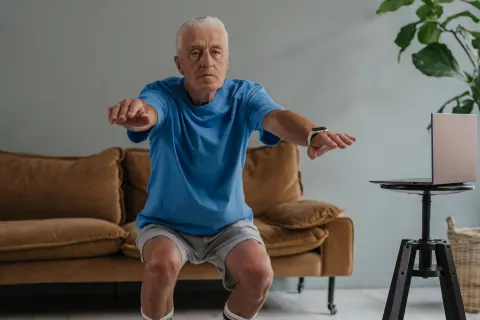
Rotate three to five moves per session to spread load. Forward march with purposeful heel strike. Step-back lunges alternate legs with torso tall. Squats to chair or ottoman keep depth consistent. Wall push-ups incline the body for upper-body work without slamming floor.
Standing "speed skaters" without jump: slide one foot wide, touch toe lightly, return center, alternate. Keep motion lateral but grounded. Shadow boxing with bent knees adds upper cut punches without foot leave-off. Core work can be dead bug on mat — quiet and spine-friendly.
Hold a light backpack for squat load as in our backpack squat home workout link above when bodyweight feels easy. Do not swing weights overhead in cramped spaces. Dropping a bag on laminate cracks noise and toes.
How to scale intensity without plyometrics
Increase cadence before adding jumps. Pump arms during marches. Squat one inch deeper if knees track over toes. Shorten rest by five seconds only after a week at the current ratio. Add a second circuit on separate days rather than doubling volume in one session.
Rate perceived exertion near seven on hard intervals — breath heavy, few words possible. If you hit nine every round, reduce work time. HIIT should feel hard in bursts, not like drowning for twenty straight minutes. Low impact living room HIIT still respects recovery between days; two sessions weekly plus walks may beat daily exhaustion.
Progressive overload without equipment can mean more controlled reps in the same time. Track rounds completed in a notebook. Our backpack squat home workout article shows how load fits small flats when you want stronger legs without a rack.
How UK and US guidance counts home vigorous minutes
NHS adult guidance counts vigorous activity when breathing is hard enough that conversation breaks — similar to honest HIIT work intervals. Seventy-five minutes of vigorous activity weekly can substitute for one hundred fifty moderate minutes, or you can mix both. Two twenty-minute low impact living room HIIT sessions plus brisk walks can approach those totals when effort is real, not performative.
CDC materials describe vigorous intensity on a zero-to-ten scale around seven or eight. Strength work on two days remains separate. Add push-ups, squats, and backpack carries toward muscle-strengthening targets. Indoor intervals do not replace clinical rehab protocols after surgery unless physiotherapists prescribe them.
WHO stresses any movement helps sedentary adults. If HIIT feels intimidating, start with one minute brisk march followed by two minutes easy, repeated five times. That still moves the dial toward weekly minutes without branding pressure.
Flooring, footwear, and joint comfort
Exercise mat dampens footfall on laminate and protects rented carpet. Avoid bare socks on slick surfaces. Cross-training shoes with flat soles support lateral steps better than rigid running shoes. Knee sleeves are optional; persistent pain needs assessment, not tighter gear.
UK flats often combine carpet over concrete; US units may be thinner wood. Listen for creaks when lunging. Shift workouts away from shared bedroom walls if neighbours complain. Hydrate — NHS Live Well notes fluid needs rise with sweat even indoors without fans.
Cool-down walking in place for three minutes lowers heart rate gradually. Gentle calf and hip flexor stretches follow. Joint clicking without pain is common; swelling or locking is not.
Sample 20-minute low impact living room HIIT session
After warm-up: forty seconds fast march punching forward, twenty seconds slow march — repeat four times. Then forty seconds squat to chair, twenty seconds rest — four rounds. Forty seconds alternating step-back lunge, twenty seconds rest — four rounds. Finish with thirty seconds wall push-up, thirty seconds rest — three rounds. Cool down three minutes.
Modify by dropping to twenty-thirty intervals on week one. Swap lunges for extra marches if balance wobbles. Pregnant people should use obstetric guidance on lying flat and exertion; many substitute upright moves only after clinician input.
Log how many rounds you complete. Next week add one round to a single exercise block, not all at once. Pair hard days with easy walking days similar to run-walk plans in our 10K training plan for beginners if you also jog — spacing vigorous work prevents overlap soreness.
Recovery, protein, and energy balance context
HIIT creates brief muscle stress. Protein across meals supports repair — eggs, beans, yogurt, fish, or lean meat in ordinary portions. See our everyday protein intake guide for kitchen scales language. Sleep remains the main recovery tool; late-night intervals can disrupt bedtimes if adrenaline lingers.
Activity supports energy balance but does not guarantee fat loss. Our calorie deficit explained article describes modest accounting without shame. Low impact living room HIIT is a time-efficient cardio option, not a punishment for meals.
Schedule at least one full rest day between hard home sessions when starting. Walk on off days for moderate minutes. Gentle mobility preserves range without impact noise.
When to stop and seek clinical advice
Chest pain, pressure, or pain radiating to jaw or arm warrants stopping and urgent care — 999 UK, 911 US. Severe dizziness, fainting, or sudden headache needs the same. Sharp knee or hip pain during lunges means regress, do not push through.
People with known heart disease, uncontrolled hypertension, or recent surgery should not begin HIIT without clinician clearance. Diabetes may require glucose monitoring around vigorous home work. If intervals trigger asthma symptoms despite prescribed inhaler use, contact your care team.
Postpartum return to impact-free HIIT varies; pelvic health physiotherapists in the NHS or US outpatient settings often advise on core pressure and leakage. Begin with shorter work blocks and stronger recovery.
Building a week around low impact living room HIIT
Example: Monday HIIT, Tuesday walk, Wednesday strength with backpack squats, Thursday rest or yoga, Friday HIIT, weekend walks or cycling. Adjust if shift work breaks patterns — ten-minute bouts still count toward CDC ten-minute minimums.
Combine with balance drills on non-HIIT days for ankle stability on step-backs. Keep headphones at safe volume to hear smoke alarms — a mundane safety note often skipped in influencer clips.
Revisit etiquette if flatmates report noise. Softer footfall beats faster feet. Long-term adherence beats one heroic session that ends in complaint letters.
Older adults can use the same templates with longer rest and shallower squats. Chair support for marches adds security. Teenagers in upstairs bedrooms should still respect household quiet hours even when peers post jump workouts online.
Heatwaves in UK summers or US humid coasts raise heart rate at the same march speed. Slow cadence and fan airflow prevent overheating in uncooled living rooms. Winter heating can dehydrate; keep water nearby.
If you use wearables, expect lag during arm swings. RPE and talk test validate intervals when wrist sensors under-read. Medical devices override consumer gadgets when limits apply.
Low impact living room HIIT fits carers who cannot leave home easily. Short timers respect unpredictable interruptions. Pause workouts without guilt when duty calls — consistency over weeks beats one uninterrupted hour.
Remote workers in Leeds or Austin can slot intervals between meetings if calendars allow. A closed door and muted timer beat commuting to a gym for a twenty-minute burst. Stand up slowly after floor work to avoid light-headedness when blood pressure drops — especially if you skipped lunch.
Children or pets in the room require extra space checks. Low impact does not mean zero trip hazards. Store backpacks and cables before lateral steps. If toddlers mimic your moves, keep intensity adult-only and save playful marching for separate family walks outdoors where NHS and CDC also count activity minutes.
Music tempo can nudge cadence without adding jumps. Choose tracks around one hundred twenty to one hundred forty beats per minute for marches, but let breath override the beat when RPE climbs too high. Headphones with transparency mode help you hear doorbells — a small safety habit in shared homes.
Seasonal daylight changes mood more than fitness formulas. Dark UK afternoons or US winter evenings may push you toward screen-led classes. A written move list on the fridge reduces decision fatigue on tired days. Mark which intervals felt too easy last time, then adjust one variable — work seconds, rest seconds, or squat depth — not all three at once.
Hypertension and some migraine disorders react to sudden vigorous spikes. Clinicians sometimes prefer steady moderate blocks instead of HIIT. If that describes you, treat this how-to as structure for shorter moderate circuits — march and squat without chasing breathlessness — until personalised advice says otherwise.
Finally, celebrate quiet wins. A month of twice-weekly low impact living room HIIT without neighbour complaints and without knee flare-ups is real progress. Numbers on a watch are optional. Showing up in a small space with controlled feet is the skill that keeps cardio alive when life cannot fit a gym trip.
Medical note. This article is general information for UK and US readers, not personal medical advice, a diagnosis, or an exercise prescription. It does not replace assessment by a GP, cardiologist, or other qualified clinician, especially if you have heart disease, chest symptoms, pregnancy, or joint disorders. Seek urgent care for chest pain, fainting, severe shortness of breath, or stroke symptoms. Call 999 in the UK or 911 in the US for emergencies.
Frequently asked questions
Is low impact HIIT still real cardio?
How many times per week should I do living-room HIIT?
Can I do HIIT on carpet?
What if my downstairs neighbour still hears me?
Do I need shoes indoors?
Can low impact living room HIIT replace gym cardio?
Sources
- 1. Physical activity guidelines for adults aged 19 to 64
- 2. How much physical activity do adults need?
- 3. Physical activity
- 4. Exercise and physical fitness
- 5. Recommendations for physical activity in adults
Guidance changes. Figures were checked against the sources above at the time of review; always confirm current advice with your GP, pharmacist or clinician.
Was this useful?
Anyone can react — no account needed.



Discussion
0 comments · Name and email only · Email is never shown