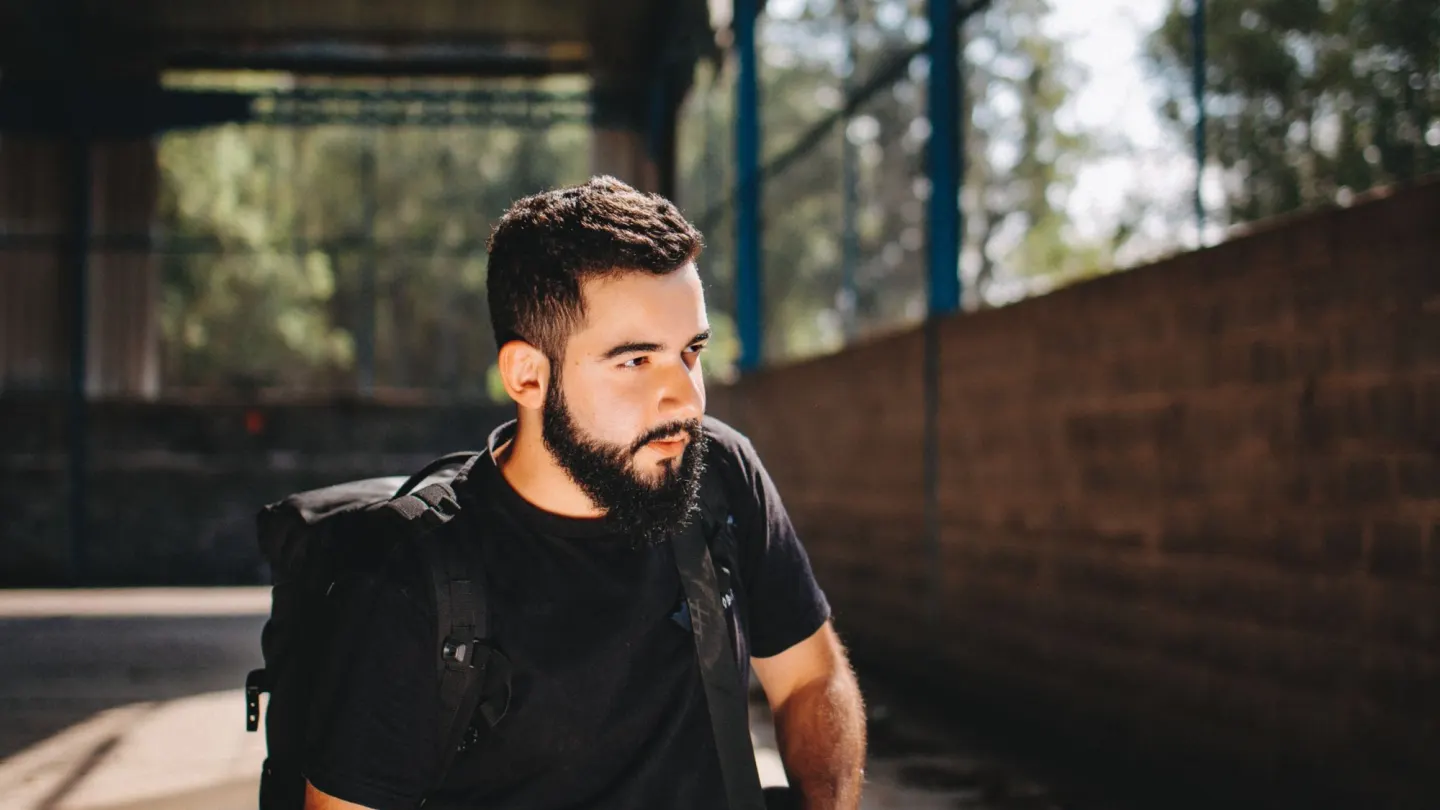
A backpack squat adds load to a sit-to-stand pattern you already know. You fill a rucksack with books, tighten the straps, and squat with control. You do not need dumbbells.
Home strength stalls when the bodyweight squat feels too easy. Buying plates is optional. A backpack squat uses kit you already own. The load sits close to your torso. That is often calmer than holding a wobbly suitcase. It still counts toward the muscle-strengthening work that UK and US guides ask adults to do on at least two days each week.
Why a backpack squat is a fair home load
A squat trains the thighs, the hips, and the muscles that keep you upright. Add a little mass and the same pattern asks more of those muscles. You need a pack that stays put and a floor that is not slippery.
Books stack and do not roll like tins. Wrap them so corners do not dig in. Place similar weight on both sides. A lopsided bag pulls you off centre.
NHS advice for adults aged 19 to 64 includes strengthening work for the major muscle groups on at least two days a week. The CDC gives the same two-day strength target, plus at least 150 minutes of moderate aerobic activity. The WHO uses the same 150-minute aerobic floor. A loaded squat is one pattern. Pair it with a push, a pull, and a walk so the week is not all legs.
If you are new to the pattern, the beginner home plan for adults over 50 uses a chair for sit-to-stands first. Add the pack only when the empty squat feels steady.
How to load a backpack squat
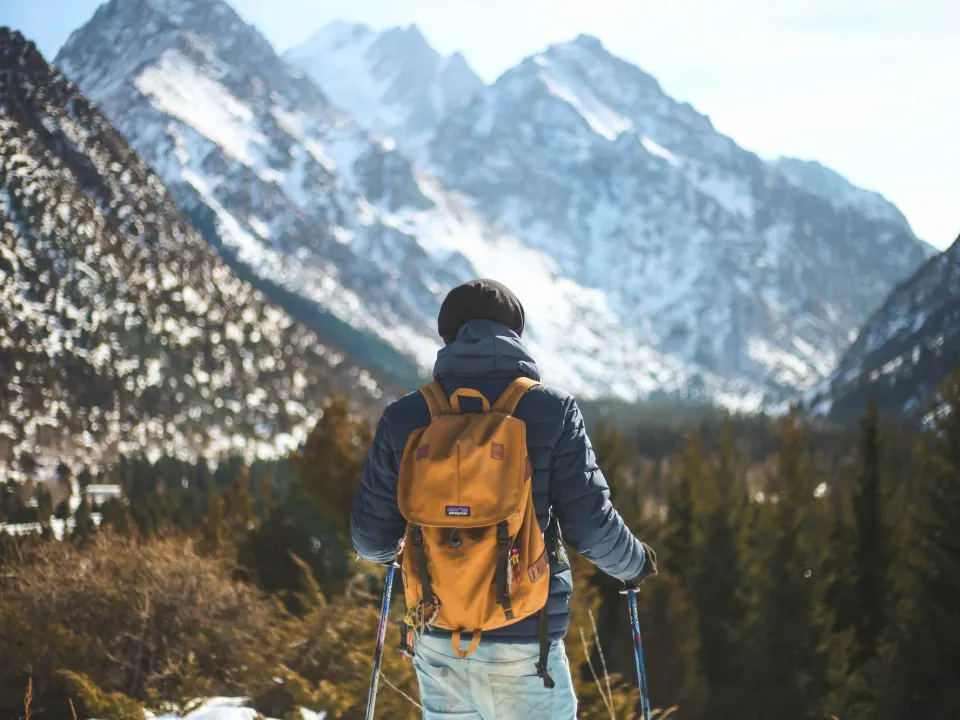
Pick a school or hiking pack with two shoulder straps. One thin fashion strap will twist. A waist strap helps if you have one.
Start empty. Practise eight slow squats. Then add two or three thick paperbacks. You can add more next week.
Stand with the feet about hip to shoulder width. Toes can turn out a little. Brace the midriff. Sit the hips back as if you were lowering to a dining chair. Keep the heels down. Rise by pushing the floor away. Do not bounce at the bottom.
Depth is personal. Many people feel fine when the thighs are roughly parallel with the floor. Others need a shallower sit, especially if the knees complain. A pain-free range that you can repeat is more useful than a deep squat you cannot control.
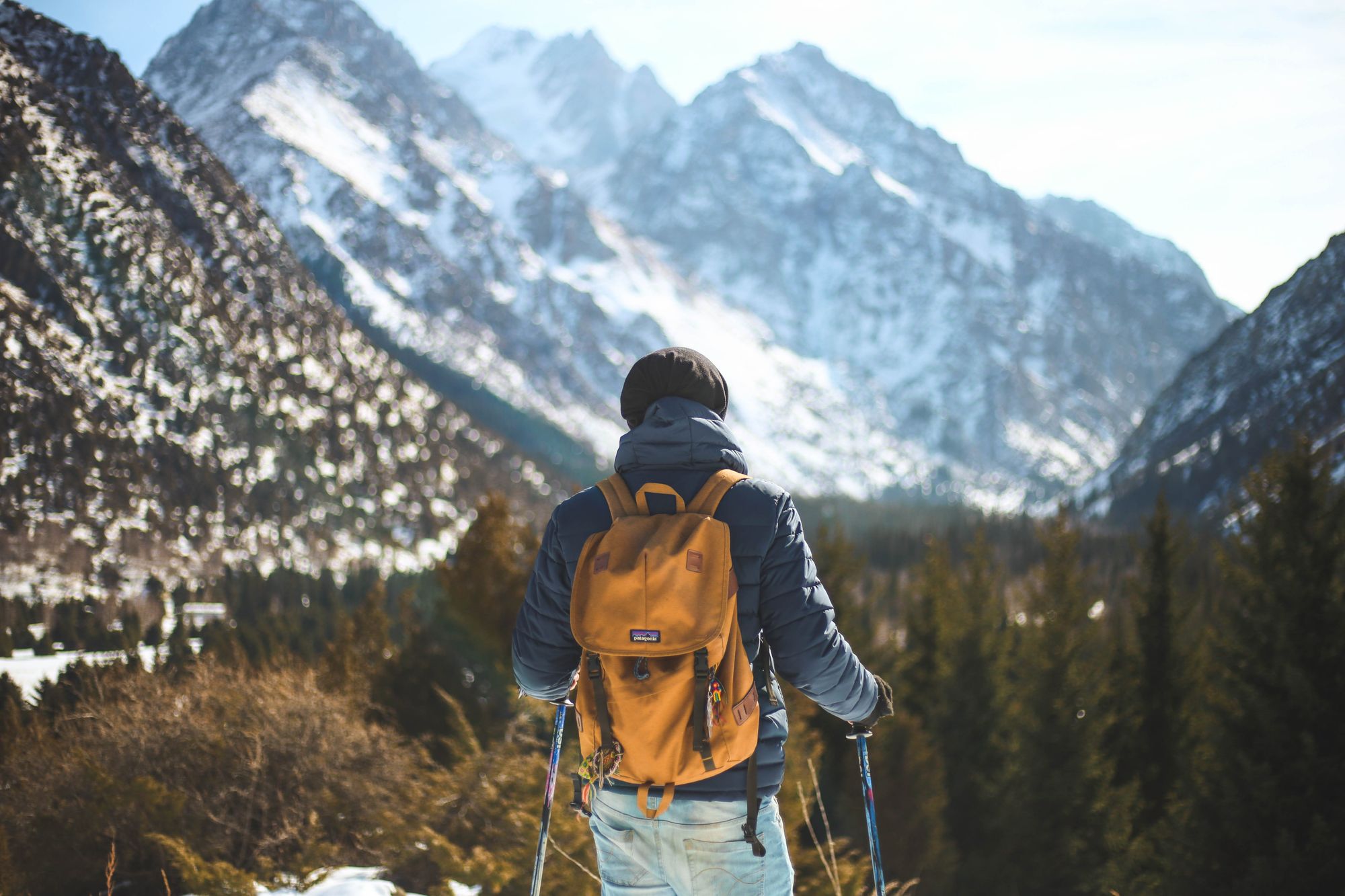
If the pack rides up, tighten the shoulder straps. If it still slides, take it off and hug it to the chest. That front-loaded version is a fair swap. It also makes the torso work a little more.
A simple backpack squat session
Warm up for four minutes. March on the spot. Circle the hips. Do eight empty sit-to-stands from a chair. Then put the pack on. Rehearse two slow reps before you count a working set.
Choose a load you could squat for about ten tidy reps, with two reps still in reserve. If the last reps need a forward lurch, take books out. ACSM notes that regular resistance work is the useful health step. A rucksack counts.
| Item | Easier start | Once the squat is smooth |
|---|---|---|
| Load | Empty pack, then a few books | Even stack you can still control |
| Sets | 2 | 3 |
| Reps per set | 8 to 10 | 8 to 12 |
| Rest between sets | 90 seconds | 60 to 120 seconds |
| Days each week | 2, not back to back | 2, still not back to back |
| If it feels light | Add 2 slow reps | Add one book, then drop back to 8 reps |
| If it feels heavy | Stop at 6 clean reps | Remove books or squat to a chair |
Place the squat near the start of a lower-body block. Follow it with a hip hinge, such as a backpack Romanian deadlift with a light load, or a split squat with the rear foot on the floor. A no-equipment full-body home workout can fill the rest of the session if the pack work is new.
Note the number of books and the reps. When 12 reps feel steady, add a little load and return to eight reps. Slow lowering is another step. Those options sit with progressive overload without heavier weights.
If you later buy a band, a resistance-band full-body session can add a pull on the same day. Keep a rest day after a hard squat session.
Quiet rooms, common faults and safer swaps
Heels that lift often mean the load is too far forward. Shorten the depth. Hold a doorframe for balance if you need it. Knees that cave in need a lighter pack.
A rounded upper back can mean the pack is too heavy or the straps are loose. Stand tall before you sit. Do not bounce out of the bottom.
Do not fill the pack with glass, a laptop, or a camera. Do not squat on a rug that slides. Shoes are better on a hard kitchen floor. There is no jump, so the move stays quiet if you lower with control.
Who should skip or adapt the squat
If you have been told to limit squatting after surgery, wait for personal advice. The same applies during late pregnancy, or if a knee swells, locks, or gives way. A sit-to-stand to a higher chair is a fair swap.
Stop for chest pain, faintness, unusual breathlessness, or pain that shoots down a leg. Call 999 in the UK or 911 in the US if those symptoms are sudden.
A backpack squat is not a treatment for knee or back pain. Choose a depth you can repeat without sharp pain.
Loading a backpack without wrecking form
Place soft weight (books wrapped in clothing) low and even in the pack. Wear both straps snug. Start with a load that allows 3×8 quiet squats to your usual depth. If heels rise or the torso tips hard, empty some books.
Progression steps
Master bodyweight tempo squats first. Add the pack, then add a pause above depth, then small load increases. Keep one bodyweight set at the end as a technique reminder.
When bags are the wrong tool
Sharp pain, poor balance, or a pack that swings means return to bodyweight or goblet a single sturdy household object held at the chest. Shopping bags as suitcase carries are better for gait loading than for heavy squats if handles dig in.
Session notes specific to backpack squat
Before you repeat backpack squat, decide the exact surface, footwear and support object you will use. Write the first set’s intended reps or seconds on paper. After the session, record only what changed: a deeper controlled squat, a quieter footfall, a longer wall-sit, or a press-up incline that felt more stable. Those notes beat vague intentions to ‘train harder’.
If a joint feels sharper during backpack squat than muscularly tired, shrink range or choose the regression described earlier. Home training should leave you able to climb stairs and sleep that night. Seek GP or physiotherapy advice for pain that lingers, swells, or follows a fall.
Space hard versions of backpack squat so similar patterns are not hammered on back-to-back days. A walk, easy mobility, or an upper-body focus can fill the gap while tissues adapt.
Load examples using household items
Start with 3–6 kg of books packed low and even — roughly two large textbooks wrapped in a towel. Next step might be 8–10 kg if form stays quiet. Soft items beat rattling bottles. Wear the pack high enough that it does not bounce on the lumbar spine each rep.
Test every new load with a set of five bodyweight squats first, then five loaded. If depth shortens dramatically under load, empty books until depth matches your unloaded pattern.
One more concrete week of practice
Schedule two appointments with yourself for the skills in this article. Session one copies the doses exactly. Session two adjusts a single cue that felt weakest — depth, quiet footfall, hold time, or screen height — and keeps everything else identical.
After those two sessions, keep what was sustainable. Discard any add-on that only worked once. That is enough experimentation for one week.
Coaching details that make backpack squat more repeatable
Treat backpack squat as a skill with measurable standards, not a vague intention to move more. Before the session, name the surface (mat, wall, stair, chair), the exact footwear, and the first prescribed dose from this article — for example a set count, a hold time, or a work/rest interval. If you cannot state the first dose in one sentence, skim the earlier sections again before you start the clock.
During the session, use a simple quality gate: the last two repetitions or the last ten seconds should still resemble the first. When they do not, end the set, rest, and resume with a smaller range, more support, or a slower tempo. That gate protects joints and teaches better motor control than grinding ugly reps to hit a round number.
After backpack squat, write three fields only: what you completed, one cue that helped (soft heel, ribs down, quiet landing, longer exhale), and next-morning joint notes if any. Keep the log in the same notebook or notes thread every time. Over a month, you should see either cleaner technique at the same dose or a small planned progression — more seconds, one extra set, a harder leverage — changed one at a time.
Regression ladder when form or comfort slips
- Shorten range — higher wall-sit, shallower squat, shorter dead-bug reach.
- Add support — chair back, wall fingertips, rail on stairs.
- Slow the tempo — three-second lowers beat bouncing out of the bottom.
- Cut volume — drop a set before you add impact or load.
- Swap the pattern — choose the easier variation already named in this article.
Use the ladder for a full week if needed, then retest the standard version of backpack squat. Regression is training, not failure. People who live in flats, share walls, or train around family schedules especially benefit from quiet, supported options that still load muscle.
Safety boundaries worth repeating
Stop for chest pain, faintness, unusual breathlessness, sudden swelling, or neurological symptoms such as progressive numbness or arm/leg weakness. Sharp joint pain that alters your walk the next day deserves clinical advice rather than another video progression. If you are pregnant, postpartum, post-operative, or living with a long-term condition that affects balance, bone health or heart rate response, ask a GP or physiotherapist (US: primary care clinician or physical therapist) how to adapt the doses here.
Place harder versions of backpack squat on non-consecutive days when the same tissues are the limiting factor. Fill gaps with walking or an upper/lower emphasis that does not repeat the same stress. Consistency across weeks matters more than matching a stranger’s circuit density.
Frequently asked questions
How heavy should the backpack be?
Is it better to wear the pack or hug it?
Can I squat every day with a backpack?
What should I put in the pack?
Do I need to squat below parallel?
Sources
- 1. Physical activity guidelines for adults aged 19 to 64
- 2. Adult Activity: An Overview
- 3. Physical activity fact sheet
- 4. Why you should do strength training
- 5. Physical Activity Guidelines
Guidance changes. Figures were checked against the sources above at the time of review; always confirm current advice with your GP, pharmacist or clinician.
Image credits
- Photo: Photo by Matheus Bertelli on Pexels / Openverse
- Photo: Photo by SHVETS production on Pexels / Openverse
- Photo: Photo by Simon Migaj on Pexels / Openverse
Was this useful?
Anyone can react — no account needed.
Discussion
0 comments · Name and email only · Email is never shown