
Resistance bands vs dumbbells at home is not a trophy fight. It is a question of what you will pick up on a Tuesday when the sofa is winning. Both can count toward NHS and CDC strength targets if you actually use them.
The debate over resistance bands vs dumbbells often starts in a shopping cart and ends in a corner of the spare room. Bands are light, cheap, and forgiving on joints. Dumbbells feel serious and make load easy to read on the handle. Neither tool builds muscle while it collects dust.
This comparison is for adults who want two honest strength days a week at home. It will not crown a universal winner. It will map trade-offs so you can match kit to your space, budget, and patience for setup.
What NHS and CDC actually ask
NHS guidance for adults aged 19 to 64 still asks for strength work on at least two days a week. Sessions should hit major muscle groups: legs, hips, back, chest, shoulders, and arms. CDC pages mirror that floor for US adults, alongside about 150 minutes of moderate cardio.
Neither agency cares whether the load came from a purple loop or a pair of hex bells. They care that muscles work against resistance through a useful range. A band row and a dumbbell row both count if your last few reps feel genuinely hard, not theatrical.
WHO fact sheets describe the same picture globally: insufficient strength training is common, and simple home options help. Resistance bands vs dumbbells is therefore a logistics question inside a public-health frame, not a bodybuilding contest.
How resistance bands behave in a living room
Elastic bands increase tension as they stretch. That ascending curve can feel easier at the bottom of a squat pattern and harder at the top. For some people that matches joint comfort. For others it feels vague when they try to compare last month to this month.
Long loop bands anchor to feet, a sturdy post, or a rated door anchor if the manufacturer allows it. Tube bands with handles suit presses and rows but need care: do not stand on plastic handles unless the instructions say you can. Our resistance band full-body home workout keeps anchors and setups conservative on purpose.
Bands pack into a drawer and survive hotel rooms. They also wander under sofas and snap if you store them in direct sun. Check for nicks before each session. A band that looks cloudy or thin at one spot is a band to retire, not to “test” with a max-effort pull.
How dumbbells behave on a mat
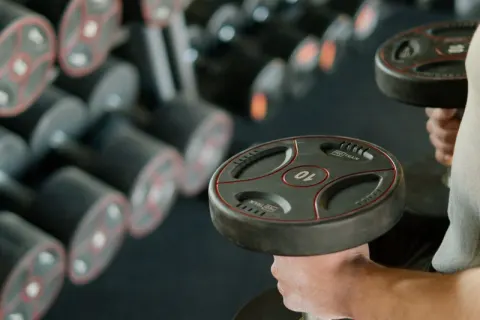
Fixed dumbbells report their mass on the end cap. That number is stable across the rep. Progressive overload becomes arithmetic: add the smallest jump your set allows, often 1 to 2 kg per hand in home sets, or one clean extra rep before you jump.
The cost is space and noise. A pair each at 8, 10, 12, and 14 kg fills a rack fast. Adjustable dumbbells save space but need collars checked every session. Drops on laminate annoy neighbours and can damage floors. A mat and controlled lowering matter more than gym bravado.
Dumbbells suit presses, rows, goblet squats, and Romanian deadlifts without fussing over anchor height. They are less kind to pure rotation work unless you already know curl patterns. For many beginners, a light pair plus a bench or sturdy chair is enough for months.
Resistance bands vs dumbbells
Systematic reviews in sports medicine journals often find bands can produce similar strength gains to free weights when volume and effort match. The practical caveat is effort matching. A loose band curl is not equivalent to a dumbbell curl at RPE 8 just because both moved.
ACSM still describes progression through frequency, intensity, time, type, volume, and progression. Bands and bells are “type” choices. Volume might be sets of 8 to 15 for many home lifters. Intensity is how close you are to failure on the last rep, not the colour of the band.
If your goal is visible load on paper, dumbbells win. If your goal is training while travelling or nursing a cautious knee, bands win. The progressive overload without weights guide shows band tricks: shorter rest, slower eccentrics, and harder band thickness—not endless rep counting without tension.
| Factor | Resistance bands | Dumbbells |
|---|---|---|
| Upfront cost (typical) | Low: one set of loops | Medium to high: multiple pairs or adjustables |
| Space | Drawer-sized | Rack or corner footprint |
| Load clarity | Tension feel; band level labels vary by brand | Printed weight on bell |
| Joint feel | Often gentler at bottom range | Stable; depends on technique |
| Progression levers | Thicker band, longer stretch, tempo, reps | Smallest plate jump or rep ladder |
| Travel | Excellent | Impractical beyond one light pair |
Joint comfort and common home mistakes
Knees and shoulders do not read Instagram captions. They read angles and speed. Bands can reduce shear at the bottom of a squat if you use them as assistance, or increase work at lockout if you choke up tension. Dumbbells reward stable foot pressure and a controlled descent.
A common band mistake is slack at the start. If the band hangs loose for the first third of a row, your working reps are fewer than you think. Step back until light tension exists at the start position. A common dumbbell mistake is swinging: momentum hides weak points and irritates backs.
Neither tool fixes pain that persists beyond ordinary muscle soreness. NHS musculoskeletal advice still favours gradual load and form checks. If a movement pinches every week, swap the pattern, reduce load, or ask a physiotherapist. Buying the other tool rarely fixes a technique problem.
When bands are the smarter default
Choose bands first if you live in a flat with thin walls, if you travel weekly, or if you are rebuilding confidence after time off. Bands also suit people who want pulling work without buying a bench immediately: anchor rows, face pulls, and pull-aparts are cheap wins.
They also pair well with a no-equipment full-body home workout on busy weeks. Bands add load to split squats and glute bridges when bodyweight alone feels too easy but dumbbells are not in the budget yet.
Older adults and people returning from illness sometimes prefer bands because they can stop a rep by letting tension fall. That is not an excuse to snap bands toward your face. Control the return path every time.
When dumbbells are the smarter default
Choose dumbbells if you like seeing numbers climb and you have space for a small rack. They excel for goblet squats, floor press, and single-arm rows where band anchor height would otherwise change every week.
They also suit people who get bored tuning band tension. A dumbbell session can be repetitive in a good way: same load, same rest, honest comparison. Pair them with a beginner bodyweight workout plan for weeks when joints want fewer bells and more floor work.
If you already own bands, adding one moderate dumbbell pair often costs less than a full rack. Many home lifters run bands for pulls and dumbbells for presses and squats. That hybrid is valid if it survives two months of calendar reality.
Building a simple week with either tool
Plan two sessions, not six. Day A might be squat pattern, push, and core. Day B might be hinge, pull, and carry or farmer hold. Rest at least one day between if muscles feel heavy. CDC and NHS floors are met by two days, not by seven heroic intentions.
Each session needs three to five exercises, two to four sets, and eight to fifteen reps on most moves. Rest sixty to ninety seconds if the goal is general strength. Longer rest is fine for heavy dumbbell sets. Shorter rest with bands can raise heart rate but do not turn every day into a breathless circuit unless you want that specifically.
Write loads or band colours in a notebook. A four-week glance beats a memory of “that felt okay”. If nothing progresses, change one variable: thicker band, one extra rep, or the smallest dumbbell jump. Five changes at once make the next month unreadable.
Safety, floors, and anchors
Anchor bands to structural points, not wardrobe doors with hollow cores. Door anchors belong only where manufacturers rate them. Loop bands under feet need flat shoes and a mat so they do not slip. Never release tension suddenly toward your head.
Dumbbells need collars on adjustables, clear space around you, and a plan if a rep fails. For presses, learn to bail safely to the floor or use a spotter for heavy attempts. Home lifters rarely need max singles. Submax sets build most general strength with less drama.
American Heart Association pages remind adults that muscle work supports heart health alongside walks. That benefit assumes safe sessions. Chest pain, unusual breathlessness, or faintness during lifting warrants urgent care, not another set.
Shopping without filling a garage
A sensible band kit might be one light and one medium loop plus a door anchor if allowed. Test tension with rows before you buy a “heavy” band you cannot stretch. A sensible dumbbell start might be one pair that lets you press ten reps with two left in the tank, plus a second pair one step heavier for lower-body moves.
Second-hand markets are fine if hex ends are not cracked and spinners are not wobbly. Avoid mystery cement-filled bells. For bands, avoid sun-faded bundles at car-boot sales. Your knees and teeth are not the place to gamble on elastic age.
Resistance bands vs dumbbells debates on forums rarely mention storage humidity or pet chew risk. Your real comparison should include who else uses the room and how fast you can start a session after work.
Mixing both over a year
Seasoned home trainers often oscillate. Bands dominate holiday months. Dumbbells return when life stabilises. Some keep bands for warm-up pull-aparts and dumbbells for main lifts. The pattern that matters is two days a week, most weeks, with effort that would honestly feel hard on rep eight of ten.
If you switch tools, expect a one-week learning curve. Band squats do not feel like goblet squats on day one. Note the swap in your log so you do not call a tool change a strength loss. Compare like with like after three similar exposures.
Children and pets should not share the lifting zone mid-set. NHS injury prevention messaging is boring because it works: clear space, good light, and shoes that grip beat any brand colour.
What coaches quietly recommend
Good coaches ask about schedule before kit. If your only free window is after the children sleep, bands may win because setup is quiet. If you wake early and want clear numbers in a log, dumbbells may win because you can repeat the same load half-asleep.
They also ask about grip and wrist comfort. Thick-handled dumbbells bother some people on curls. Bands with narrow handles can dig into palms unless you choke grip higher on fabric. Gym chalk is messy at home; cloth grips or gloves are personal taste, not magic.
Resistance bands vs dumbbells threads online love maximalist setups. Your coach voice should whisper: two days, full range, last reps honest. Everything else is decoration until that habit exists.
Renters, neighbours, and noise
Band sessions are quieter than dropping metal, which matters in flats with thin ceilings. Controlled eccentrics still thump if you jump landings. Dumbbell goblet squats to a box reduce impact. Tell neighbours you are training at seven pm, not midnight, if walls are shared.
Insurance and lease rules rarely ban bands; some leases mention mounted racks. Free-standing shelves for bells avoid drilling. When in doubt, bands and a door anchor rated by the maker keep deposit arguments smaller.
Record one short video of your form each month, bands or bells. Comparison beats memory when you wonder which tool felt smoother on shoulders.
Resistance bands vs dumbbells is won by the tool that still lives in reach on a rainy Thursday, not the one that looked best in a review video.
Resistance bands dumbbells: room sessions
Resistance bands vs dumbbells stops being theoretical when you spend four nights in a hotel. A loop band in the side pocket of a carry-on beats hunting a dumbbell rack you will never visit. Anchor rows to a sturdy desk leg only if the furniture is fixed; many hotel desks slide on carpet.
Dumbbells appear in some business hotels, but weight jumps are random. Bands let you hit push, pull, and squat patterns without guessing whether twelve kilograms is too light or twenty is too heavy for a jet-lagged shoulder.
Keep sessions to twenty minutes so travel fatigue does not become an excuse to skip entirely. Two short band circuits still count toward the NHS and CDC two-day strength floor when effort on the last reps is honest.
Recording progress when bands and bells mix
Write band colour, anchor height, and approximate stretch length for rows and presses. Write dumbbell weight and reps for goblet squats and floor press. Mixed logs look messy but beat memory when you wonder why shoulders felt fine last month.
Review four weeks at a time. If band tension rose or dumbbell load ticked up at similar effort, progress happened even without a single unified number on an app dashboard.
A four-week home experiment you can actually finish
Pick one path for four weeks: bands only, dumbbells only, or a mixed kit. Keep the same six moves. Log the band colour or the dumbbell load, the reps you completed, and how hard the last clean rep felt. Do not change the plan mid-week because a video looked clever.
At the end of week four, ask three questions. Did you train at least twice most weeks? Did the last sets still look tidy? Did the band or the dumbbell demand a little more than week one? If attendance failed, the tool was not the problem. If attendance held and the demand rose a little, keep that kit for another month before you buy anything else.
Shared flats favour quiet bands in the evening. Houses with a spare corner often favour dumbbells you can park under a chair. Either choice beats a half-used rack of gadgets. Progress is the receipt, not the receipt from the shop.
Putting it into a normal week
Write the plan on a calendar you already open. Name the days, the minutes, and the place. A vague intention to “move more” or “sleep earlier” collapses when work runs late. A named block survives better, even when it shrinks to twenty minutes.
Review once a week, not every hour. Ask what you actually did, what blocked you, and what one change would make next week easier. Keep the change small enough that you can repeat it when energy is average, not only when motivation is high.
Share the plan with one person if accountability helps, or keep a private note if privacy helps. The method matters less than the return visit. Health habits grow from returns, not from a perfect first attempt.
If pain, dizziness, chest pressure, or unexplained breathlessness shows up, stop and seek urgent care. General guides cannot examine you. Personal medical advice still belongs with a clinician who knows your history.
Use UK and US public guidance as the floor, then personalise with professional help when you have a condition, take medicines, or are returning from injury. Modest consistency beats dramatic overhauls that last four days.
Frequently asked questions
Are resistance bands enough to replace a gym?
Can beginners start with dumbbells only?
Do bands build muscle as well as dumbbells?
How many band levels do I need?
What if I have both but limited time?
Should I feel sore after every session?
Sources
- 1. Physical activity guidelines for adults aged 19 to 64
- 2. Adult physical activity guidelines
- 3. Physical activity guidelines
- 4. Physical activity fact sheet
- 5. AHA recommendations for physical activity in adults
Guidance changes. Figures were checked against the sources above at the time of review; always confirm current advice with your GP, pharmacist or clinician.
Was this useful?
Anyone can react — no account needed.



Discussion
0 comments · Name and email only · Email is never shown