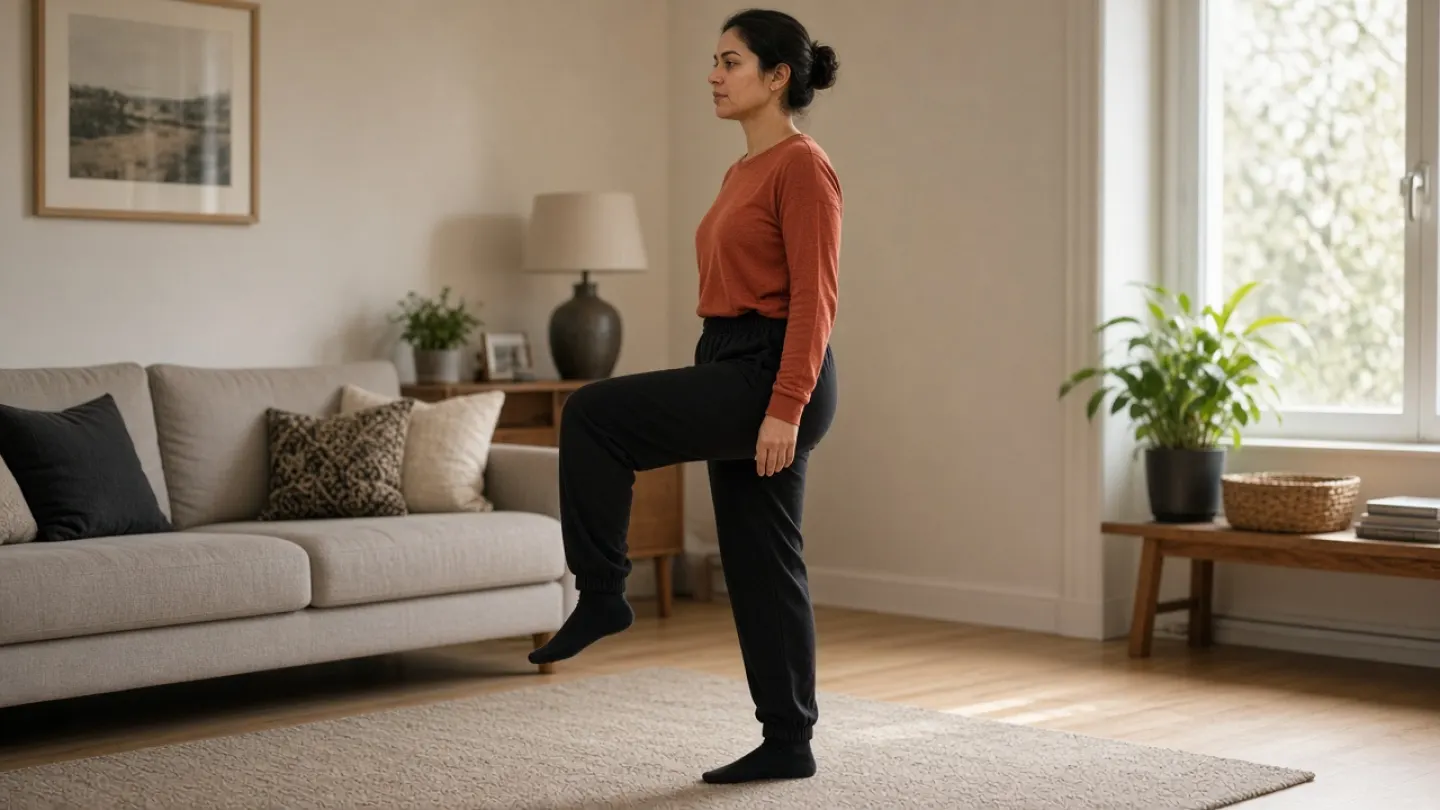
Stretching vs mobility is not a contest with one winner. Flexibility is how far a joint can go. Mobility is how well you control that range. This is a source-reviewed guide, not a hands-on lab test.
Trainers, apps, and social clips use stretching and mobility as if they were twins. They overlap. They are not the same measurement. This page keeps the split honest and names what reviews actually measured.
If you came here from a product page, keep shopping language in its box. The best stretching apps hub lists tools. Reviews of Pliability or GOWOD describe features. They do not rewrite physiology.
What stretching vs mobility means in plain language
Flexibility is the range a joint can travel when tissue is taken toward a stretch. ACSM’s 2023 shareable note in ACSM’s Health & Fitness Journal frames flexibility as ligaments, muscle, and tendon allowing passive range. Genetics and body shape still set a ceiling.
Mobility is using that range on purpose. You own the end of a squat, a reach overhead, or a hip turn while you balance. The same journal note lists cat-cow, bird dog, and ankle circles as mobility examples. Those are movements, not long holds.
You can be flexible and still wobbly. You can be strong in a short range and still stiff. Stretching vs mobility debates often hide that split.
What reviewers and guidelines actually measure
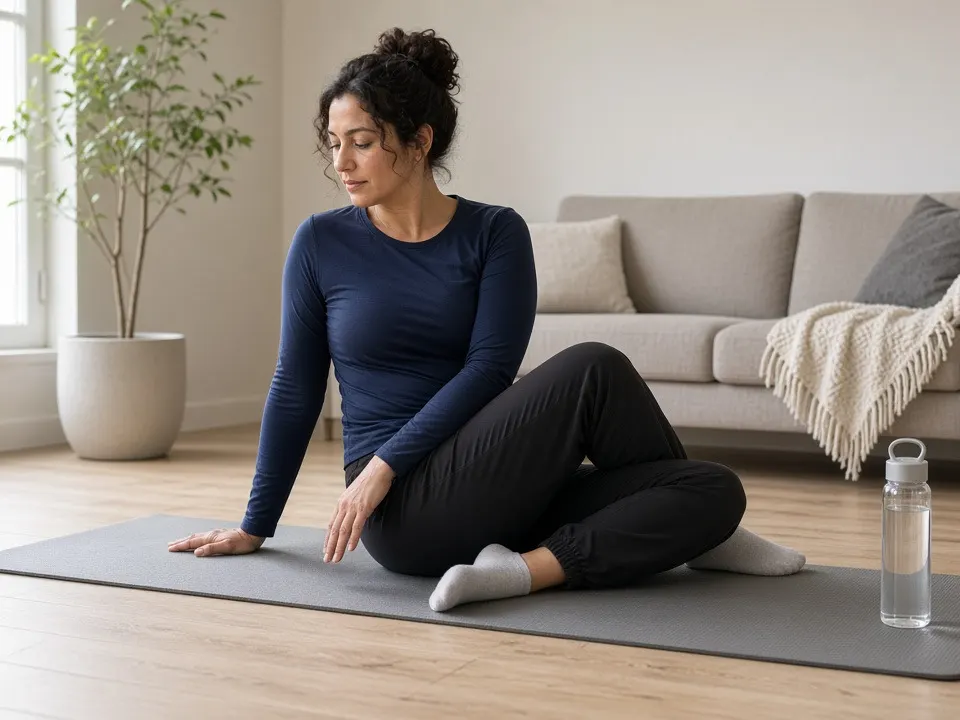
Lab papers usually measure angles. Sit-and-reach, straight-leg raise, and goniometer scores are flexibility tests. They do not prove you can lunge under load.
Performance papers sometimes add jumps, sprints, or balance. Those are closer to mobility or sport skill. They still do not diagnose your hip.
Public-health pages stay broader. NHS flexibility exercises (reviewed 20 November 2023) aim to “improve your health and mobility” with simple home moves. CDC adult activity guidance still centres aerobic minutes and muscle-strengthening days. Range work supports those habits. It does not replace them.
| Question or claim | Source | Study type | Population | Comparator | Outcome | Key finding | Limitation | Applicability |
|---|---|---|---|---|---|---|---|---|
| Flexibility is passive range; mobility is usable range | ACSM Health & Fitness Journal shareable resource, Nov/Dec 2023 | Education note, not a trial | General fitness readers | None | Definitions and ACSM flexibility dose | Lists 2–3 days a week, daily preferred; 10–30 s holds; 30–60 s for older adults | Not a systematic review | Useful language, not a personal plan |
| Stretch training raises range of motion | Konrad et al., Journal of Sport and Health Science, 2023 | Systematic review and meta-analysis | Healthy participants; 77 studies, 186 effect sizes | Control groups in included trials | Joint ROM after ≥2 weeks | Moderate overall ROM gain; static and PNF larger than ballistic/dynamic | High heterogeneity; mixed joints and doses | Healthy adults chasing range, not patients |
| Weekly frequency drives extra ROM | Same Konrad 2023 paper; Thomas et al., Int J Sports Med, 2018 | Meta-analysis vs earlier quantitative synthesis | Healthy stretch-training samples | Different weekly doses across studies | ROM change | Thomas linked ≥5 days and ≥5 min per week with gains; Konrad found no clear frequency dose-response | Reviews disagree on dose | Do not treat either number as a law |
| Home flexibility work supports everyday movement | NHS flexibility exercises, reviewed 20 Nov 2023 | Public guidance | General adult readers | None | Practical home routine | Gentle moves at least twice a week, built up slowly | Not an outcome trial | Desk-stiff adults, not rehab protocols |
| Stretching prevents injury | Behm and Chaouachi, Eur J Appl Physiol, 2011 (narrative review) | Narrative review of performance and injury papers | Mostly young, trained groups in cited trials | Various | Injury and performance | Authors note stretching has not been shown to prevent injury in a simple way | Older mixed literature | Do not stretch only “to stay safe” |
Why apps sell both words
Product copy likes “mobility” because it sounds athletic. “Stretching” sounds like a cool-down. Many libraries still deliver long static holds. That is flexibility work with a nicer label.
Pliability leans on timed holds and recovery flows. GOWOD scores positions and then assigns holds or activations. StretchIt sells flexibility progressions. Bend is mostly illustrated static timers. None of those store pages replace a strength plan.
If a session ends with you stronger at the new angle — a slow squat, a controlled lift-off — you trained mobility. If you only hung out at end range and stood up wobbly, you stretched.
Static holds versus moving drills
Static stretching parks you at a mild stretch. ACSM’s 2011 position stand on exercise quantity and quality recommends 10–30 second holds for most adults, two to four repeats, aiming for about 60 seconds per exercise. Older adults may hold 30–60 seconds.
Dynamic drills move you through range. Leg swings, inchworms, and easy lunges belong here. Konrad’s 2023 analysis found dynamic and ballistic stretch training produced smaller long-term ROM gains than static or PNF work. That does not make dynamic work useless. It makes it a different tool, often used before sport.
Behm and Chaouachi (2011) summarised acute effects. Long static stretches before power work can blunt strength and jump tests. Dynamic work is often preferred in a warm-up. The size of the dip depends on how long you hold and what you do next. We do not treat that review as a ban on all static work.
What stretching vs mobility does not settle
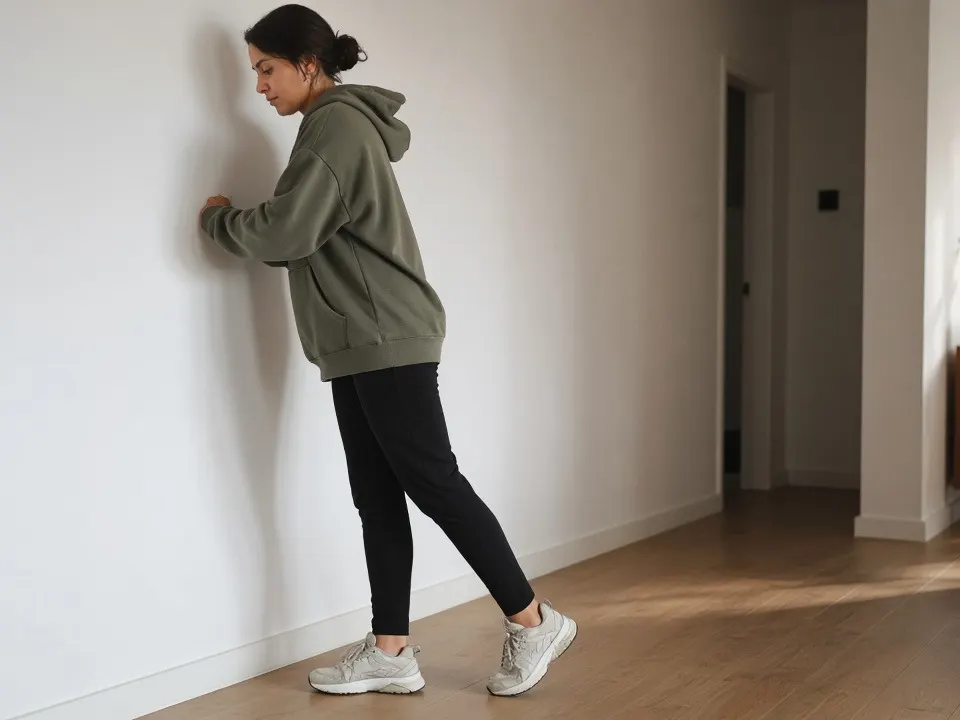
Range is not a moral score. Some sports want stiffness. Some bodies will never do a split. Extra range without control can feel sloppy, not “healed.”
Soreness is a separate question. The 2011 Cochrane review by Herbert and colleagues found stretching before or after exercise did not produce clinically important drops in delayed-onset muscle soreness in healthy adults. Do not stretch only to erase tomorrow’s ache.
Pain that wakes you, travels down a limb, or follows a fall is not a mobility puzzle. It is a clinical one.
A practical way to use both
Warm up with easy movement. Lift or walk. Then use static holds if you still want more range. That order matches how many coaches read the acute-performance papers.
On rest days, a short NHS-style flexibility set is enough for many people. Pair it with a no-equipment full-body home workout later in the week so new range meets some strength.
Track one real task: sitting to the floor, reaching a high shelf, or squatting to a chair. Angles on an app test are optional. The task is the point.
When the evidence is thin
We lack long trials that enrol desk workers, then report both sit-and-reach and a loaded squat after a named consumer app. Brand mobility scores are not clinical outcomes.
Sex and age effects appear in Konrad’s subgroups. Women showed larger ROM effect sizes in that analysis. That is not a reason to push harder. It is a reminder that averages hide people.
PNF stretching can match or beat static work for range. It often needs a partner or a clear contract-relax cue. Home apps rarely teach it well. Skip it unless you know the method.
Frequently asked questions
Is mobility just stretching with a new name?
Should I stretch or do mobility work first?
Can stretching replace strength training?
Do mobility apps measure mobility?
Is more range always better?
Where should I start if I am stiff from sitting?
Sources
- 1. Flexibility versus mobility (shareable resource)
- 2. Chronic effects of stretching on range of motion
- 3. Stretching to prevent or reduce muscle soreness after exercise
- 4. Flexibility exercises
- 5. Adult physical activity guidelines
Guidance changes. Figures were checked against the sources above at the time of review; always confirm current advice with your GP, pharmacist or clinician.
Image credits
- Photo: Editorial photograph / Openverse
- Photo: Photo by Shixart1985 / Wikimedia Commons / Openverse
Was this useful?
Anyone can react — no account needed.


Discussion
0 comments · Name and email only · Email is never shown