
Cooking for one is a small pan, a labelled box, and a plan for the second plate. It is not a sad desk lunch by default. It is food you will finish before it spoils.
Family packs assume four people. You are feeding yourself. Cooking for one goes wrong when a whole chicken sits until Friday, or when a bag of salad collapses by Tuesday. Waste is a budget leak. It can also be a food-safety leak.
This how-to uses NHS Eatwell cues and UK and US leftover rules. It will not promise a perfect meal-prep Sunday. It will help you shop smaller, freeze smarter, and still sit down to a proper plate.
Why cooking for one so often fills the bin
Cooking for one looks like a two-portion pan, not a banquet. Make tonight’s dinner plus one box. Stop there if that is what you will eat. A week of identical tubs often ends in the bin.
A plate still needs a starchy base, some protein and some veg. NHS Eatwell wants that mix across the day, not in every bite. Pasta and peas. Rice and eggs. A baked potato and beans. Those are complete enough.
Flavour keeps leftovers from feeling like punishment. Lemon, herbs, chilli flakes or a spoon of yoghurt at the table cost little. A pale box of plain chicken is why people order a pizza. Our Mediterranean diet evidence guide is a pattern of plants, pulses and oil, not a restaurant bill.
Eat at a table when you can. A proper plate beats grazing from the pan. You will notice portions. You will also notice if the food actually tastes good enough to repeat tomorrow.
Keep a drink beside the plate. Water, tea or milk all count toward NHS fluid advice of about six to eight cups a day. Our everyday hydration guide is the other half of a dry leftover rice box.
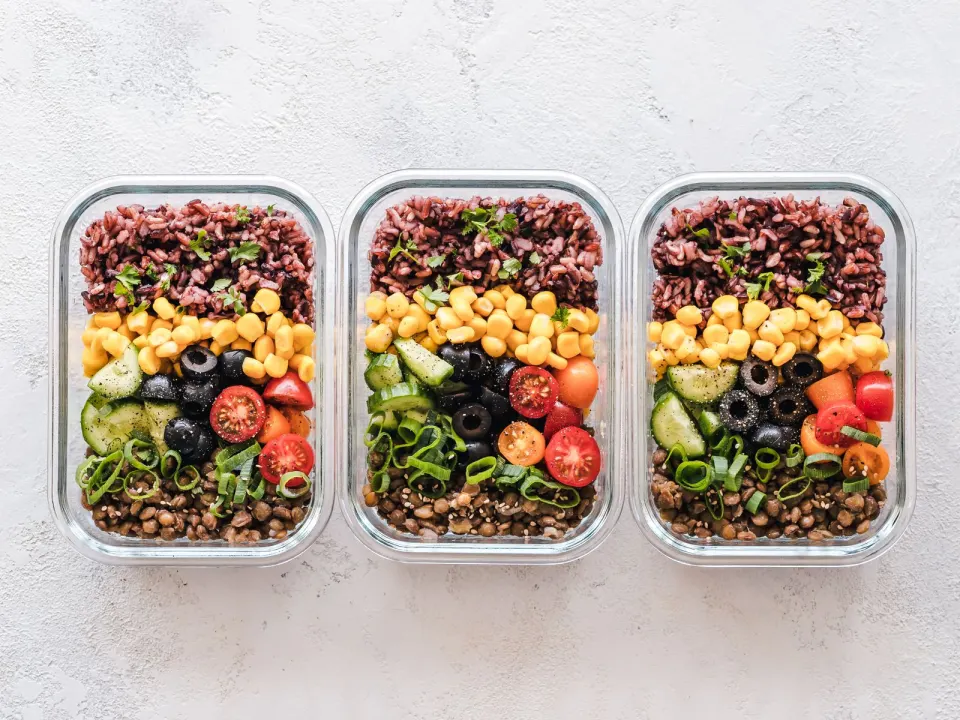
Cook a second portion on purpose
Loose fruit can beat a large net you will not finish. A small tin can beat a catering jar. Look at the price per 100g or per ounce. That is the fair fight.
Frozen vegetables are the solo shopper’s friend. You pour what you need. NHS counts them toward 5 A Day. Salad bags are a trap if you live alone and work late. Buy leaves the day you will eat them.
Meat and fish freeze well in small packs. Split a pack of chicken thighs on the day you buy them. Wrap each portion. Date it. Thaw in the fridge, not on the counter. GOV.UK leftover and freeze pages ask you to defrost in the fridge and to cook until steaming hot.
Bread freezes. So do cooked beans. A supermarket “meal for one” can be useful. It can also be high in salt. Our food label guide shows the salt line so a lonely ready meal is a choice, not a guess.
Ultra-processed snacks fill the gap when cooking feels pointless. They are easy. They are not the whole week. Our ultra-processed foods guide explains why a labelled leftover stew is still a different job from a bag of crisps.
| Step | United Kingdom | United States |
|---|---|---|
| Time at room temperature | Cool, then fridge within 1–2 hours | Fridge within 2 hours (1 hour if above 90°F) |
| How to cool a pan | Split into smaller, shallow boxes | Shallow containers so food chills faster |
| Fridge life | Eat leftovers within 2 days, or freeze | Often 3–4 days at 40°F or below |
| Reheat | Steaming hot all the way through | 165°F / steaming hot throughout |
| Rice leftovers | Cool fast; eat the next day; reheat once | Fridge promptly; reheat until steaming hot |
Shop small without paying a single-person tax
A soup, a dal or a tomato sauce freezes well. Cook a pot. Cool it. Pour it into single boxes or bags. Flatten bags so they thaw faster. Label the date. Future you will not remember “that Tuesday pan”.
Leave a little headspace in a tub. Food expands as it freezes. Thaw in the fridge overnight if you can. Microwave on a plate if you must, then cook until steaming hot. Do not refreeze thawed leftovers unless you cooked them again until hot, and even then UK advice is cautious. When in doubt, eat or bin.
Not everything freezes. Cucumber, lettuce and yoghurt sauces turn sad. Roast carrots, cooked beans, chilli and pasta sauce hold up. Cook those. Buy the fresh bits on the day.
A muffin tin can portion soup or sauce. Freeze the cups. Pop them into a bag. That is cooking for one without a scale of industrial meal prep. It is also how you stop a family recipe from becoming waste.
WHO healthy-diet advice still wants a mix of veg, pulses and unsaturated fats. Freezing does not cancel that. It just parks tonight’s extra for Thursday.
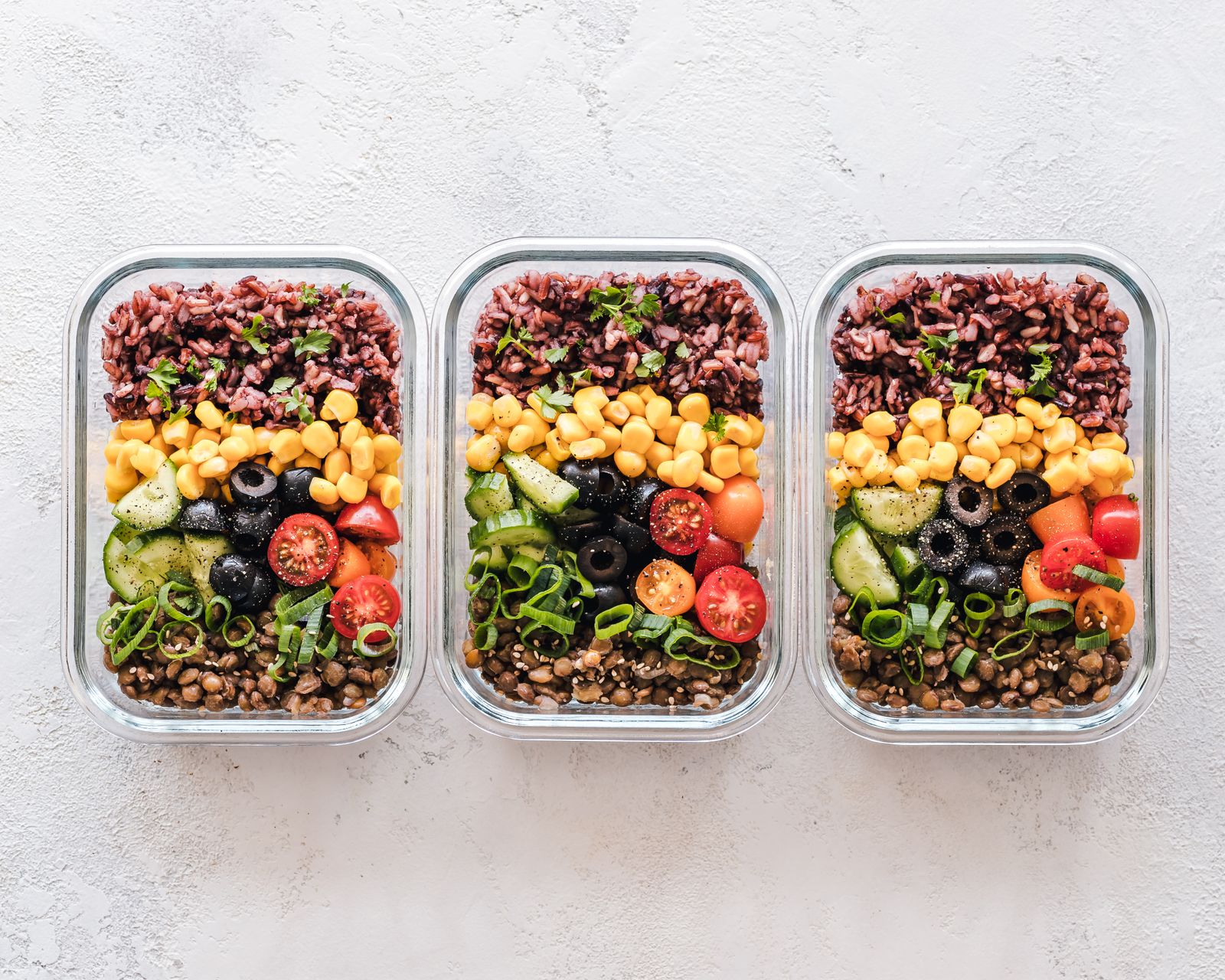
Keep rice, meat and fridge shelves honest
Texture is the fix. Add a handful of leaves, a squeeze of lemon, or leftover roast veg at the table. The batch is the base. The plate can still change.
Keep sauces on the side. A lake of dressing turns a box soggy by noon. Pack yoghurt, salsa or mustard in a small pot. Stir it through when you eat.
Sit down, even for fifteen minutes. A proper fork and a plate tell your brain it was a meal. Eating over a laptop is how leftovers feel like scraps. You still need the calories. You also need the pause.
If you work away from home, use a cool bag. CDC food-safety pages say perishable food should not sit at room temperature more than two hours. A warm office counts. An ice pack is cheaper than a stomach bug.
Change the starch across the week if you get bored. Rice one night. Potatoes the next. Oats in the morning. Variety is an Eatwell idea, not a luxury.
When a sad desk lunch is a health problem
Living alone can make cooking feel pointless. That is common. It is not a moral failure. A simple repeating plate is still a win. Frozen veg and eggs are still a dinner.
If you have no appetite for days, or if you skip meals because cooking feels impossible, speak to a GP. Low mood, grief and illness change intake. A leftover chart cannot examine you.
People with a weakened immune system, pregnancy, or kidney disease should follow personal clinical advice on leftovers. The shorter UK fridge window is the cautious default if you are unsure.
Severe vomiting, bloody diarrhoea, or signs of dehydration after leftovers need urgent care. Call 999 in the UK or 911 in the US for a life-threatening emergency. Food poisoning is a clinical issue.
If eating alone slips into a harsh rule book, or into binge–restrict cycles, get help. Beat in the UK and NEDA in the US offer eating-disorder support. This how-to is not a plan for cutting food.
Practical detail that sharpens the advice
Name the meals where cooking for one will show up this week—breakfast, a packed lunch, and one dinner you already know how to cook. Specificity beats vague intention. Keep fruit, vegetables and a protein food visible at those meals.
Worked examples that make sense of cooking for one
Start from the article’s own emphasis on cooking for one. Translate it into one breakfast, one lunch and one dinner you could eat this week without speciality shops. If a tip only works with unlimited time or expensive powders, rewrite it until it fits a normal weekday.
Key ideas already flagged in this piece include: Cooking for one works when you buy what you will finish, then freeze or box the extra on day one. NHS 5 A Day still uses about 80g of fruit or veg as one adult portion. Frozen and tinned both count. Cool leftovers and fridge them within one to two hours. Split big pans into shallow boxes so they chill.. Keep those ideas visible on a note on the fridge or in your phone groceries list.
UK and US readers may see different units on packs (kJ vs kcal, salt vs sodium, ml vs fl oz). Convert once for the products you buy often, then stop redoing arithmetic at every meal while you practise cooking for one.
Common pitfalls specific to this topic
Common pitfalls include all-or-nothing restarts, buying supplements before fixing drinks and takeaway frequency, and copying athletes’ intakes without matching their training. Adjust one food environment cue at a time while you refine cooking for one.
UK and US context for everyday decisions
UK and US guidance often agree on patterns (more plants, varied protein foods, attention to salt, sugar and saturated fat) even when units differ. Use local labels and local clinical services when personalising cooking for one.
Extra practical checks worth doing once
Name the meals where cooking for one will show up this week—breakfast, a packed lunch, and one dinner you already know how to cook. Specificity beats vague intention. Keep fruit, vegetables and a protein food visible at those meals.
Frequently asked questions
How many portions should I cook at once?
Can I eat leftover dinner cold for lunch?
What should I do with half an onion or a tin of tomatoes?
Is a supermarket meal for one a failure?
How do I stop leftovers tasting dull?
Sources
- 1. The Eatwell Guide
- 2. 5 A Day: what counts?
- 3. How to chill, freeze and defrost food safely
- 4. Preventing food poisoning
- 5. Healthy diet
- 6. Dietary Guidelines for Americans
- 7. Nutrition
Guidance changes. Figures were checked against the sources above at the time of review; always confirm current advice with your GP, pharmacist or clinician.
Image credits
- Photo: Photo by Anna Avilova on Pexels / Openverse
- Photo: Photo by Karolina Grabowska on Pexels / Openverse
- Photo: Photo by Ella Olsson on Pexels / Openverse
Was this useful?
Anyone can react — no account needed.



Discussion
0 comments · Name and email only · Email is never shown