
Wholegrains swaps are weekday edits, not a new identity. Change the bread, the rice, the pasta or the breakfast box. Leave the rest of the meal familiar.
NHS pages still ask most people to base meals on starchy food and to choose wholegrain or higher-fibre versions where they can. US Dietary Guidelines put it another way: make at least half of your grains whole grains. Neither rule needs a specialist shop. It needs one swap you will repeat.
This how-to keeps wholegrains swaps on a normal plate. It does not promise weight change. It does not scold white toast. It shows what to look for on a label, how much a serving looks like, and when gluten-free or gentler fibres are the better call.
What wholegrains swaps actually change on the plate
A whole grain still has the bran, germ and endosperm. White flour has had the bran and germ milled away. You lose fibre and some vitamins. You keep a softer crumb and a longer shelf life. That is a processing choice, not a moral one.
NHS starchy-food pages say these foods should make up just over a third of what you eat. Potatoes with skins, wholewheat pasta, brown rice and oats sit in that space. The swap is the type of starch, not a command to eat more of it.
US MyPlate uses ounce-equivalents. For many adults on a 2,000 kcal pattern, 6 ounce-equivalents of grains a day is the sketch, with at least half from whole grains. That is three slices of wholemeal bread, or a mix of porridge plus brown rice, not a mountain of pasta.
The Mediterranean diet evidence guide puts grains next to vegetables, pulses and unsaturated oils. Wholegrains swaps work best in that company. A brown loaf with processed meat every day is still a processed-meat habit.
Bread: read the first ingredient, not the crust colour
Wholemeal, whole wheat and whole grain are the useful words. “Brown”, “granary” and “multiseed” can still be mostly white flour with colour or seeds on top. Turn the pack. The first ingredient should be wholemeal wheat flour, whole wheat flour, or another whole grain.
Fibre on the nutrition panel is a better clue than a rustic photo. Some white breads are now higher in fibre. They can be a halfway step if wholemeal feels too dense at first. Sugar and salt still sit on the same label. A seeded loaf can be high in both.
Toast is still toast. Two slices of wholemeal bread with eggs or beans is a meal. Four slices with sweet spread is a different decision. The grain swap does not cancel the rest of the topping.
Wraps and pittas follow the same rule. Look for wholemeal as the first ingredient. A “wheat” wrap in the US is often refined wheat. “Whole wheat” is the phrase you want.
A lunchbox swap is the same loaf. Wholemeal bread with leftover beans or egg is still a sandwich. You changed the grain, not the whole day. That is how wholegrains swaps stick when time is short.
Rice, pasta and the half-cup cue
Half a cup of cooked rice or pasta is one US ounce-equivalent. On a dinner plate that looks like a cupped handful, not a filling-the-bowl mound. NHS Eatwell still wants starchy food to take just over a third of the plate, with vegetables getting plenty of room.
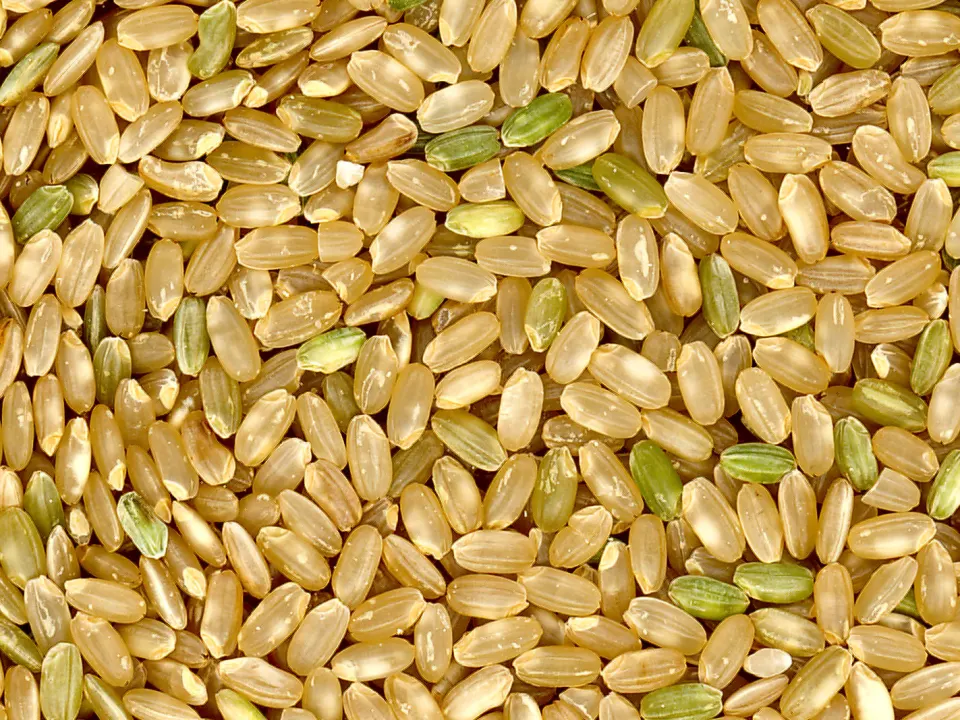
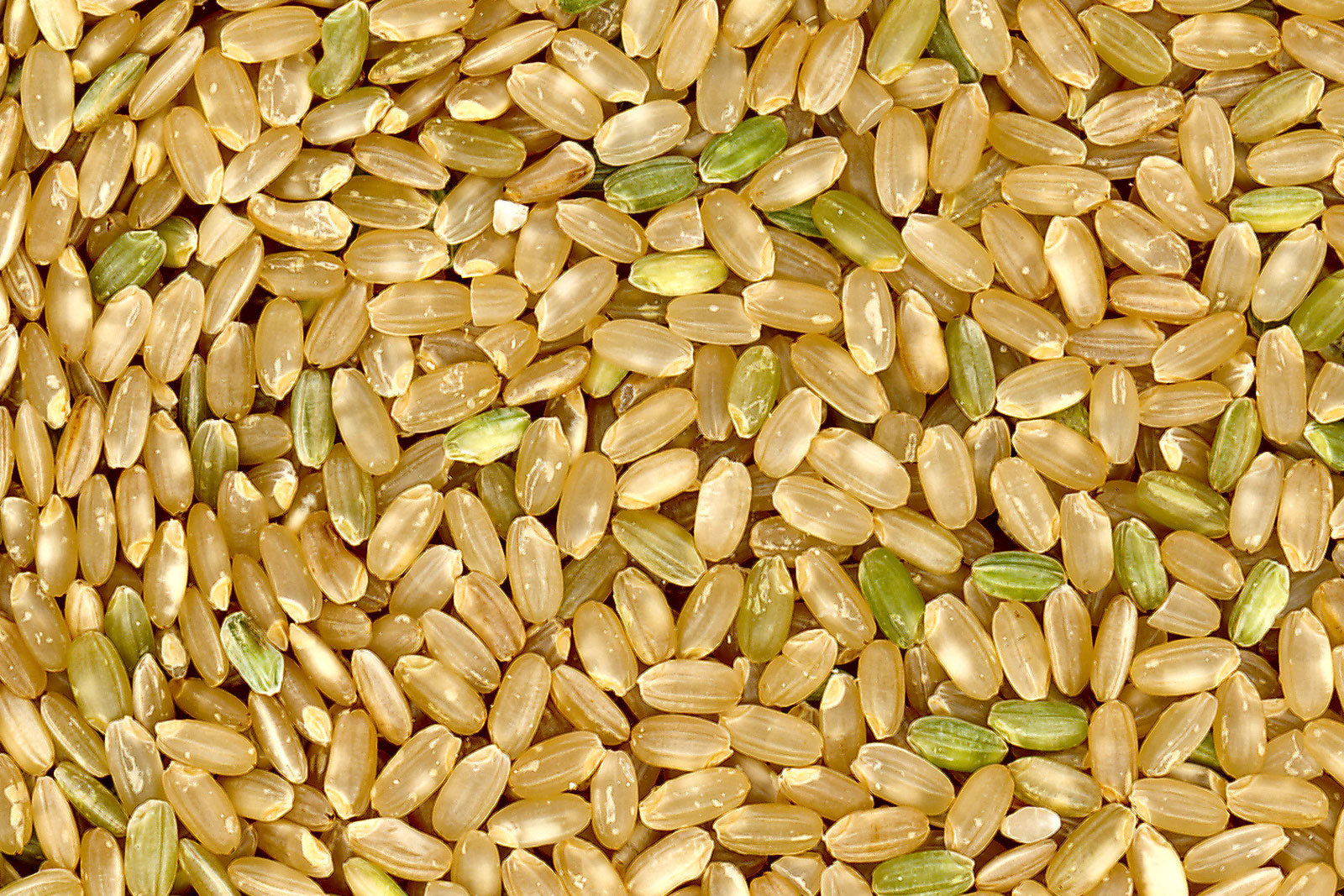
Brown rice, wholewheat pasta, bulgur, barley and quinoa are straightforward swaps. Cooking times are longer. Batch a pan on Sunday if weeknights are tight. Cool leftovers fast. Rice needs extra care: cool it quickly and eat it within a day in UK food-safety advice, and reheat until steaming hot.
If brown rice feels too chewy, mix half brown and half white for a few weeks. The swap can be gradual. You still move the fibre needle. You still practise the habit.
Pasta water should taste lightly salted if you salt it at all. The sauce and cheese often add more salt than the grain. Pair a wholewheat bowl with beans, fish or eggs. Our everyday protein guide helps that side of the plate stay simple.
Bulgur, barley and leftover cooked grains freeze well. A cup of cooked bulgur in the freezer is a future salad base. Wholegrains swaps can be a freezer bag, not only a new loaf. Label the bag with the date. Reheat until hot, or eat cold in a salad if the grain was cooled and stored safely.
| Food | Amount that counts as 1 oz-eq | Wholegrain swap |
|---|---|---|
| Bread | 1 slice | 100% wholemeal or whole wheat |
| Cooked rice | 1/2 cup | Brown or wild rice |
| Cooked pasta | 1/2 cup | Wholewheat or whole grain pasta |
| Cooked porridge | 1/2 cup | Plain oats are already a whole grain |
| Ready-to-eat cereal | 1 cup of flakes (check the pack) | Whole grain as the first ingredient |
| Popcorn | 3 cups popped | Plain popcorn, not a sweet cinema mix |
Breakfast swaps that do not hide in the cereal aisle
Porridge oats are a whole grain with very little drama. Use plain oats. Add fruit. Keep honey to a teaspoon if you want it. Flavoured sachets can be closer to a dessert. That is the same logic as our ultra-processed foods guide.
Overnight oats are just oats soaked in milk or a fortified alternative. They are not a new food group. A tablespoon of seeds or yoghurt on top is plenty. A free pour of nut butter and syrup is a different breakfast.
Wholegrain breakfast wheat biscuits or shredded wheat can replace a sugary flake. Compare sugar per 100g, not the front of the box. “Added protein” cereals can still be high in sugar. The grain line matters more than the gym claim.
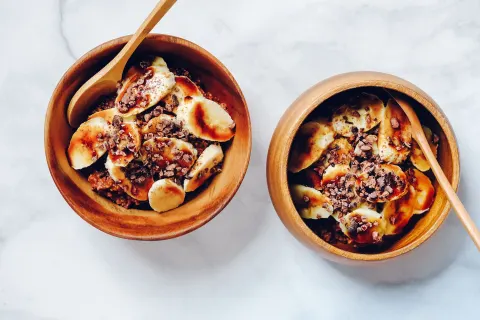
If you like toast, the breakfast swap is the loaf, not a new gadget. Wholemeal toast with mashed banana or scrambled eggs is an ordinary plate. White toast now and then is not a failure. The pattern across the week is the point.
Leftover brown rice can be tomorrow’s lunch with frozen peas and an egg. That is two wholegrains swaps from one pan. Cool the rice fast. Eat it the next day. Reheat until it steams. The grain is the base. The topping can change.
Fibre, water, gluten and when white bread still belongs
UK adults are advised to have 30g of fibre a day. NHS pages say many people get closer to 20g. Wholegrains swaps are one of the quieter ways to close that gap, with beans, fruit, vegetables, nuts and skins on potatoes.
Fibre holds water. Increase wholegrain food a little at a time. Drink as you go. Our everyday hydration guide is the dull partner to this article. A sudden jump from white bread to bran cereal can bring wind and a bad mood. That is not a reason to avoid fibre. It is a reason to go slowly.
Coeliac disease and medically diagnosed gluten sensitivity are different from a wellness “gluten-free” phase. NHS coeliac pages are the place to start if you have symptoms. Oats, rice, maize and quinoa can fit a gluten-free pattern when they are certified. Ordinary wholemeal wheat bread cannot.
White bread still has a place. After some gut surgery, during a flare of certain bowel conditions, or when a clinician has asked for a lower-fibre phase, the white loaf can be the right tool. Follow that advice first. Do not override it with a blog swap list.
Breakfasts and lunches that put the advice into practice
Anchor wholegrains swaps at breakfast with oats, wholemeal toast or leftover grain salads rather than relying on juice. Lunches that include beans, barley, brown rice or rye bread raise fibre without a separate “fibre snack.” Keep a fruit bowl visible; dried fruit is useful in small amounts but bathes teeth in sugars if grazed all afternoon.
Training days can enlarge the starch fist; desk days can enlarge the vegetable half-plate instead. Both still include carbohydrate foods—quantity flexes, quality stays.
Worked examples that make sense of wholegrains swaps
Start from the article’s own emphasis on wholegrains swaps. Translate it into one breakfast, one lunch and one dinner you could eat this week without speciality shops. If a tip only works with unlimited time or expensive powders, rewrite it until it fits a normal weekday.
Key ideas already flagged in this piece include: NHS Eatwell asks you to base meals on starchy foods and to choose wholegrain or higher-fibre versions where you can. US advice for a 2,000 kcal pattern is about 6 ounce-equivalents of grains a day, with at least 3 of those as whole grains. One ounce-equivalent is about one slice of bread, or half a cup of cooked rice, pasta or porridge.. Keep those ideas visible on a note on the fridge or in your phone groceries list.
UK and US readers may see different units on packs (kJ vs kcal, salt vs sodium, ml vs fl oz). Convert once for the products you buy often, then stop redoing arithmetic at every meal while you practise wholegrains swaps.
Digestive pacing when you change wholegrains swaps
Increase beans and bran-rich foods over two to three weeks and drink fluid with meals. Sudden jumps commonly cause wind. Rinse tinned beans; cook dried legumes thoroughly. People with IBS may need dietitian guidance; temporary low-FODMAP restriction is not a lifelong fibre-avoidance diet.
If stools contain blood, or pain and weight loss appear, seek care rather than escalating over-the-counter fibre alone while managing wholegrains swaps.
Label reading that supports better wholegrains swaps choices
On UK packs, compare carbohydrate and sugars per 100 g; on US packs, read Total Carbohydrate, Fiber and Added Sugars together. “Low-carb” marketing can hide sugar alcohols. Wholegrain stamps help only when grain leads the ingredient list. Moving sugar-drink grams into oats, fruit and potatoes usually improves wholegrains swaps quality even when total carbohydrate barely changes.
Frequently asked questions
Do I need to make every grain wholegrain?
Is brown bread always wholemeal?
Are oats a wholegrain?
Will wholewheat pasta upset my stomach?
Does popcorn count?
Sources
- 1. Starchy foods and carbohydrates
- 2. The Eatwell Guide
- 3. How to get more fibre into your diet
- 4. Dietary Guidelines for Americans, 2020–2025
- 5. Grains
- 6. Whole Grains, Refined Grains, and Dietary Fiber
Guidance changes. Figures were checked against the sources above at the time of review; always confirm current advice with your GP, pharmacist or clinician.
Image credits
- Photo: Photo by E4024 on Wikimedia Commons / Openverse
- Photo: Photo by Bill Ebbesen on Wikimedia Commons / Openverse
- Photo: Photo by Fir0002 on Wikimedia Commons / Openverse
Was this useful?
Anyone can react — no account needed.



Discussion
0 comments · Name and email only · Email is never shown