
Nuts and seeds portions look tiny in the hand and huge on a label. A small handful, about 30g, is the everyday measure used by heart charities, not a sharing bag.
Most unsalted nuts and seeds can sit in a healthy pattern. They bring unsaturated fat, some protein, fibre and crunch. They also bring a lot of energy in a small space. That is why the British Heart Foundation still talks about a handful, not a free pour from a 200g pack.
This guide turns nuts and seeds portions into ordinary meals. It does not rank “superfoods”. It does not promise weight change. It helps you use a 30g measure, read a label, and keep allergy and selenium limits in view.
What nuts and seeds portions look like in real life
Nuts and seeds portions are easier when you leave the bag in the cupboard. Tip a small handful into a bowl or onto yoghurt. Then close the pack. The British Heart Foundation suggests this because nuts are easy to keep eating once the packet is open.
Thirty grams is about a small adult handful of mixed nuts. It is not a coffee-mug scoop. It is not a cinema bag. If your hand is large, use a tablespoon measure twice, or weigh 30g once so your eyes learn the pile.
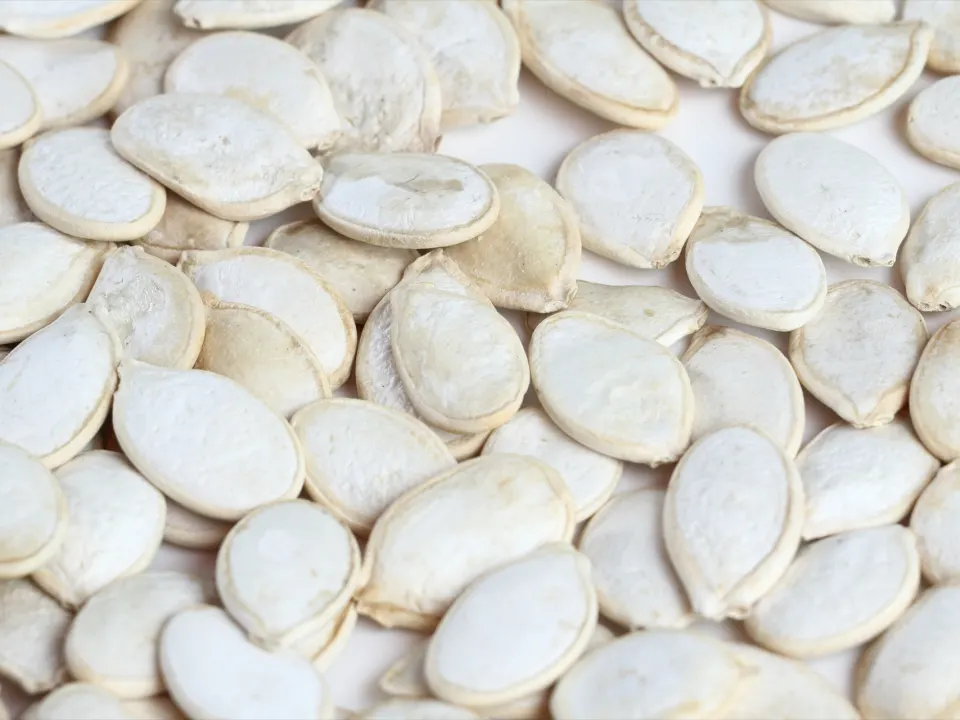
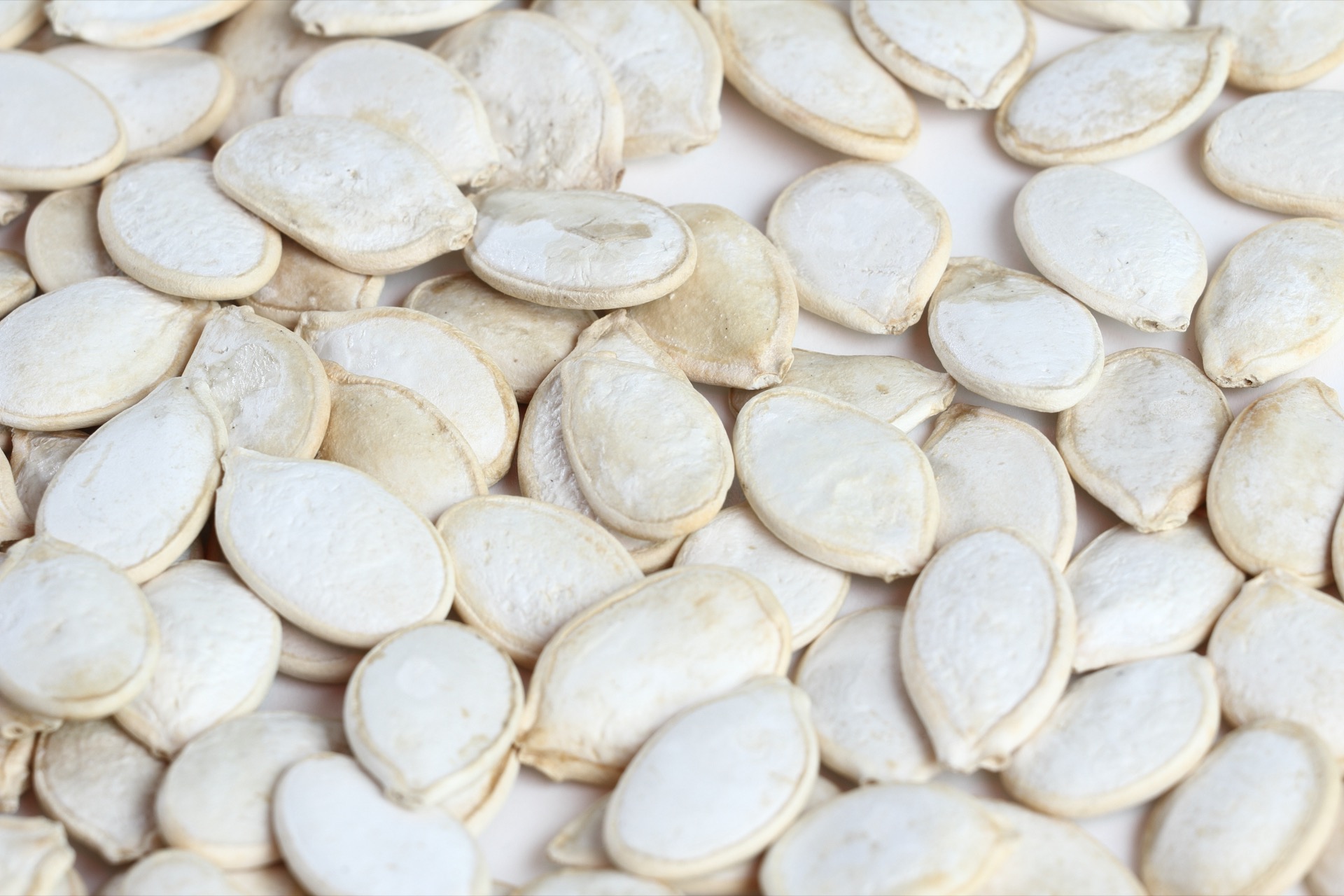
Seeds follow the same idea. Pumpkin, sunflower, sesame and chia are energy dense too. Sprinkle a tablespoon on oats or salad rather than pouring from a jar. A tablespoon of seeds on breakfast is a garnish. A teacup of seeds is a second meal.
NHS Eatwell still groups nuts with beans, pulses, fish, eggs and meat as a protein food. WHO healthy-diet advice also includes nuts as part of a varied pattern. Neither asks you to eat them by the bag. They sit beside vegetables, fruit and starchy foods, not instead of them.
Why a handful stays small: energy and fat type
Nuts are high in fat. Most of that fat is unsaturated. The British Heart Foundation is clear that this type of fat does not raise LDL cholesterol in the way saturated fat can. That is useful. It is not a licence to eat without a portion.
Fat still provides about 9 kcal per gram. That is why 30g of nuts can land between 180 and 225 kcal. A chocolate biscuit can sit in a similar energy band with less fibre and less unsaturated fat. The swap can still be wise. The handful still counts.
BHF dietitians note about 7g of protein in a 30g mix. Almonds also bring about 4g of fibre in that serving. Those numbers help a snack feel more solid than crisps. They do not turn nuts into a protein shake. Pair them with fruit, yoghurt or a meal if you want more staying power.
The Mediterranean diet evidence guide is the right frame. Nuts appear next to vegetables, pulses and olive oil. They do not appear as an all-day graze. Keep water nearby as you add fibre-rich foods. Our everyday hydration guide covers that simple pairing.
| Nut (per 100g) | Energy (kcal) | Protein (g) | Saturated fat (g) |
|---|---|---|---|
| Almond | 554 | 21.2 | 3.8 |
| Peanut | 564 | 25.8 | 8.7 |
| Cashew | 573 | 17.7 | 9.5 |
| Pistachio | 601 | 17.9 | 7.4 |
| Walnut | 688 | 14.7 | 7.5 |
| Brazil nut | 683 | 14.3 | 17.4 |
| Macadamia | 748 | 7.9 | 11.2 |
How to use a 30g handful in ordinary meals
The calm habit is to put nuts on food you already eat. Chop 30g of walnuts over a salad. Stir a tablespoon of pumpkin seeds through leftover rice. Add a small handful of peanuts to a stir-fry at the end. You see the portion. You stop when the handful is gone.
Breakfast is a good test. Porridge with a teaspoon of seeds and sliced fruit is a meal. Porridge with a free pour of granola clusters and nut butter is easy to overshoot. Measure the nut butter with a teaspoon. Two heaped teaspoons is about 30g, says the BHF, and about 190 to 200 kcal.
A walk-and-snack handful beats a pastry for many people because it brings fibre and unsaturated fat. It is still a snack with a number. If you want something more filling, add an apple or a yoghurt. Do not stack a handful, a bar and a latte of nut milk and call it “just nuts”.
Peanuts are a legume by botany. They behave like nuts on a plate. They are a common allergy trigger. Treat them with the same respect as tree nuts if allergy is in the house.
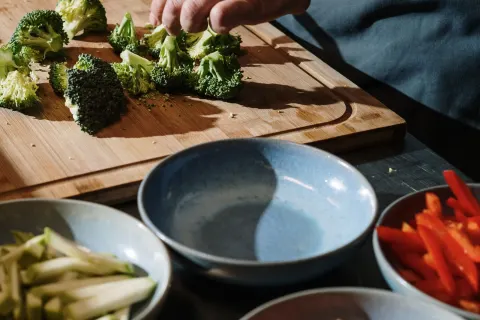
Chopped nuts go further on the eye than whole nuts. Ten walnut halves look like more food when they sit on broccoli. You still count the handful, not the number of pieces. If you stir peanut butter into a sauce, start with one teaspoon. Taste, then add the second if you need it.
Labels, coatings, bars and drinks
Plain, unsalted nuts are the everyday choice. Salted party mixes add sodium. Honey-roast and chocolate coatings add sugar and extra fat. The BHF asks people to skip those as the default. Save them for an occasional treat if you like them.
Our food label guide shows where salt, sugar and ingredients sit on UK and US packs. “Roasted” is not the same as “honey roasted”. “Natural” is not a portion. If salt is high on the label, choose another bag.
Nut bars often look like a handful in wrapper form. Many add syrup, chocolate, coconut and salt. The BHF’s blunt line is that a handful of unsalted nuts is usually the simpler choice. That is also the point of our ultra-processed foods guide: a short ingredient list beats a protein-bar story.
Nut drinks are not a handful of nuts in a glass. Many almond drinks are only a few percent nuts. Protein is often under 1g per 100ml, while cow’s milk is about 4g. If you use one as a dairy swap, choose unsweetened with added calcium. Do not count it as your nut portion.
Allergy, Brazil nuts, children and medical care
Nut and seed allergy can be severe. If you already carry an adrenaline device, follow your allergy plan. Do not “test” a new nut at home. NHS and MedlinePlus pages treat food allergy as a clinical issue, not a snack experiment. Call 999 in the UK or 911 in the US for breathing trouble, swelling of the tongue, or collapse.
Brazil nuts are a special case even without allergy. They are very high in selenium. The BHF notes that a 30g serving can supply more than the daily selenium amount. NIH Office of Dietary Supplements pages also flag Brazil nuts as an easy way to go over a safe selenium intake. Two or three Brazil nuts can be enough. Do not use a full handful of Brazil nuts as your daily mix.
Whole nuts are a choking risk for young children. NHS advice is not to give whole nuts to children under five. Nut butters, spread thinly, are a different texture. Follow your health visitor or paediatric clinician if you are introducing allergens.
People on a fat-modified diet, with pancreatitis, or with a prescribed potassium or mineral limit should ask their dietitian before making nuts a daily habit. This article cannot set a gram target for those conditions.
Using labels to spot portion drift
Pick two similar products and compare them on the same basis—per 100 g in the UK, or truthful servings in the US—when practising nuts and seeds portions. Note sugars, salt/sodium, saturates and fibre together rather than chasing a single marketing flash.
Ingredient lists ordered by weight reveal whether sugar or refined oils lead despite a “protein” or “natural” banner.
Worked examples that make sense of nuts and seeds portions
Start from the article’s own emphasis on nuts and seeds portions. Translate it into one breakfast, one lunch and one dinner you could eat this week without speciality shops. If a tip only works with unlimited time or expensive powders, rewrite it until it fits a normal weekday.
Key ideas already flagged in this piece include: A useful everyday portion of nuts is a small handful, about 30g, according to the British Heart Foundation. That handful can provide about 180 to 225 kcal, depending on the nut, so it works better as a planned snack or topping than as grazing from the bag. Choose plain, unsalted nuts. Honey-roast, salt and syrup coatings add extra salt, sugar and energy.. Keep those ideas visible on a note on the fridge or in your phone groceries list.
UK and US readers may see different units on packs (kJ vs kcal, salt vs sodium, ml vs fl oz). Convert once for the products you buy often, then stop redoing arithmetic at every meal while you practise nuts and seeds portions.
Portion drift to watch in cafés and at home
Cereal bowls, café cups and restaurant pastas often exceed labelled portions. Pour a manufacturer serving into your usual bowl once to calibrate. Sharing mains or boxing half a restaurant dish early prevents quiet drift that undermines nuts and seeds portions advice.
Keeping label and calorie literacy free of crash-diet thinking
Calorie and label literacy should not become crash dieting. If tracking worsens anxiety or you have a disordered-eating history, use plate patterns and professional support instead of relentless logging while learning nuts and seeds portions.
Frequently asked questions
How much is a handful of nuts?
Are seeds the same portion as nuts?
Should I avoid nuts if I want to manage my weight?
Is peanut butter a healthy swap?
Can I eat Brazil nuts every day?
Sources
- 1. Are nuts healthy? Which nuts are good for you?
- 2. The Eatwell Guide
- 3. Fat: the facts
- 4. Healthy diet
- 5. Selenium: Consumer fact sheet
- 6. Food allergy
Guidance changes. Figures were checked against the sources above at the time of review; always confirm current advice with your GP, pharmacist or clinician.
Image credits
- Photo: Photo by Klaus Nielsen on Pexels / Openverse
- Photo: Photo by Melchoir on Wikimedia Commons / Openverse
- Photo: Photo by Dmitry Makeev on Wikimedia Commons / Openverse
Was this useful?
Anyone can react — no account needed.

Discussion
0 comments · Name and email only · Email is never shown