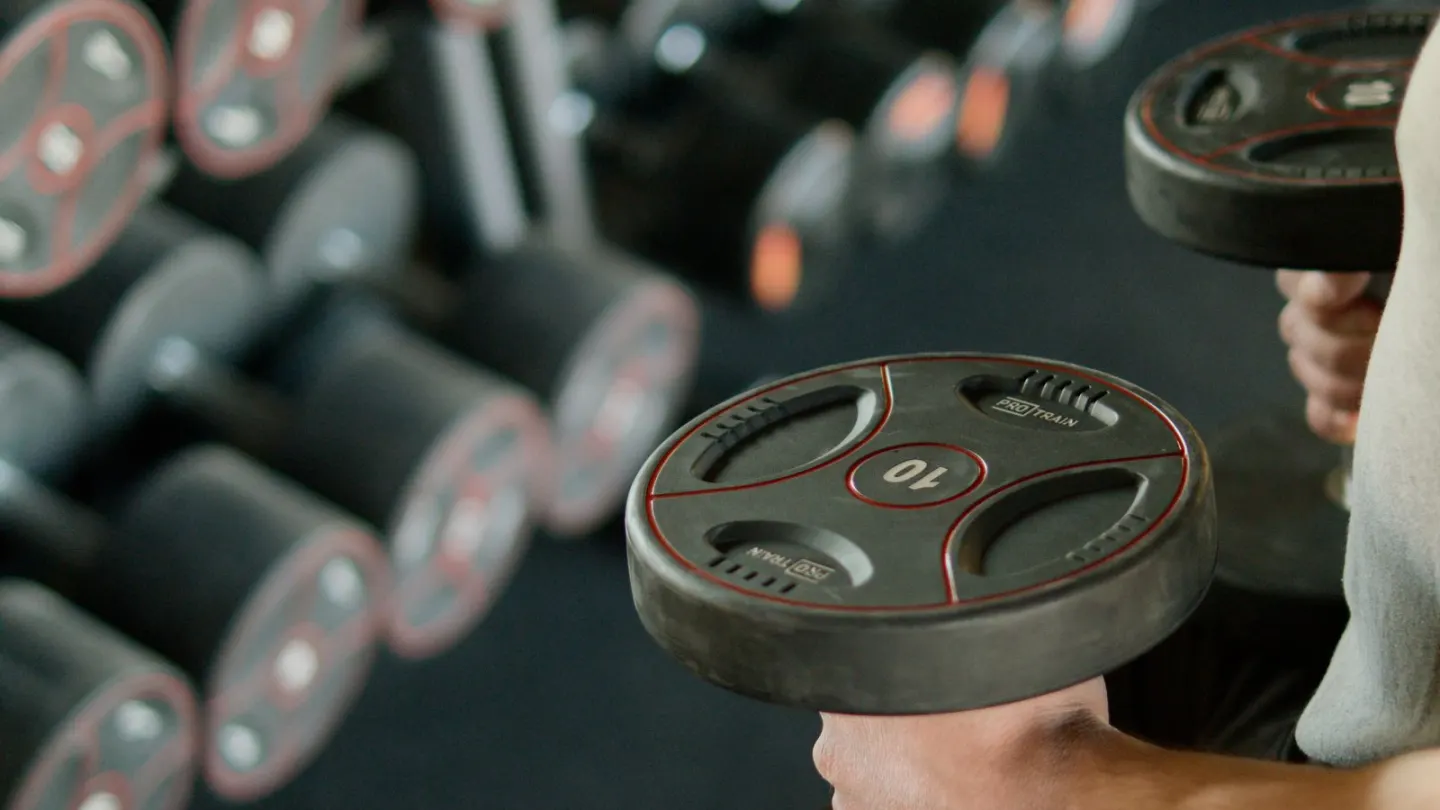
Grip strength is how hard you can squeeze. Clinics use a hand dynamometer. Gyms use carries, hangs, and holds. It is a useful health clue. It is not a diagnosis on its own.
The PURE study followed about 140,000 adults in 17 countries. A 5 kg weaker squeeze was linked with higher death rates and more heart attacks and strokes after researchers adjusted the numbers. That is an association. It does not prove that a thicker handshake will add years.
This guide translates Lancet, BHF, CDC, NHS, and NIH-hosted reviews into carries you can do twice a week. It does not promise a stronger heart from a gripper. It shows how to train the hands without ignoring walking or medical care.
Why grip strength shows up in health research
A dynamometer is a handle you squeeze for a few seconds. NHS frailty work and many research groups use it because it is cheap and repeatable. It tracks overall muscle better than a single arm curl photo.
An NIH-hosted review in older adults treated grip as a biomarker. Weaker scores sat with worse function, more falls, and higher death rates in the papers it summarised. That still does not mean the hands caused those outcomes. They often travel with slower walking, less muscle, and long-term illness.
BHF-funded UK Biobank work scanned hearts after a baseline squeeze test. People with a weaker grip, on average, had hearts that pumped less blood per beat and showed less favourable muscle structure. BHF was careful. Family history, blood pressure, and cholesterol still matter. A handshake is not a scan.
CDC analysts using NHANES data found that relative grip — squeeze divided by body size — tracked with a better mix of blood-pressure, glucose, and lipid markers in US adults. Relative scores help when a larger person has a high absolute number that still looks low for their size.
What the PURE numbers actually say
Leong and colleagues reported PURE in The Lancet in 2015. They measured grip with a Jamar dynamometer in adults aged 35 to 70. Median follow-up was four years. After adjustment, each 5 kg reduction in grip strength had a hazard ratio of 1.16 for all-cause death. The heart-death ratio was 1.17. Heart attack was 1.07. Stroke was 1.09.
Those are group statistics. They are not your personal odds. The authors also found grip was a stronger predictor of death than systolic blood pressure in that dataset. That surprised many readers. It still does not replace blood-pressure care. It adds a muscle clue beside the usual checks.
A later PURE paper on reference ranges warned against one global cut-off. Median scores differed by region, age, and sex. A man under 40 in Europe or North America sat near 50 kg. A woman over 60 in South East Asia sat near 18 kg. Compare yourself with a clinic method, not a social-media chart.
| Measure | Figure | What it is not |
|---|---|---|
| PURE sample with vital status | 139,691 adults in 17 countries | Not a UK-only clinic list |
| All-cause death per 5 kg lower grip | Hazard ratio 1.16 (about 16% higher in the group model) | Not your personal risk |
| Heart attack / stroke per 5 kg lower | Hazard ratios 1.07 and 1.09 | Not a diagnosis of blocked arteries |
| Example PURE medians | About 50 kg in younger European or North American men; about 18 kg in older South East Asian women | Not a pass/fail gym test |
| Weekly activity still required | About 150 minutes moderate plus muscle work on 2 or more days | Not replaced by a gripper |
How to train grip strength without a circus act
Train the thing you want. If you want a stronger hold on shopping bags, carry bags. If you want a longer deadlift, hold the bar. Spring grippers can be a small extra. They should not be the whole plan.
Farmer carries are the simplest gym version. Pick up two even dumbbells. Walk 20 to 40 metres. Set them down with a straight back. Rest. Repeat for three to five trips. Keep the ribs stacked. Do not shrug toward your ears. A beginner gym workout plan can host this at the end of a session.
Dead hangs from a bar build the other side of the skill. Use a step so you can reach the bar without jumping. Hang for 10 to 20 seconds. Step down. If shoulders feel pinchy, stop. Towel or thick-handle holds are a later step, not a first week trick.
Leave a little in reserve. ACSM’s 2026 review still treats last-rep grinding as optional. Our RPE and reps-in-reserve guide is the same idea: stop while you could do two more clean holds. Hands recover slowly if you shred them every day.
A twice-weekly plan that still leaves room for walking
NHS and CDC want muscle work on two or more days, plus about 150 minutes of moderate activity. Grip work is a few minutes at the end, not a new sport. Pair it with a squat or sit-to-stand, a push, and a row. Then walk.
Day A: three carries of 20 to 30 metres. Day B, two or three days later: two hangs of 10 to 15 seconds each side of a rest, plus one carry. That is enough to start. Add distance or a small plate when the last trip still looks like the first.
People over 50 can use the same pattern with a lighter pair and a clearer floor. See strength training over 50 for the wider week. If balance is already an issue, skip the walk with weights. Hold a suitcase by a bench instead.
Progress the hold, not the drama. Our progressive overload guide applies here: longer time, heavier pair, or less rest, one at a time. Chalk is optional. Straps hide the very quality you are training, so save them for heavy hinges if a coach uses them that way.
What a weak squeeze should prompt, and what it should not
If a clinic measures a low score, ask what they compared it with. Ask about walking speed, recent weight change, and medicines. A weak squeeze can sit with illness, nerve problems, or simply a week off work with a sore wrist. It is a clue. It is not a verdict.
Do not start a violent gripper plan to “fix your heart.” BHF still wants blood pressure, cholesterol, smoking, and activity in the conversation. NHS Health Checks and US preventive visits already cover those. Extra hand work can sit beside that care. It cannot replace it.
Stop carries if the wrist, elbow, or shoulder complains in a sharp way. Numbness that wakes you at night needs a clinician, not a thicker handle. Chest pain, faintness, or sudden breathlessness is an emergency. Call 999 or 911.
Hands, daily life and the rest of the week
Opening jars, carrying a school bag, and holding a rail on the stairs are already grip practice. You do not need a gadget for those. You do need two muscle days and a walk most weeks. That mix matches the official pages better than an isolated gripper challenge.
If rheumatoid arthritis, carpal tunnel, or a recent fracture is in the story, get personal advice before hangs. Soft handles and shorter carries are the usual first step. Pain the next morning that is sharp, not just tired, is a reason to regress.
Sleep still matters. Sore hands plus a late night make the next hang sloppy. Keep the work short. Keep the week boring in the best sense: repeats you can do again on Thursday.
How to train grip without ruining your elbows
Grip strength supports carrying, hanging, rowing and older-age independence, but hammering crush grippers every day often irritates elbows. Spread the work across crush, support and pinch patterns. Farmer carries, suitcase carries, towel or fat-grip hangs, and plate pinches cover most of what daily life asks for.
Two short grip finishers a week beat daily max efforts. Example: after strength work, carry a heavy pair of dumbbells for three sets of thirty to forty seconds, then hang from a bar for two sets of twenty seconds. Keep shoulders packed and walk tall. If the inside elbow aches the next morning, cut volume in half and add wrist-extensor work with a light dumbbell.
| Pattern | Example | Starter dose |
|---|---|---|
| Support | Farmer carry | 3 x 30–40 seconds |
| Hang | Dead hang or active hang | 3 x 15–30 seconds |
| Pinch | Plate pinch hold | 3 x 20 seconds each hand |
| Crush | Gripper or ball squeeze | 2 x 8–12 easy reps |
Field notes that keep grip strength useful
Before the next session involving grip strength, decide the exact dose: duration, sets, portions or steps — whatever this article measures. Write it somewhere you will see at the start time. Vague intentions are how good advice becomes unused bookmarks.
Afterward, record one sentence on comfort and one number from the plan (load, minutes, fibre grams, glasses, intervals). That pair of notes is enough to spot patterns across a fortnight without building a complicated spreadsheet you abandon.
If the plan collides with the same obstacle twice — late meetings, sore knees, skipped breakfast — change the obstacle, not only your willpower. Move the slot, shorten the session, or prepare the meal earlier. grip strength only works as behaviour in a real week.
Share the plan with one person who will ask a kind check-in question, or book it in a shared calendar. Quiet accountability beats public pressure. Re-read the sections above after two weeks and keep only the pieces you actually repeated.
Revisit the safety notes in this article whenever grip strength feels rushed. Slowing the first five minutes usually saves the whole session.
Revisit the safety notes in this article whenever grip strength feels rushed. Slowing the first five minutes usually saves the whole session.
Frequently asked questions
Does improving grip strength lengthen life?
Should I buy a dynamometer for home?
Are wrist curls enough?
How often should I train my hands?
My squeeze feels weaker on one side. Is that an emergency?
Sources
- 1. Prognostic value of grip strength: findings from the PURE study
- 2. Weak handshake could be sign of a failing heart
- 3. Grip strength: an indispensable biomarker for older adults
- 4. Reference ranges of handgrip strength from 125,462 healthy adults
- 5. Adult activity guidelines
- 6. Physical activity guidelines for adults aged 19 to 64
- 7. Physical activity fact sheet
Guidance changes. Figures were checked against the sources above at the time of review; always confirm current advice with your GP, pharmacist or clinician.
Image credits
- Photo: Photo by Ivan Samkov on Pexels / Openverse
- Photo: Photo by Andres Ayrton on Pexels / Openverse
Was this useful?
Anyone can react — no account needed.



Discussion
0 comments · Name and email only · Email is never shown