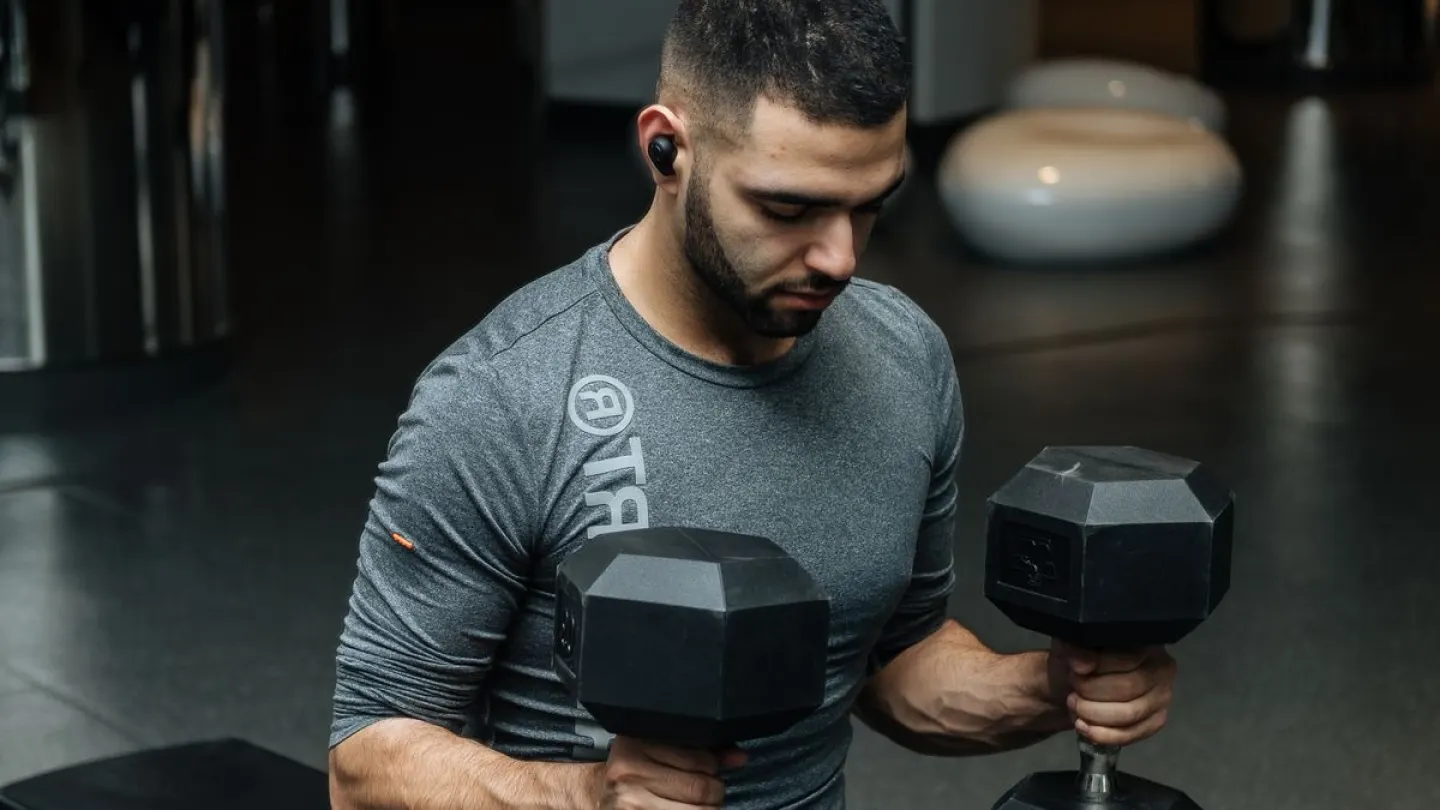
A farmer carry is a walk with a load in each hand. You stand tall. You grip. You take even steps. Farmer carry technique is that simple path, not a race down the gym floor with weights you cannot set down.
Gyms use dumbbells, kettlebells, or special handles. The pattern still matches a grocery walk. NHS advice for adults aged 19 to 64 includes muscle-strengthening work on at least two days a week. The CDC gives the same two-day target, plus at least 150 minutes of moderate aerobic activity. A loaded walk can cover grip, trunk and a little extra walking time.
This is a how-to for healthy adults. It is not a strongman contest. It is not a treatment for a weak grip after injury. If walking a straight line is already hard, skip the load and get personal advice first.
What a farmer carry trains on a gym floor
Two hands, two loads, a walk. The grip works to keep the handles still. The trunk works to keep the ribs stacked. The legs and hips keep you moving. It is strength you can see in a shopping bag later the same day.
BHF notes that stronger muscles make daily tasks such as carrying shopping easier. That is the spirit of this drill. You train the errand, with kit that will not tear. A suitcase carry uses one hand. A farmer carry uses both. Start with two loads if one-sided walks feel tippy.
WHO still uses the 150-minute aerobic floor and two weekly strength days. A farmer carry is mostly strength. Pair it with a squat, a push, a pull and a plain walk.
If you are new to gym floors, a beginner gym workout plan shows easier standing work first. Come back to a farmer carry when a short unweighted walk feels steady. Adults over 50 can keep the path short. The strength training over 50 guide is a calmer on-ramp.
How to set a farmer carry without a race
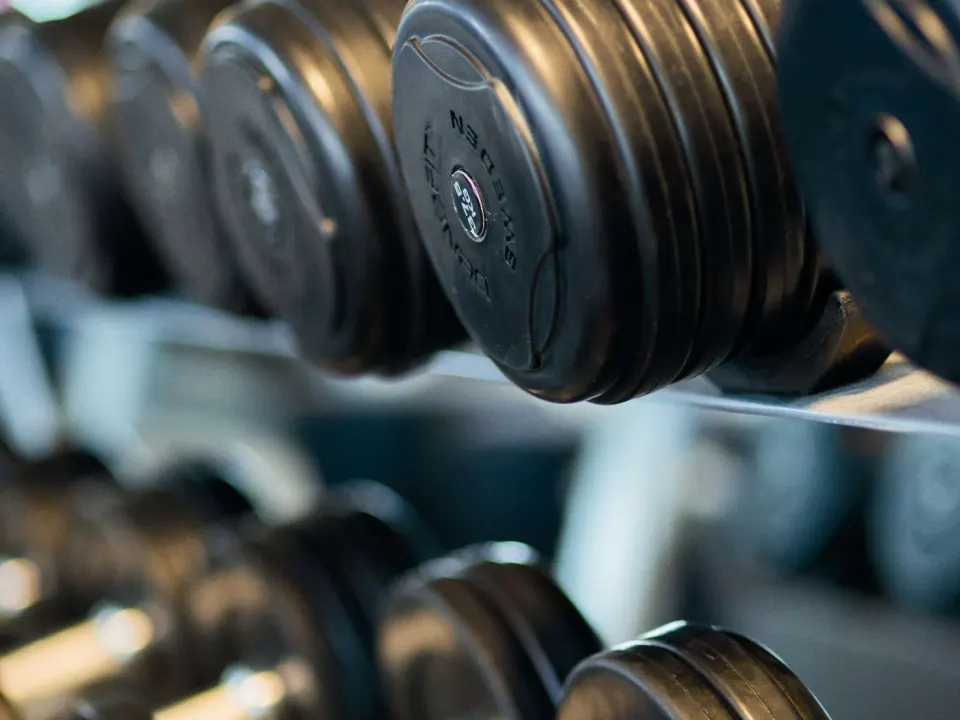
Clear the lane. You need a straight walk of at least eight steps. Check collars on dumbbells. Check that kettlebells will not roll into a walkway. Stand between the loads. Hinge a little at the hips. Pick them up as you would shopping: back long, bells close. Do not yank from a twist.
Stand tall. Soften the knees. Let the shoulders sit down, not up by the ears. Walk. Count even steps. Look ahead, not at the floor. At the end of the path, hinge and park the loads. Do not dump them. Dumping is how toes and gym floors get hurt.
- Pick a load you can park. If the lower is a crash, it is too heavy.
- Brace before you walk. Lightly tense the midriff, then go.
- Match the steps. A limp means the load is winning. Shorten the walk.
- Breathe. Do not hold your breath for the whole path. Talk-pace breathing is a fair check.
- Turn with the loads down. Pivot empty, then pick up and return.
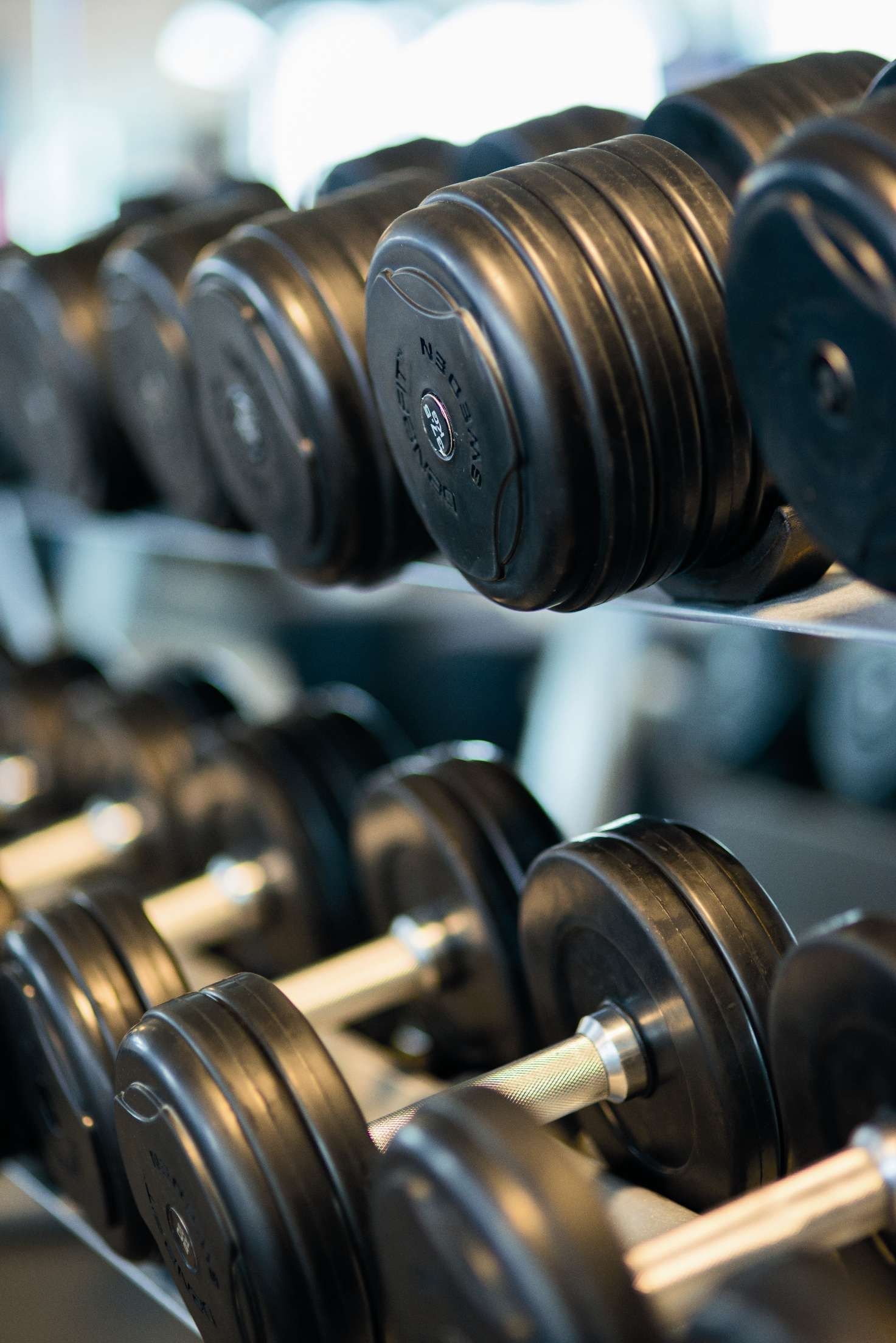
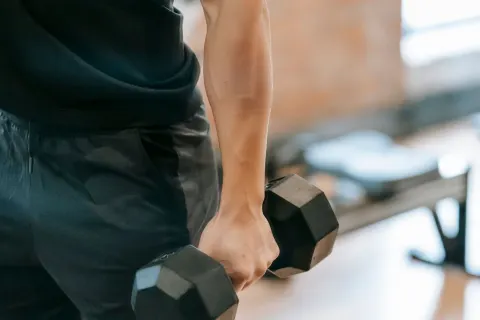
Hex dumbbells sit still on the floor. Round plates can roll. Farmer-walk handles are even, but they are not required. Two kettlebells work if you can keep them from knocking your legs.
Distance, load and a tall walk
Think in seconds, not in a marathon. Twenty to forty seconds is a useful first bout. That is a hallway, not a car park. Rest until your grip and breathing settle. Then repeat.
CDC muscle-strengthening pages describe work to the point where another repetition would be hard without help. For a walk, that means you finish with a little left in reserve. You should still be able to park the bells. Our progressive overload guide applies here as a small extra tin, not a sprint.
Shoulders that creep up steal the trunk work. Think “long neck” and “heavy bags, quiet shoulders.” A fast shuffle turns the drill into a stumble. Wrist pain often means a thin handle. Use a thicker grip or wrap a towel.
ACSM health notes still favour control. Two seconds to pick up, a smooth walk, two seconds to lower. That is farmer carry technique, not a clock you chase.
A simple twice-weekly farmer carry session
Warm up for four minutes. March on the spot. Circle the shoulders. Pick up empty hands and walk four steps with the same tall posture. Then add the real load.
Place the carry near the end of a session, after squats or hinges. Grip work last means you still have hands for other lifts. A hybrid strength and cardio week can hold the walking minutes around this drill.
| Item | First weeks | Once the walk is smooth |
|---|---|---|
| Walks | 2 to 3 | 3 to 4 |
| Time per walk | 20 to 30 seconds | 30 to 45 seconds |
| Rest between walks | 60 to 90 seconds | 45 to 75 seconds |
| Days each week | 2, not back to back | 2, still not back to back |
| If it feels light | Add 10 slow seconds | Use the next dumbbell pair |
| If it feels heavy | Shorten to 15 seconds | Drop to a lighter pair |
Write the bell number and the time. When 40 seconds feels tidy, take the next pair and return to 20 seconds. Do not add a sprint on the same week you first learn the path. Check the floor for plates and bags before you go. Our gym safety guide starts with that look-twice habit.
Common faults, quiet floors and who should skip
Shrugging is the most common miss. Lean away from one bell if the pair is uneven. Match the loads. A twisted walk often means you turned with the bells still in hand. Park them. Then turn.
Do not use a phone in the other hand. Do not weave through a busy free-weight floor. Ask for a lane. Rubber floors help if a bell must be parked in a hurry. Still lower it. Dropping a dumbbell is a foot injury waiting to happen.
CDC older-adult pages add balance work to the week. A farmer carry is not a balance class. If you sway, shorten the path or drop the load. NHS falls pages still start with strength and balance you can control, plus home hazards. A loaded walk is optional.
High blood pressure that is not settled, a recent operation, or late pregnancy may need a personal plan. A farmer carry is not treatment. Choose a pain-free stand-in, or rest the pattern.
Stop for chest pain, faintness, unusual breathlessness, or pain that shoots down a leg. Call 999 in the UK or 911 in the US if those symptoms are sudden. Online cues cannot replace an exam.
A twice-weekly farmer carry session with distance and load
Pick up two even dumbbells or kettlebells, stand tall, and walk measured lengths. Example: farmer carry 4×30–40 metres at a load that keeps posture honest, sixty to ninety seconds rest. Pair with a squat or hinge day, not after a grip-destroying deadlift max.
Cue: ribs stacked over pelvis, eyes forward, short controlled steps, arms long without shrugging.
Progress distance first, then load. Dropping implements from shoulder height is rude and risky — set them down.
| Level | Dose | Note |
|---|---|---|
| Learn | 4 × 20 m light | Posture first |
| Build | 5 × 30–40 m | Even steps |
| Load | 4 × 30 m heavier | Still tall |
| Offset carry | 3 × 20 m/side | Anti-lateral flexion |
Faults
Leaning on the dumbbells against the thighs and shuffling.
Holding breath the entire walk — breathe steadily.
Choosing loads so heavy the first step is a twisted lurch.
Carries as finishers versus main grip work
After squats: 3×30 m moderate. On a dedicated grip day: denser carries with longer total distance and shorter rests.
Do not finish every deadlift day with maximal carries if hands are already smoked — quality hinge work comes first.
Calluses tear less when you set weights down cleanly and file skin reasonably — skip the gore.
Who should skip or adapt carries
People with acute low-back or hand/wrist injuries may need lighter suitcase carries or a sled push instead while clearing symptoms.
Busy gyms with narrow aisles: use treadways or marked lanes, or switch to treadmill walks holding dumbbells only if stable and allowed.
Blood-pressure concerns with heavy isometrics: ask a clinician about straining and grip-heavy work.
Coaching cues and checkpoints for farmer carries
Return to the key prescriptions for farmer carries already set out above and execute them as written for two consecutive sessions before you invent variations.
Use the checkpoints below as a quick pre-set scan for farmer carries. If any line fails, fix that line before you add load, speed or volume.
- Learn: 4 × 20 m light — Posture first
- Build: 5 × 30–40 m — Even steps
- Load: 4 × 30 m heavier — Still tall
- Offset carry: 3 × 20 m/side — Anti-lateral flexion
After those two honest sessions, change only one variable in farmer carries: a small load jump, one extra repeat, a slightly longer interval, or one fewer accessory set. Write the change in the log before you warm up.
Stop for sharp pain, chest pain, faintness or unusual breathlessness. Call 999 or 911 for sudden severe symptoms. This article is general information, not a diagnosis or a personalised rehab plan.
Frequently asked questions
Is a farmer carry the same as a suitcase carry?
How heavy should the dumbbells be?
Do I need farmer-walk handles?
How often should I practise a farmer carry?
Can this replace my walk?
Sources
- 1. Physical activity guidelines for adults aged 19 to 64
- 2. Falls
- 3. Adult Activity: An Overview
- 4. Older Adult Activity: An Overview
- 5. Physical activity fact sheet
- 6. Resistance Training for Health
- 7. Why you should do strength training
- 8. American Heart Association Recommendations for Physical Activity in Adults
Guidance changes. Figures were checked against the sources above at the time of review; always confirm current advice with your GP, pharmacist or clinician.
Image credits
- Photo: Photo by Cesar Galeão on Pexels / Openverse
- Photo: Photo by Julia Larson on Pexels / Openverse
- Photo: Photo by Scott Webb on Pexels / Openverse
Was this useful?
Anyone can react — no account needed.

Discussion
0 comments · Name and email only · Email is never shown