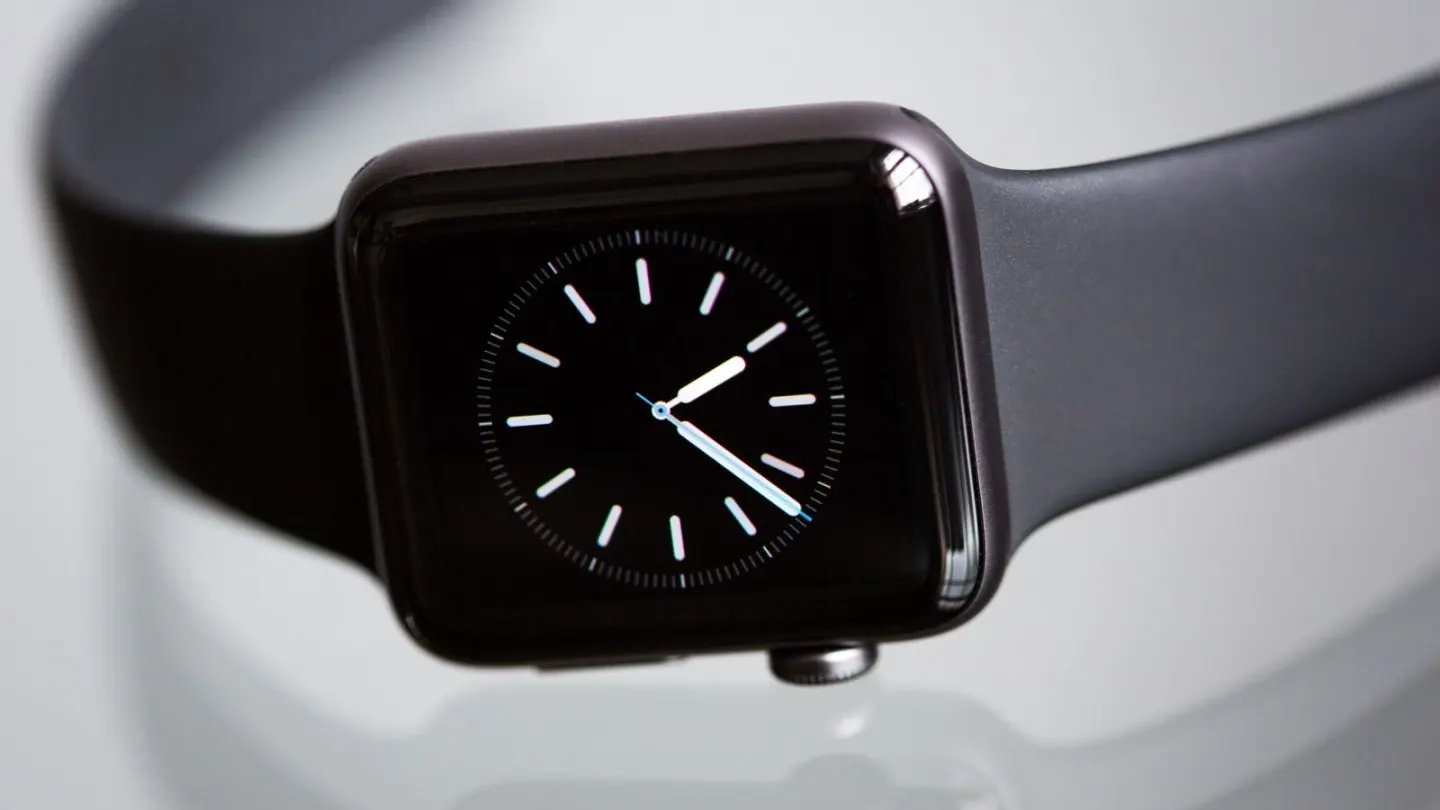
Sleep stage tracker accuracy is the weaker half of the consumer claim. Many gadgets now print light, deep and REM minutes. A lab night scores those states from brain, eye and muscle leads. This is a source-reviewed guide, not a hands-on lab test.
The companion page on sleep tracker accuracy covers sleep versus wake. This page stays on stages. Shopping copy lives on best sleep trackers and on entity reviews such as SleepScore. Those pages are not epoch maps.
What a sleep stage actually is
Standard lab scoring splits wake, N1, N2, N3 (deep) and REM. Consumer apps often merge N1 and N2 into “light.” That already changes the target. A device that “matches light sleep” may be matching a bucket the lab would split.
N3 is slow-wave sleep on EEG. REM is a wake-like EEG with rapid eyes and low muscle tone. A wrist optical sensor sees neither the cortex nor the eyes. It sees pulse variability and movement. A microphone hears snore and rustle. The algorithm then paints a colour.
That paint can look confident. Confidence is not agreement.
Why consumer sensors guess
Pulse and motion rise and fall with stage, on average. They also rise with a dream that twitches the wrist, a bathroom trip, a partner turning, or a still, anxious wait for sleep. The model has to pick a label every 30 seconds. Errors cluster at transitions.
N1 is short and unstable. Papers often find it the worst class. Deep and REM can look better in healthy sleepers because those blocks last longer. That does not mean your deep-sleep ring is a slow-wave meter.
Audio apps add another miss. Silence can be obstructive apnoea. Noise can be a partner. Stage colours from sound alone should be treated as decoration until a named build has a PSG paper.
Sleep stage tracker accuracy in published studies
| Question or claim | Evidence source | Study type | Population | Reference standard | Outcome | Key finding | Limitation | Applicability |
|---|---|---|---|---|---|---|---|---|
| Seven 2019-era devices can stage like PSG | Chinoy et al., SLEEP, 2021 | Lab nights vs PSG | 34 healthy adults; three nights including disruption | Expert PSG | Epoch stage agreement; summary minutes | Stage comparisons mixed. Sleep/wake sensitivity ≥0.93. Specificity 0.18–0.54. Worse on poor nights | Healthy, young; subset of devices per night | Not a 2026 firmware certificate |
| Oura, Fitbit and Apple Watch stage minutes match PSG | Robbins et al., Sensors, 2024 | Single inpatient night | 35 healthy adults, 20–50 years, no known sleep disorder | PSG | Stage sensitivity / precision; minute bias | Stage sensitivity 50–86% (Oura 76.0–79.5%; Fitbit 61.7–78.0%; Apple 50.5–86.1%). Apple deep sleep −43 min vs PSG. Fitbit light +18 min, deep −15 min. Oura means not different on wake, light, deep or REM | One night; healthy sleepers; some missing files | Healthy lab sleep only |
| Six current wrist devices show substantial stage agreement | Nature and Science of Sleep wearable validation, 2025 (PMC12038347) | PSG comparison | 62 participants | PSG | Kappa; sensitivity / specificity; TST, SE, WASO, light | Kappa 0.21–0.53 (fair–moderate). Sleep-epoch detection >90%. Wake specificity 29–52%. Light sleep, SE and WASO often differed from PSG | Device mix; clinic vs home not the same | Wrist PPG class, not every phone app |
| Phone apps can score REM | Fino et al., J Sleep Res, 2020 | Home portable PSG vs four iPhone apps | 21 healthy adults | Home PSG | Sleep-wake reliability; REM | Sleep Cycle modes failed sleep-wake reliability. None of the four apps scored REM | Small n; older builds | Microphone / accelerometer phones |
| Phone sonar stages are interchangeable with EEG | Zaffaroni et al., IEEE EMBC, 2019 | Lab sonar vs expert PSG | 38 lab nights | Expert PSG; also ResMed S+ | Stage sensitivity vs actigraphy citations | Authors reported more balanced stage sensitivity than typical actigraphy papers they cited, close to S+. Light merged N1+N2 | One sonar stack; listed phones; lab | Not every 2026 Play handset |
| A consumer stage graph can diagnose a disorder | Khosla et al., AASM, 2018 | Position statement | Clinical care | Clinic evaluation / PSG | Permitted use | Uncleared consumer sleep technology cannot diagnose or treat | Statement age | Default clinic line |

Phone sonar and microphone stages
SleepScore’s sonar papers are the best-documented nightstand staging path we opened. Zaffaroni 2019 used a phone on a table and merged N1 with N2 to match the app’s “light” label. Chinoy 2021 later included SleepScore Max, a bedside unit, among devices with mixed stage results. Those are not a blank cheque for every Android on the 2026 Play list.
Microphone staging is thinner. Fino’s four-app home study did not produce a REM score from those apps. A 2019 Salzburg Sensors paper found Sleep Cycle, in sound mode, weak on wake. If wake is wrong, every stage downstream is wrong.
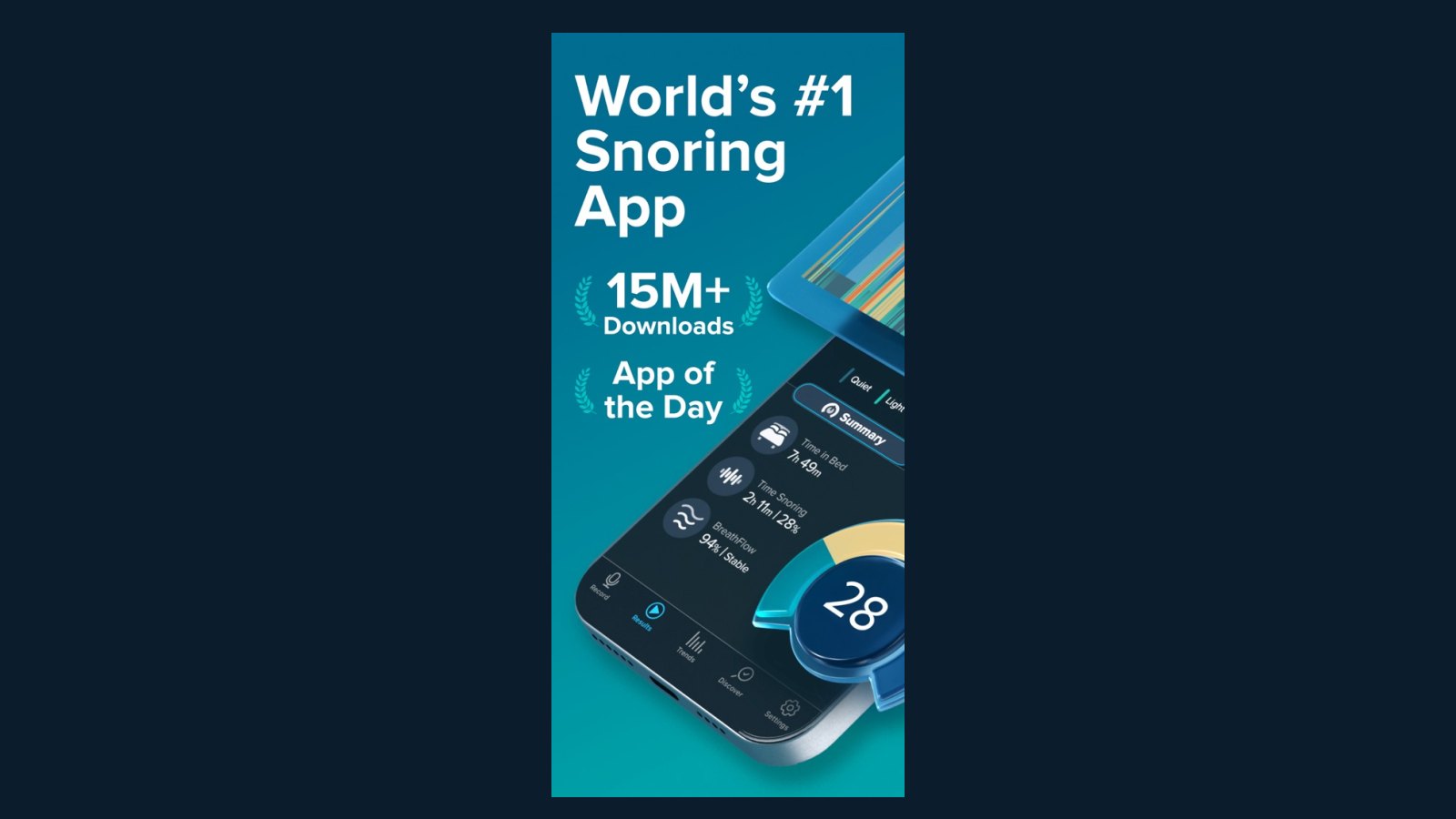
Sleep as Android publishes a manufacturer comparison on a 31-night public set. We did not find an independent PSG paper on the current Play build. Pzizz is audio, not a stager. SnoreLab logs sound. None of those jobs become EEG because the icon uses the word “sleep.”
Why one night can look “right”
Summary minutes can sit near PSG while epoch labels are a mess. A device can over-call light, under-call deep, and still land a plausible total. Robbins 2024 shows that split: duration looked acceptable while Apple Watch deep sleep ran 43 minutes short and light sleep ran 45 minutes long.
Means hide people. A paper can report “no average difference” and still miss your night by an hour. Limits of agreement, when published, are the honest cell. Many store pages quote only the friendly mean.
Healthy sleepers are easier. Insomnia, periodic limb movement and apnoea change the signal. Chinoy’s disrupted night already hurt performance. Clinic samples are still scarce for most shop SKUs.
How to use a stage graph without over-reading it
Look at time in bed and a simple sleep-wake sketch first. If those swing by hours, the night changed. If REM minutes swing by eight, the model probably twitched.
Do not train your week around “more deep sleep.” Behaviour that lengthens time asleep — a regular window, less late caffeine, a darker room — is the lever public-health pages already name. CDC adult copy still wants a regular chance at seven or more hours for most people aged 18–60. NHS insomnia pages start with habits and a GP.
Short nights also change next-day hunger. That is sleep and weight regulation, not a REM trophy. Gasping or witnessed pauses need a clinician, not a greener ring.

What remains unverified
We did not score 2026 firmware against a PSG cart. Brand-new rings and watches often lack an independent, named-build paper in the first year. Phone apps change graphs without publishing epoch tables.
Manufacturer “clinically validated” lines are not interchangeable. Ask which device, which night, which reference and which statistic. If the answer is a blog, treat stages as a sketch.
Until a consumer stage label sits inside a registered diagnostic study, the fair sentence is short. Sleep stage tracker accuracy is moderate in the best healthy-sleeper papers and weaker on messy nights. It is not a clinic score. It cannot replace a sleep study.
Frequently asked questions
Can a watch measure REM and deep sleep?
Why do two devices disagree on deep sleep?
Are phone sleep stages accurate?
Should I change my routine because REM dropped?
Can a stage graph diagnose narcolepsy or apnoea?
Is a higher deep-sleep number healthier?
Sources
- 1. Performance of seven consumer sleep-tracking devices compared with polysomnography
- 2. Accuracy of Three Commercial Wearable Devices for Sleep Tracking in Healthy Adults
- 3. A performance validation of six commercial wrist-worn wearable sleep-tracking devices for sleep stage scoring compared to polysomnography
- 4. (Not so) Smart sleep tracking through the phone
- 5. Sleep Staging Monitoring Based on Sonar Smartphone Technology
- 6. Consumer Sleep Technology: An American Academy of Sleep Medicine Position Statement
Guidance changes. Figures were checked against the sources above at the time of review; always confirm current advice with your GP, pharmacist or clinician.
Image credits
- Photo: Photo by Torsten Dettlaff on Pexels / Openverse
- Photo: Photo by Pixabay on Pexels / Openverse
- Photo: Photo by juliane Monari on Pexels / Openverse
- Photo: Photo by Pexels contributor on Pexels / Openverse
Was this useful?
Anyone can react — no account needed.
Discussion
0 comments · Name and email only · Email is never shown