Weight Management Practical guide
Family Meals and Healthy Weight: Structure Without Policing Plates
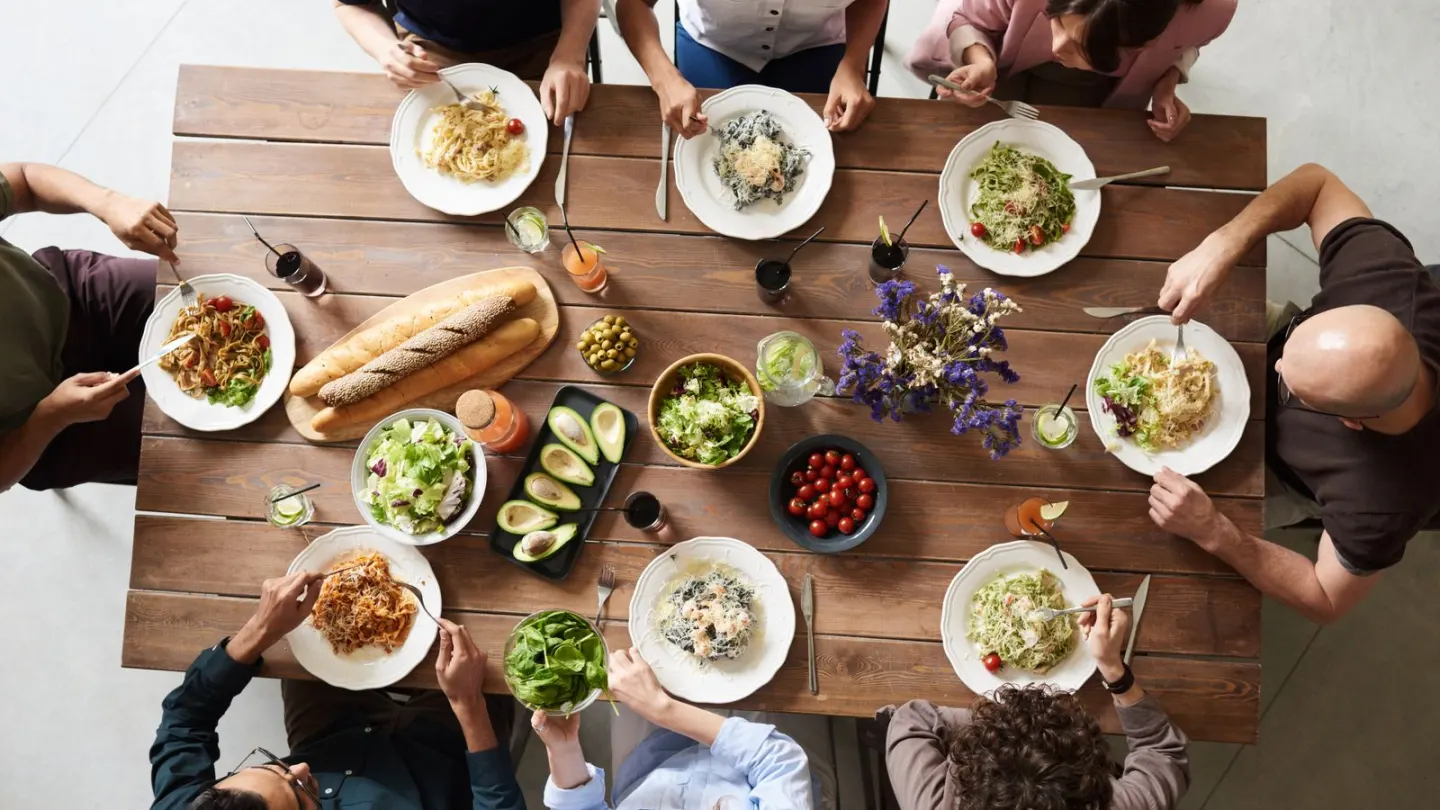
Family meals and healthy weight sit together in NHS and CDC advice because shared plates shape habits. Structure helps. Policing every bite does not. This guide is about regular meals, ordinary food, and a calmer table—not a junior diet camp.
Children and adults eat in the same kitchen. What is on the counter, what is poured, and whether anyone sits down all matter. Official pages talk about vegetables, water, sleep, and movement. They do not ask you to weigh a child’s peas.
What family meals and healthy weight look like in official advice
Family meals and healthy weight, in public-health language, are a pattern. CDC’s family-action page says childhood obesity has many causes, including genes, eating patterns, activity, and sleep. There is no single household fix. There are repeatable cues.
Eat together when you can. NHLBI’s We Can! materials say families who eat together tend to eat more nutritious meals. They suggest making shared meals a priority at least two or three times a week. Turn the television off. Talk. That is structure. It is not a nightly tribunal.
CDC also asks households to replace sugary drinks with water or plain milk. Sugary drinks are a leading source of added sugars in the US diet. NHS Healthier Families makes the same drink swap in UK kitchens, and it treats 5 A Day as a family target, not a child’s punishment.
Adults still have their own energy needs. A growing teenager is not a 50-year-old desk worker. Our calorie needs guide explains why one “family diet” number is a poor fit. Shared food can still be the same stew, with extra bread or yoghurt for the person who needs more.
| Cue | Official starting point | What it is not |
|---|---|---|
| Shared table | Eat together at least two to three times a week (NHLBI) | A nightly exam of children’s plates |
| Screens | Turn the TV off during meals (NHLBI) | A moral test of parenting if one night slips |
| Drinks | Water or plain milk instead of sugary drinks (CDC) | A ban on birthday cake or festival food |
| Vegetables and fruit | 5 A Day, about 80 g a portion (NHS) | Juice as a full stand-in for fruit every day |
Build a table routine that survives a Tuesday
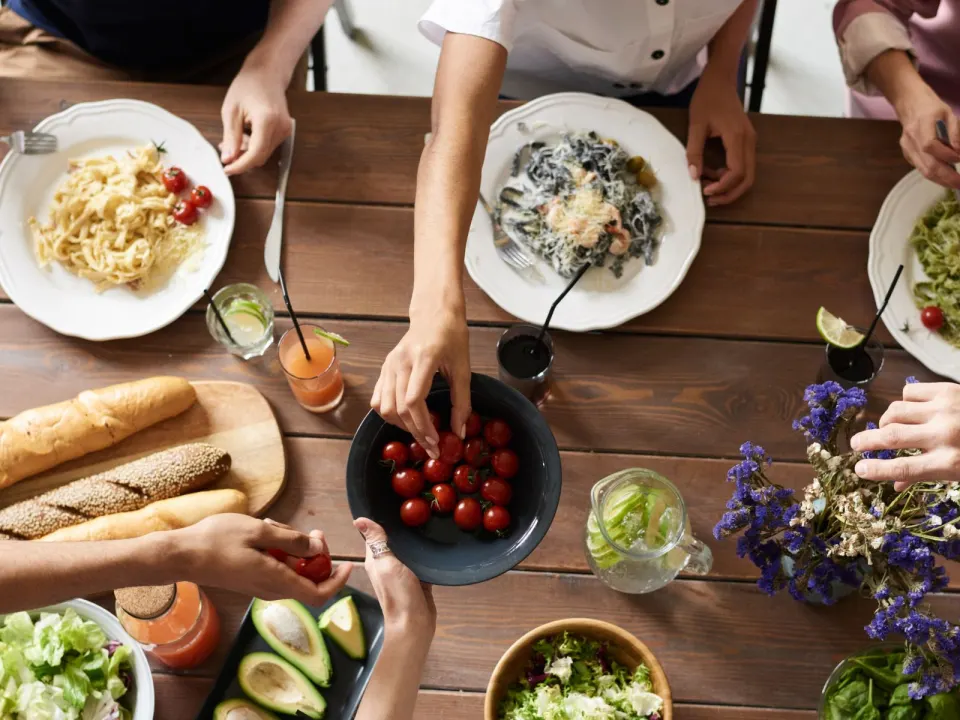
Pick nights that already have a little slack. Many households can manage Sunday lunch and two weeknights. Put phones in a bowl if that helps. Serve water as the default jug. Keep a second option such as milk. That is enough structure for most weeks.
Cook one meal. NHS and USDA family-meal tips both warn against becoming a short-order cook. If a child prefers plain pasta, set a little aside before you add sauce. Put vegetables on the table in a shared bowl. Offer. Do not bargain mouthful by mouthful.
A practical Tuesday plate: a tray of chicken thighs or chickpeas, roasted potatoes, and a bowl of frozen peas. Adults add salad. Children serve themselves a potato and a spoon of peas. Leftovers become Wednesday lunch. Protein on the plate helps satiety; the everyday protein guide lists tins, yoghurt, beans, and eggs that freeze well into family cooking.
Involve kids in washing fruit, setting forks, or choosing the vegetable. USDA MyPlate family-meal handouts treat that help as skill-building. It is not a trick to make them eat kale. Praise the help, not the empty plate.
What plate policing usually costs
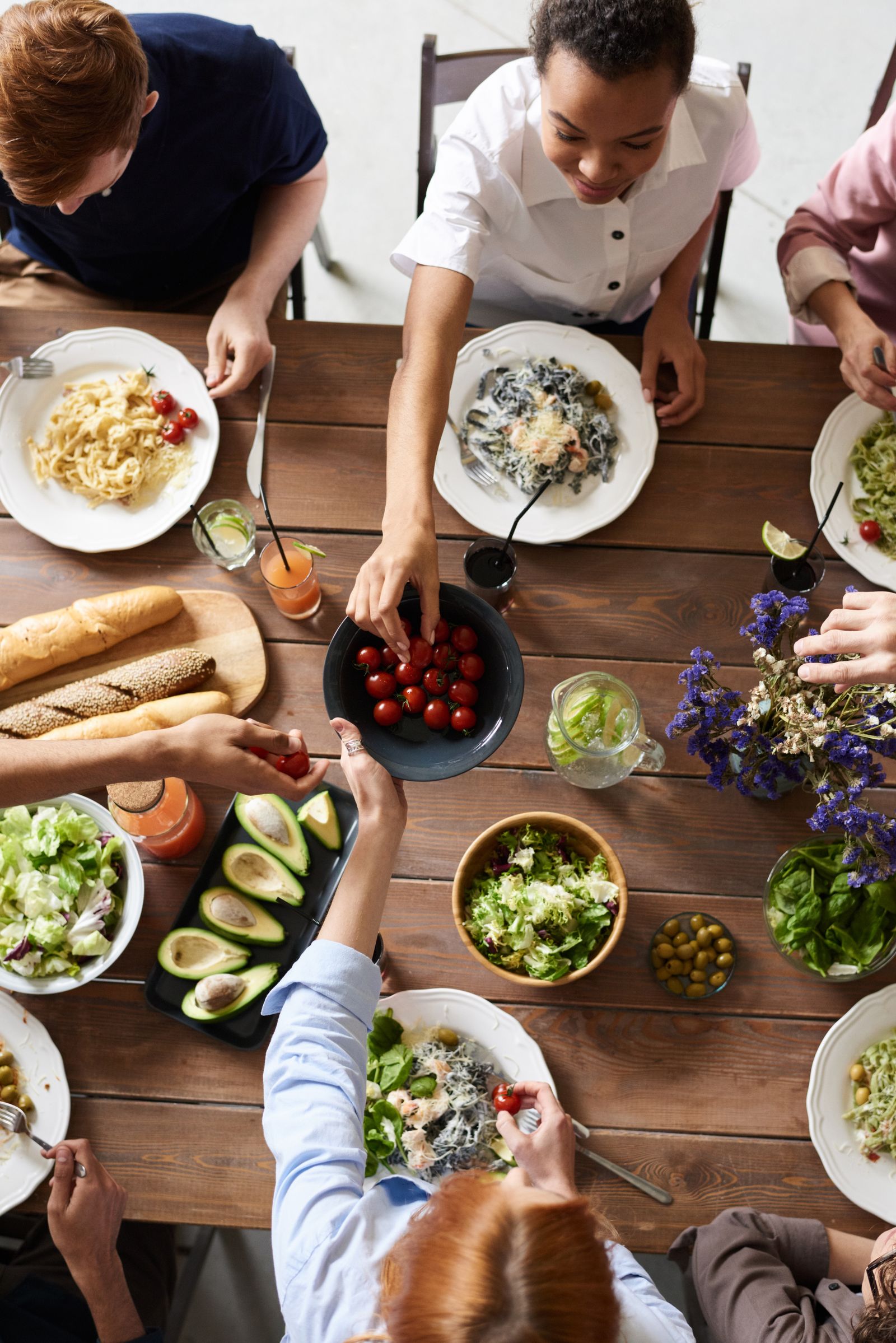
Commenting on every forkful teaches children to eat for an audience. It can also teach adults to hide snacks. Family meals and healthy weight work poorly as a surveillance project. If talk at the table is mostly “finish that” and “you don’t need seconds,” the meal has become a test.
Avoid ranking bodies. Do not compare siblings. Do not put anyone on a public “diet plate” while the rest of the table eats pizza. If a clinician has advised a change for one person, keep the change quiet and practical: water on the table, extra vegetables in the shared dish, dessert as a planned portion rather than a prize.
BMI for children is a screening tool, not a character score. Adult BMI and waist have limits too, especially if someone lifts regularly. The BMI and waist guide is for context. Growth charts belong with a GP, health visitor, or paediatric clinician, not with a parent’s phone app used as a daily verdict.
Movement and sleep sit on the same week
CDC family pages pair eating patterns with activity and sleep. Children aged 6 to 17 are asked to aim for 60 minutes of activity a day. Adults can use a 25-minute walk after dinner on the nights you already sit down together. Two short strength sessions help older adults keep muscle; see strength training over 50 if that is your household.
Sleep timing is part of appetite. A late screen in a bedroom can push bedtime past the point where breakfast is easy. NHLBI and CDC both treat sleep as a healthy-weight habit, not a side note. A shared meal at 6:30 p.m. is often kinder than a 9 p.m. tray in front of a laptop.
When a family meal is not the right tool
Shift work, caring, and two addresses make a nightly table unrealistic. Two planned meals a week still count. A packed lunch eaten together on a Saturday is a family meal. So is a supermarket rotisserie chicken with bagged salad on a night you cannot cook.
If a child is shrinking their food list, hiding food, or exercising in a driven way, stop home “weight projects” and seek help. In the UK, start with a GP and NHS eating-disorder pages. Beat supports families. In the US, start with a paediatric clinician and NEDA. Do not use this article as a method for restriction.
Adults with a history of disordered eating may need a dietitian-led plan that is not built around the family scales. Shared meals can still be warm. They should not become the place where someone is graded.
Behaviour examples you can try without miracle claims
Approaches related to family meals healthy weight are more useful when they name behaviours, not guaranteed kilogram outcomes. Weight changes slowly for most people, fluctuates with fluid and hormones, and responds differently across ages, medicines and health conditions. Aim for patterns you can repeat on an ordinary Tuesday — not a transformation promise.
Concrete behaviour examples (pick one or two, not all):
- Protein-forward breakfast: eggs on toast, Greek yoghurt with fruit, or tofu scramble — then notice afternoon snack urgency for a week.
- Fibre swap: keep the meal you already like; add beans, veg or whole grains so the plate is more filling without a dramatic “diet overhaul.”
- Liquid audit: list weekday drinks; replace one sugary or alcoholic item with water, tea or a smaller pour, three days this week.
- Walk anchor: ten minutes after lunch or dinner on workdays; mark it on the calendar like a meeting.
- Kitchen default: put washed fruit or pre-cut veg at eye level; move ultra-palatable snacks out of easy reach if that reduces autopilot eating.
None of these “melt fat” on a schedule. They change the environment and the average day, which is how sustainable weight-related habits usually work.
How to judge progress without chasing the scale alone
| Signal | What to notice | Caution |
|---|---|---|
| Weekly average weight | Trend over 3–4 weeks if you choose to weigh | Daily swings are mostly fluid; do not punish a single morning |
| Waist or how clothes fit | Same method, same time of day | Not everyone should focus on measurements — skip if it harms mood |
| Energy and training | Can you complete planned walks or sessions? | Persistent exhaustion means the plan may be too aggressive |
| Hunger and mood | Manageable appetite, not constant preoccupation | Obsession, secrecy or compensatory purging needs clinical help |
If you have a history of disordered eating, are pregnant, underweight, frail, or living with a condition where weight loss is not appropriate, do not start a deficit because an article suggested it. Ask a clinician what “healthy” means for you. Stigma in healthcare is real — you can ask for respectful, behaviour-focused care and a second opinion if needed.
Activity that supports weight-related goals without burnout
Walking and everyday movement (NEAT) change weekly energy use more reliably for many people than occasional heroic cardio. Strength training helps preserve muscle during weight loss phases when protein and recovery are adequate. Cardio is excellent for heart health; it is not a licence to ignore food patterns or sleep.
Plateaus happen. Before cutting more food, check sleep, stress, step count accuracy, weekend intake, and whether the plan was realistic. Sometimes maintenance for a few weeks is the productive move. Rapid regain after crash dieting is common — another reason to prefer steady behaviours over extremes.
Safety boundaries for any weight-related plan
Stop and seek care if you notice fainting, chest pain, severe dizziness with exertion, signs of an eating disorder, or mood collapse tied to restriction. Children, teens, and people with certain chronic illnesses need specialist guidance — adult internet plans do not transfer safely. No article can guarantee weight loss, a clothing size, or disease reversal.
Medical note. This article is general information, not a diagnosis or a personal treatment plan. It does not replace advice from a GP, pharmacist, registered dietitian, physiotherapist, or other qualified clinician. Seek urgent help for severe, sudden, or rapidly worsening symptoms. UK readers can use NHS 111 for urgent advice; US readers can use local urgent care or emergency services when needed.
Frequently asked questions
Do family meals cause weight loss?
How often should we eat together?
Should children finish everything on the plate?
What if relatives comment on children’s bodies at dinner?
Sources
- 1. NHLBI We Can!: Eat right (family meals)
- 2. CDC: Preventing childhood obesity — six things families can do
- 3. NHS Healthier Families
- 4. CDC: Tips to support healthy routines for children and teens
Guidance changes. Figures were checked against the sources above at the time of review; always confirm current advice with your GP, pharmacist or clinician.
Image credits
- Photo: Photo by fauxels on Pexels / Openverse
- Photo: Photo by Klaus Nielsen on Pexels / Openverse
Was this useful?
Anyone can react — no account needed.



Discussion
0 comments · Name and email only · Email is never shown