
Hydration at the desk is a bottle you can reach, a refill walk you will take, and fewer sugary top-ups. It is not a contest to finish a huge jug by noon.
Desk days hide thirst. You type. You forget. Then you grab the nearest can. NHS drink advice is calmer than that. As a general guide, adults can aim for six to eight cups or glasses of fluid a day. Water is the default. Lower-fat milk, tea, and coffee also count. Fruit juice and smoothies should stay small.
CDC pages on healthy drinks make the same split. Choose water most of the time. Limit drinks with added sugars. A desk is where that choice repeats. The bottle is a cue. The route to the tap is a pause. Neither one is a medical dose.
What hydration at the desk is for
Most healthy adults can use thirst and pale-yellow urine as everyday signs. MedlinePlus notes that water is the main drink the body needs. Food also brings fluid, especially fruit, vegetables, soup, and yoghurt. You do not have to hit a sports-drink number while you sit.
Hot rooms, heating, and talking all day can raise needs a little. So can a long commute on foot. Illness, vomiting, and diarrhoea change the plan. Heart, kidney, and liver disease may mean a fluid limit set by a clinician. Follow that limit. A blog cannot override it.
A huge marked bottle can backfire. You gulp to “win” the morning, then sit through meetings needing the toilet, or you feel bloated. Steady sips with meals and a refill at a natural break are kinder. Rapid litres of water are not a desk sport. Very large intakes in a short time can be unsafe. Leave the bottle where you can see it, then drink when you would anyway pause.
| Drink | Desk role | Watch-out |
|---|---|---|
| Water, still or sparkling | Default bottle on the desk | Sparkling drinks can bloat some people |
| Tea or coffee | Counts toward daily fluid | Late cups can disturb sleep |
| Lower-fat milk | A useful mid-morning drink | It is a food as well as a fluid |
| No-added-sugar squash | A flavour change if plain water fails | Check the label; keep portions ordinary |
| Fizzy sugary drinks | Occasional, not the all-day top-up | Extra sugars with little other value |
A bottle, a route, and a place that does not fight you
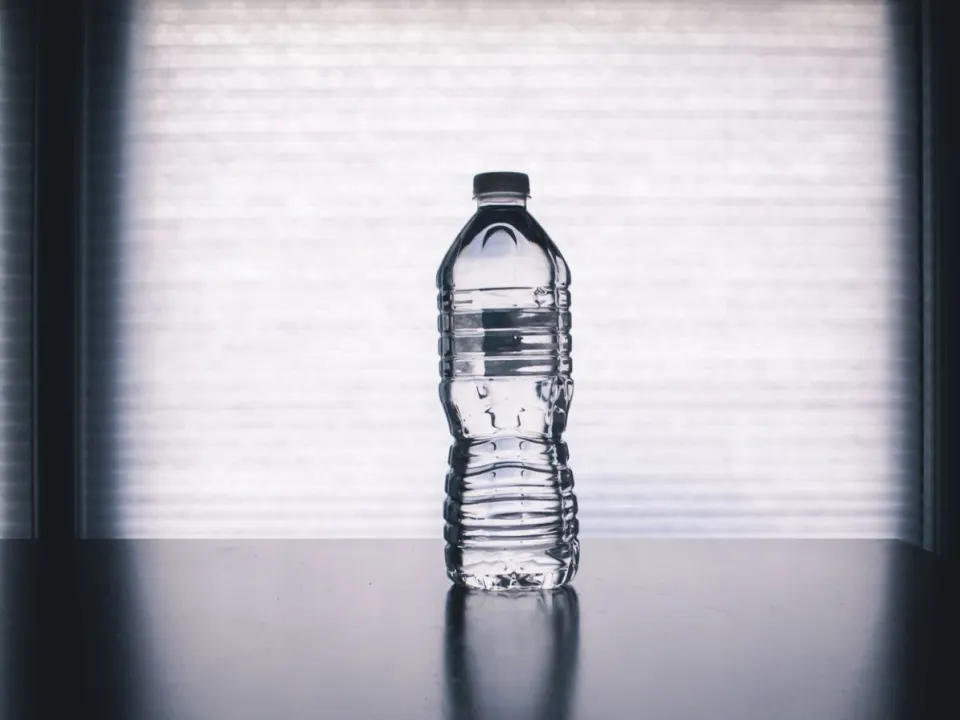
Put the bottle on the side you do not use for the mouse. A bottle in the pointing path makes you reach and twist for every click. Keep it close enough that you see it. Out of sight is out of mind. A clear bottle helps you notice that it is still full at 3pm.
Choose a lid you will actually close. Spills on a keyboard create a worse day than mild thirst. At a hot desk, a bottle you can carry is better than a glass you abandon. Wash it. Stale bottles taste like a reason to buy a can.
Build a refill route. The tap, kettle, or fountain should be far enough that you stand and walk. That walk is the hidden win. NHS sitting advice is to break up long sits with light movement. HSE wants display-screen users to change activity. A refill can be that change, if you do not send someone else.
A simple day looks like this. Tea or coffee at 09:00. Water on the desk by 09:10. A refill walk at 11:00. Water with lunch. Another refill after 15:00. That is not a lab protocol. It is a set of cues you can keep when the inbox is loud.
Look away as you walk. The 20-20-20 screen-break routine fits a corridor with a window at the end. Hands off the keys for those minutes also help. Pair the pause with the load advice in the keyboard and mouse strain guide.
Tea, coffee and the fizzy trap
Usual tea and coffee count as fluid. A normal cup does not cancel its water. Large caffeine doses late in the day can still wreck sleep. If nights are already short, move the last caffeinated cup earlier. Water can take the afternoon slot.
Sugary fizzy drinks are the desk trap. They are easy, cold, and sitting in the fridge. CDC healthy-drinks pages ask people to limit added sugars in drinks. NHS pages treat sugary drinks as a poor everyday habit for teeth and for extra sugar. You do not need a ban speech. You need a default swap: water first, then tea, then the can if you still want it. Keep the can out of arm’s reach if that is the only way the swap holds.
Energy drinks are not a hydration plan. Sports drinks have a role in long, sweaty exercise. They are not required for a still morning at a laptop. Alcohol at lunch is a poor fluid plan. If you take medicines that affect fluid or sodium, ask a clinician rather than adding powders “just in case”.
Use the refill as movement, not as a delay tactic
Do not sip so slowly that you never stand. Do not chug so you can skip the next hour’s pause. Aim for a refill in the morning and another after lunch, plus drinks with meals. That pattern is easier than watching millilitres.
When you stand to refill, take 30 seconds of easy shoulder and hand movement. The ten desk stretches can wait for a side room. A shake-out of the fingers is enough in a kitchen queue.
A sit–stand desk does not water you. You still need the bottle and the walk. Reset the surface when you return so the keys meet relaxed elbows. The wider desk ergonomics checklist covers that order so the drink is not the only healthy object on the desk.
When drinking more is the wrong fix
See a clinician if thirst is new and intense, if you pass urine very often, or if you have unexplained weight loss. Those can have many causes. A bigger bottle is not a test. Dark urine, dry mouth, dizziness, and unusual tiredness can occur with low fluid intake, but they are not unique to it.
Seek urgent care for confusion, fainting, or an inability to keep fluids down. Call 999 or 911 if you think it is an emergency. People with kidney, heart, or liver disease should not chase a generic “eight glasses” slogan if they have been given a limit.
Older adults may feel thirst later. Keep drinks visible and regular if you care for someone in that group.
A bottle-and-route system
Keep a 500–750 ml bottle at the desk. Finish it once by late morning and once by mid-afternoon as a starting pattern, adjusting for body size, climate and medical advice. Each refill is a built-in walk.
What about tea, coffee and cans?
They contribute fluid for most people, but a pattern of only sugary soft drinks adds energy you may not want. Alternate with water. If a clinician has given fluid restrictions, follow those.
Toilet-break guilt
Adequate fluid means bathroom trips. That is physiology, not lost productivity. If access to toilets is restricted in your workplace, raise it as a facilities or dignity issue.
Workday application notes for hydration at the desk
Tie hydration at the desk to a visible cue you already have: a kettle boil, the end of a recurring meeting, or plugging in a laptop at the start of deep work. Keep a one-line prompt on a sticky note near the screen with the first move and hold time so you do not renegotiate the routine mid-afternoon.
If symptoms during hydration at the desk include numbness, progressive weakness, chest pain, or pain that wakes you at night, stop self-managing and speak with a clinician or occupational-health service. Comfort drills support ordinary stiffness; they do not replace assessment.
Revisit your desk height, screen position and break timing whenever you change chairs, monitors or work locations. A routine built for one setup can feel oddly hard in another — adjust the environment before you assume you need more aggressive stretching.
Practical checkpoints for hydration at the desk
Rehearse the main drills for hydration at the desk at the exact doses already listed. Change only one variable this week — range, tempo, or support — and write down the result the next morning.
Keep safety limits visible: sharp pain, dizziness, chest symptoms, or neurological changes mean stop and seek care. Modest consistency with hydration at the desk beats sporadic intensity.
If your environment changed (new chair, different floor, travel), re-check setup before blaming the programme. Small environment fixes often restore comfortable technique faster than adding volume.
One more concrete week of practice
Schedule two appointments with yourself for the skills in this article. Session one copies the doses exactly. Session two adjusts a single cue that felt weakest — depth, quiet footfall, hold time, or screen height — and keeps everything else identical.
After those two sessions, keep what was sustainable. Discard any add-on that only worked once. That is enough experimentation for one week.
Frequently asked questions
Does hydration at the desk mean eight bottles of water?
Does coffee dehydrate me at my desk?
Is sparkling water as useful as still water?
Should I use electrolyte tablets for office work?
What if I forget to drink until I have a headache?
Sources
- 1. Water, drinks and hydration
- 2. Water and healthier drinks
- 3. Water in diet
- 4. Why we should sit less
- 5. Display screen equipment: work routine and breaks
Guidance changes. Figures were checked against the sources above at the time of review; always confirm current advice with your GP, pharmacist or clinician.
Image credits
- Photo: Photo by Monstera Production on Pexels / Openverse
- Photo: Photo by Pixabay on Pexels / Openverse
Was this useful?
Anyone can react — no account needed.



Discussion
0 comments · Name and email only · Email is never shown