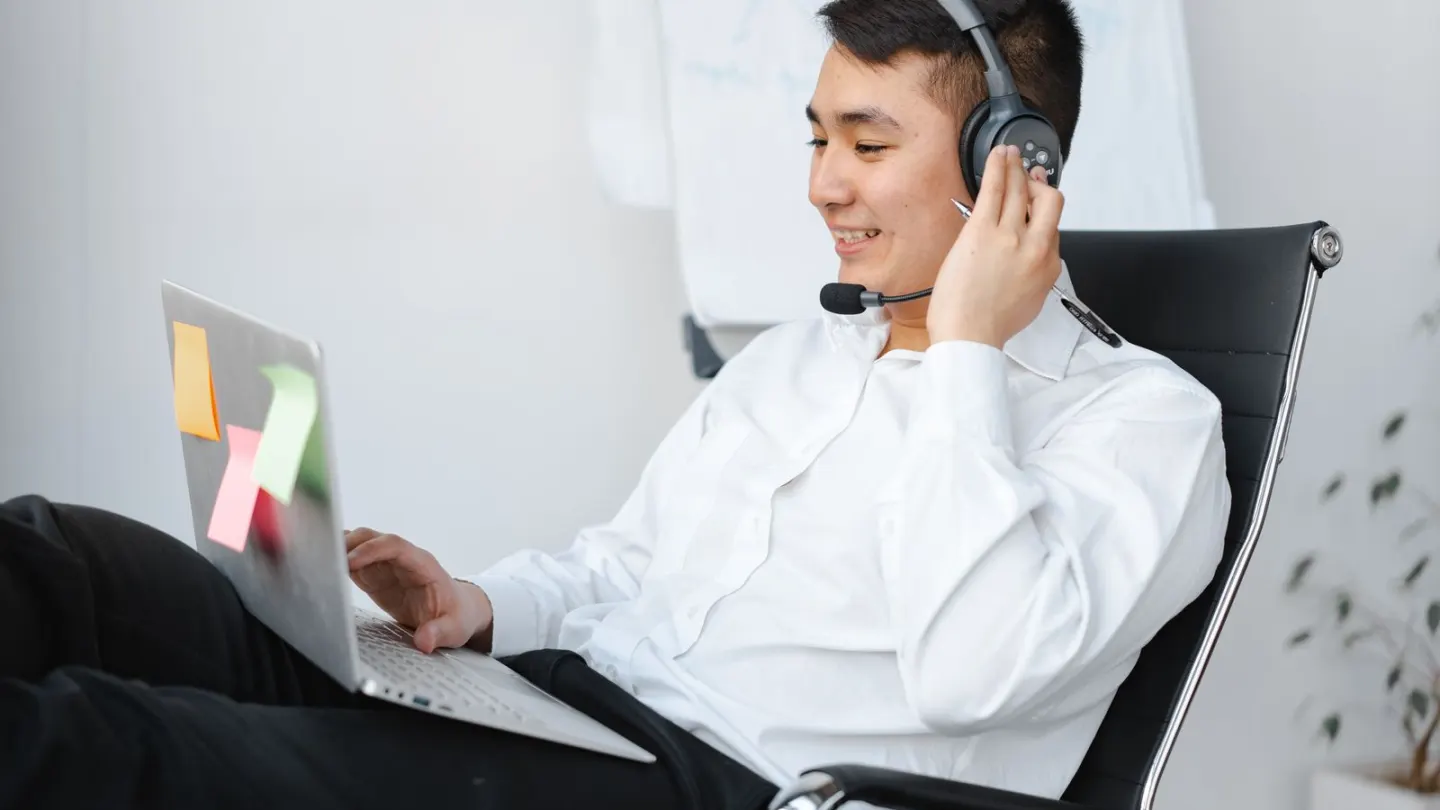
Subtle desk stretches can ease stiffness without a yoga mat or a show. Keep them small, seated, and short. They are not a treatment for injury.
Open offices punish big moves. A lunge beside a shared desk reads as a class. Subtle desk stretches look more like a fidget. You shift a shoulder. You roll an ankle under the table. You sit taller for ten seconds, then go back to the keys.
That is still useful. NHS advice to sit less is about interrupting a long still shape, not about looking athletic. HSE display-screen guidance wants changes of activity during the day. A quiet stretch can be one change. A short walk is a better one when you can leave the chair.
Subtle desk stretches that stay in the chair
Sit back so your feet are supported. Uncross your legs. Then pick two or three moves, not ten. Hold a mild stretch. Breathe. Do not bounce. ACSM flexibility advice for adults is a static hold of about 10 to 30 seconds, repeated two to four times. At a desk, the short end of that range is enough. Two rounds of a chin glide still beat one huge stretch you never repeat.
Try an ankle circle under the desk, ten slow loops each way. Slide your shoulder blades down and together for a count of five, then release. Glide your chin straight back, as if making a small double chin, then return. Open and close the fingers on your lap. Shift your weight from one sit bone to the other.
None of this needs a raised arm over the head. None of it needs a shoe off. If a move makes you look around to see who is watching, it is too big for this room. Save the bigger hip stretch for a stairwell or for home.
Pain is a stop sign. Mild tightness is the target. Sharp, burning, or travelling pain means you should stop and change the plan. MedlinePlus stretching pages make the same point in plain words: ease into a stretch and stay in control.
| Move | How it looks | Hold | Skip if |
|---|---|---|---|
| Ankle circles | Feet hidden under the desk | 10 slow loops each way | Recent sprain or swelling |
| Chin glide | A small double chin, then release | 5 seconds, 5 times | Dizziness or neck injury |
| Shoulder slide | Blades down and together | 5 to 10 seconds, twice | Sharp shoulder pain |
| Finger fans | Hands on the lap, not in the air | 10 seconds, twice | Hot, swollen joints |
| Sit-bone shift | Weight left, then right, while you read | 10 seconds each side | New lower-back pain after a fall |

Why small moves still count
Long sitting keeps hips flexed and the chest rounded. A tiny change of shape lets blood flow and joints move. That is comfort work. It is not a workout. WHO and CDC adult activity targets still sit at weekly walking and muscle work. Desk fidgets do not replace those minutes.
HSE is clear that display-screen users need breaks or a change of task. Stretching in the chair can be that change for two minutes. It should not be the only change. Looking far away still matters for your eyes. Standing to take a call still matters for your hips.
Think of a real Tuesday. You have been on a video call for 50 minutes. When it ends, do not lunge in the aisle. Do the chin glide. Slide the shoulders. Then walk to fill a bottle. That mix is quieter than a stretch class and closer to what the sitting advice is asking for.
A sandwich at 12:40 and a two-minute corridor loop still count. You do not need gym kit. Soft shoes and a shirt are enough. If the floor is wet or crowded, stay seated and use the ankle and hand set. Come back to walking when the path is clear.
If you have a height-adjustable desk, a short stand can follow the seated set. Keep knees soft. Do not freeze. The standing desk transition plan is the place to add upright time slowly.
A quiet set you can hide in a meeting
Mute and camera-off calls are the easy window. Camera-on calls are not. Keep the set for the minutes after you hang up, or for an audio-only stretch of a meeting. Tell a close team that a shoulder roll is not disengagement. Most people will not notice an ankle circle at all.
Do not stretch into a hard end range while you type. Typing with a bent wrist and a yanked neck stacks load. Rest the hands. Then move. The NHS uses “repetitive strain injury” as a popular term for mixed arm and hand problems. A stretch cannot promise to prevent that. Varied tasks and pauses still matter. See the load advice in the keyboard and mouse strain guide.
If you want a longer menu later, use the ten desk stretches at home or in a side room. This article is the public-room version.
Pair stretches with a real break
HSE’s public example for screen work is short, frequent pauses: about five to ten minutes each hour beats one long collapse. You will not stretch for five minutes in an open bay. You can stretch for 40 seconds, then walk. Use the movement snacks for the work day if walking is allowed.
Look away as well. Every 20 minutes, rest your eyes on something about 20 feet (6 metres) away for 20 seconds. That is the 20-20-20 screen-break routine. A stretch that still stares at Slack is only half a pause.
Attach the set to a cue you already have. End of a call. Kettle. Printer. Calendar hour. Two moves are enough. A missed hour is not a debt. Restart at the next cue. If you only remember one move, make it the walk. Sitting advice is about leaving the still shape, not about a perfect stretch list.
When stretching is the wrong tool
Stop for chest pain, faintness, or sudden severe breathlessness. Call 999 in the UK or 911 in the US. Stretching will not sort those.
See a GP, physiotherapist, or US primary care clinician if pain lasts more than a couple of weeks, keeps returning, or disturbs sleep. Numbness, tingling, weakness, or pain that travels down an arm or leg needs a proper check. After a fall or crash, do not self-stretch a sore neck as a first plan.
People with inflammatory joint disease, recent surgery, or a clinician’s advice to limit range should follow that plan. Occupational health can review a workstation when symptoms keep returning at work. Kit and task design often matter more than another hold.
Low-visibility desk moves
- Seated scapular squeezes — 8×5-second holds.
- Ankle pumps under the desk — 20 reps.
- Chin tucks — 8 gentle reps.
- Hand spreads and prayer stretch — 20 seconds.
- Standing while taking a phone call — posture change without a yoga scene.
When you need a private space
Hip-flexor kneeling stretches and floor work belong in a break room, side office, or home. Matching the move to the culture keeps you consistent.
Pair subtle with real breaks
Invisible drills help between meetings; you still need occasional walks. Use subtle moves as glue, not the entire plan.
Workday application notes for subtle desk stretches
Tie subtle desk stretches to a visible cue you already have: a kettle boil, the end of a recurring meeting, or plugging in a laptop at the start of deep work. Keep a one-line prompt on a sticky note near the screen with the first move and hold time so you do not renegotiate the routine mid-afternoon.
If symptoms during subtle desk stretches include numbness, progressive weakness, chest pain, or pain that wakes you at night, stop self-managing and speak with a clinician or occupational-health service. Comfort drills support ordinary stiffness; they do not replace assessment.
Revisit your desk height, screen position and break timing whenever you change chairs, monitors or work locations. A routine built for one setup can feel oddly hard in another — adjust the environment before you assume you need more aggressive stretching.
Practical checkpoints for subtle desk stretches
Rehearse the main drills for subtle desk stretches at the exact doses already listed. Change only one variable this week — range, tempo, or support — and write down the result the next morning.
Keep safety limits visible: sharp pain, dizziness, chest symptoms, or neurological changes mean stop and seek care. Modest consistency with subtle desk stretches beats sporadic intensity.
If your environment changed (new chair, different floor, travel), re-check setup before blaming the programme. Small environment fixes often restore comfortable technique faster than adding volume.
Frequently asked questions
Will subtle desk stretches fix my posture?
How often should I do them?
Can I stretch during a video call?
Is stretching better than walking?
What if stretching makes the pain worse?
Sources
- 1. Why we should sit less
- 2. Display screen equipment: work routine and breaks
- 3. Physical activity guidelines
- 4. Stretching
- 5. Repetitive strain injury (RSI)
- 6. Ergonomics and musculoskeletal disorders
Guidance changes. Figures were checked against the sources above at the time of review; always confirm current advice with your GP, pharmacist or clinician.
Image credits
- Photo: Photo by Mikhail Nilov on Pexels / Openverse
- Photo: Photo by Aathif Aarifeen on Pexels / Openverse
- Photo: Photo by Monstera Production on Pexels / Openverse
Was this useful?
Anyone can react — no account needed.




Discussion
0 comments · Name and email only · Email is never shown