
Standing meeting fatigue is what happens when “let’s take this standing” becomes another still pose. Standing is not a free upgrade on sitting. It is a different static load.
A short stand-up can be useful. You leave the chair. You often finish faster. Trouble starts when the meeting runs, people lock their knees, and nobody is allowed to sit. Standing meeting fatigue then shows up as hot feet, tight calves, a swaying hip, and a wish to lean on the nearest table edge.
UK and US workplace guidance agrees on the unglamorous point: vary posture and move. HSE wants display-screen users to change activity and get up. OSHA wants you to avoid long awkward holds. Neither agency asks you to stand in one spot until the agenda is done.
Why standing meeting fatigue shows up so fast
Sitting and standing both load tissues. They load different ones. Sitting flexes hips and often rounds the back. Standing asks feet, calves and the small muscles that keep you upright to work without a rest. If you already stood at a counter all morning, a 50-minute stand-up is not variety. It is more of the same.
People also stand badly when they are thinking. Knees snap back. One hip takes the weight. The head pokes forward toward a laptop held in the arms. Shoulders creep up. That is an awkward posture in OSHA’s sense, even if it looks “active”.
Meetings add social pressure. Sitting down can feel like you are not committed. Holding a laptop can feel like you are paying attention. Neither instinct protects your feet. Name the problem in the room: we are standing to think, not to prove stamina.
How long is long enough?
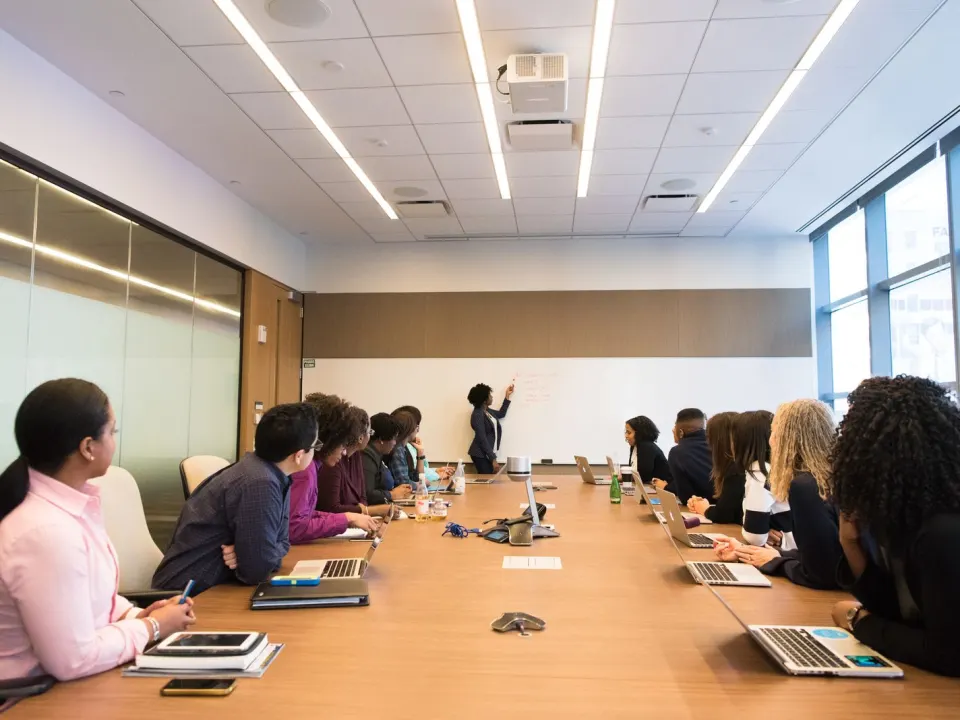
There is no official minute count that makes a standing meeting healthy. HSE’s display-screen example still helps as a mindset: short, frequent changes beat rare, long ones. A 10 to 15 minute stand-up is a different animal from a one-hour review with no chairs.
If the topic needs more time, mix modes. Stand for the first ten minutes. Sit for the detailed bit. Walk a corridor for the last decisions if the group is small. A walking meeting is movement. A frozen circle is not. For under-desk walking devices and their limits, that is a separate safety question; this article is about meetings on ordinary floors.
Build standing tolerance the same way you would with a desk: short bouts, then more. The four-week approach in the standing desk transition plan is a fair template. Do not copy a whole morning of desk standing into a meeting room on day one.
| Format | Standing time | Built-in relief | Best for |
|---|---|---|---|
| True stand-up | 5–15 minutes | End on time. Sit if anyone needs to | Daily updates, blockers |
| Sit–stand hybrid | 10 minutes, then seated work | Chairs in the room from the start | Planning with a document |
| Walking loop | Little standing still | Easy indoor route, no traffic | Two or three people, simple agenda |
| Long review | Optional short stands only | Seats, table, scheduled stretch at 30 minutes | Anything over 20 minutes |
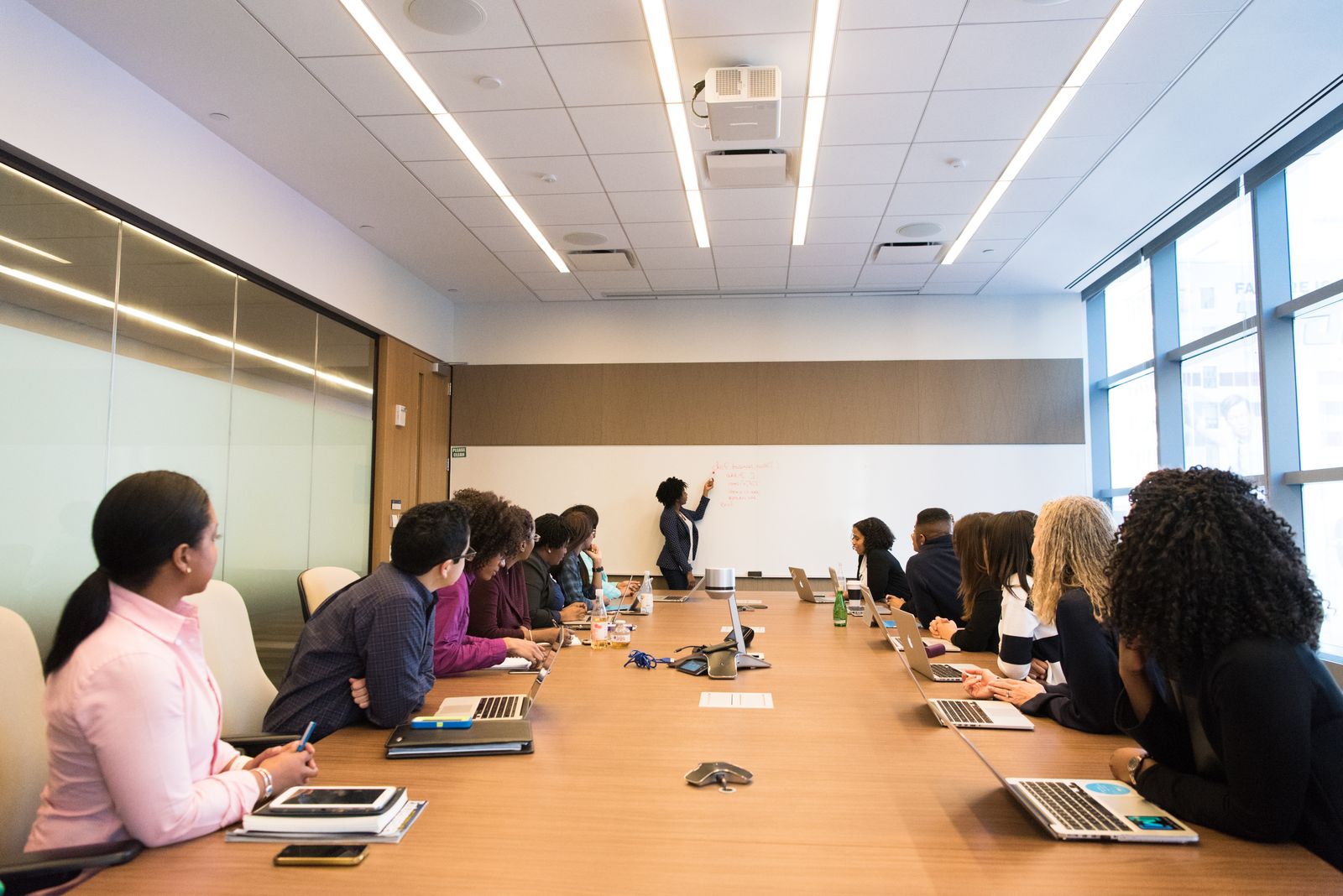
Set the room so people can change shape
Put chairs in the room even if you hope not to use them. A high table lets people rest a notebook without folding at the waist. If people bring laptops, provide a surface at elbow height. Holding a screen in mid-air shrugs the shoulders. Keep input devices on a table. Our keyboard and mouse RSI prevention guide explains why grip still matters. Wall screens should sit where people can see without tipping the chin up. For eye comfort, the 20-20-20 look-away routine still applies. Carpet is kinder than polished concrete. Prefer shoes with some cushion.
What your body can do during the meeting
Unlock your knees. Soft knees are not sloppy. They spare the joints from a locked, backward press. Shift weight from one foot to the other. A small footstool or the rail of a chair lets you rest one foot, then swap. That is an old standing-work trick, not fidgeting.
Keep your ribs stacked over your pelvis rather than hanging into a sway back. You do not need a military chest. You need a position you can leave. Every few minutes, take one step back or sideways. If the culture allows, walk in a slow arc while listening.
Hands can rest on a table edge between notes. Do not hang off one hip for the whole agenda. If calves pump or feet burn, sit. Sitting down is not a failure of the format. It is the format working.
Between meetings, walk. Two minutes in a corridor does more than bouncing in place while someone shares a spreadsheet. Scatter those bouts using the ideas in movement snacks for the work day.
Who should not be pushed to stand
Pregnancy, balance problems, neuropathy, recent surgery, some heart and vascular conditions, and postural tachycardia can all change what standing is reasonable. People who use wheelchairs are not “missing out” on a standing meeting. Offer the same short agenda and a surface at a useful height.
If you feel dizzy, sit or lie down safely. Do not push through tunnel vision. Sudden one-sided leg swelling, warmth and pain, chest pain, or severe breathlessness need urgent medical help, not a longer stand. Call 999 in the UK or 911 in the US if it could be an emergency.
Mild foot ache that settles after you sit, and is gone the next morning, can be ordinary overload. Pain that limps, wakes you, or climbs during each meeting means the dose is too high. Shorten the stand or stop.
NHS and CDC activity guidance still wants weekly walking or similar aerobic work, plus muscle strengthening. Standing meetings do not meet those targets. Treat them as posture variety at most.
Make the format kinder without killing it
Time-box the stand-up. Park detailed debates for a seated slot. Say out loud that sitting is allowed. Rotate who stands at the board. If you host hybrid calls, do not force office staff to stand while remote staff sit. Pick one shared rule: ten minutes standing optional, then sit, or all sit and walk afterwards.
Standing meetings without static overload
Keep standing meetings shorter (often 10–20 minutes), allow perch stools, and invite people to move or sit when they need to. Long standing status meetings can fatigue backs and feet as much as long sitting.
Agenda design
Stand for updates, sit for detailed problem-solving, or walk for open discussion. Match posture to task rather than ideology about standing.
| Label | Value | Unit |
|---|---|---|
| True stand-up | 15 | minutes maximum as a starting point |
| Hybrid sit–stand | 10 | minutes standing then seated work |
| Long review | 0 | default to seats with optional short stands |
Inclusive practice
Never make standing mandatory. Pregnancy, joint conditions, vestibular issues and fatigue disorders all make prolonged standing hard. Offer choices without requiring disclosure in the room.
Workday application notes for standing meeting fatigue
Tie standing meeting fatigue to a visible cue you already have: a kettle boil, the end of a recurring meeting, or plugging in a laptop at the start of deep work. Keep a one-line prompt on a sticky note near the screen with the first move and hold time so you do not renegotiate the routine mid-afternoon.
If symptoms during standing meeting fatigue include numbness, progressive weakness, chest pain, or pain that wakes you at night, stop self-managing and speak with a clinician or occupational-health service. Comfort drills support ordinary stiffness; they do not replace assessment.
Revisit your desk height, screen position and break timing whenever you change chairs, monitors or work locations. A routine built for one setup can feel oddly hard in another — adjust the environment before you assume you need more aggressive stretching.
Room kit that prevents locked-knee standing
Provide at least one perch stool, space to shift weight, and permission to sit without explanation. For hybrid rooms, place a laptop on a riser so in-room people are not peering down at a low camera while standing awkwardly.
Timebox standing updates with a visible timer. When discussion goes deep, invite people to sit. Culture change is the agenda permission, not tougher calves.
One more concrete week of practice
Schedule two appointments with yourself for the skills in this article. Session one copies the doses exactly. Session two adjusts a single cue that felt weakest — depth, quiet footfall, hold time, or screen height — and keeps everything else identical.
After those two sessions, keep what was sustainable. Discard any add-on that only worked once. That is enough experimentation for one week.
Desk-day choreography for standing meeting fatigue
Anchor standing meeting fatigue to breakpoints you already have: ending a call, sending a calendar invite, boiling a kettle, or standing to collect printing. Write the first action and timing on a sticky note near the monitor — for example “30s doorway stretch each side” or “60s walk after every second meeting.” If the note needs a paragraph of explanation, simplify the action until it fits one line.
Batch similar resets so you are not context-switching endlessly: eye breaks can be ultra-short and frequent; mobility snacks can cluster at mid-morning, lunch and mid-afternoon; workstation tweaks belong at the start of a work block rather than during deep focus. Different tools should not all scream with the same alarm sound.
When the calendar collapses, keep a minimum version of standing meeting fatigue: stand and change gaze, or do the shortest stretch sequence already listed. Protecting the minimum on chaotic days prevents the all-or-nothing pattern where one busy Thursday erases the whole week’s intention.
Environment checks that multiply the routine
- Screen height near eye level for your main sitting posture.
- Keyboard and pointing device close enough that shoulders stay quiet.
- Feet supported; avoid long periods perched on a chair edge.
- A clear two-metre path for a micro-walk without tripping on cables.
- Water bottle placement that forces a brief stand when empty.
Re-run this checklist when you change rooms, laptops, or chairs. A routine for standing meeting fatigue that felt easy at the office can feel awkward on a kitchen stool — fix the surface before you assume you need longer stretches.
Symptoms that mean stop self-managing
Seek appropriate care for night pain that wakes you, progressive numbness or weakness, unexplained swelling, chest symptoms, or headaches with visual changes. Desk routines and microbreaks support ordinary stiffness from static work; they are not a diagnosis pathway. Occupational-health or a GP/primary care clinician can advise on adjustments, display-screen assessments, and referrals.
Review standing meeting fatigue every fortnight with one question: did the planned breaks or drills happen on most workdays? If not, reduce the ask until it fits the real meeting load, then rebuild. Sustainable beats elaborate.
Frequently asked questions
Is standing meeting fatigue a sign that standing is unhealthy?
How long should a standing meeting last?
Are walking meetings better?
What shoes help?
Should I lock my knees so I look alert?
Sources
- 1. Working safely with display screen equipment
- 2. Work routine and breaks
- 3. Computer Workstations eTool
- 4. Ergonomics and musculoskeletal disorders
- 5. Why we should sit less
- 6. Physical activity guidelines for adults aged 19 to 64
Guidance changes. Figures were checked against the sources above at the time of review; always confirm current advice with your GP, pharmacist or clinician.
Image credits
- Photo: Photo by fauxels on Pexels / Openverse
- Photo: Photo by Christina Morillo on Pexels / Openverse
Was this useful?
Anyone can react — no account needed.


Discussion
0 comments · Name and email only · Email is never shown