An under desk walking pad can break up long sits if the pace stays slow and the floor is clear. It is not a gym run. It is not a must. Some people should skip it.
WHO, NHS and CDC adult advice still points to at least 150 minutes a week of moderate activity, plus muscle work on two or more days. Light walking at a desk may replace some sitting. It does not automatically meet that moderate dose. Cochrane reviewers found that sit-stand desks may cut sitting time, with very low-certainty evidence. A pad is a similar idea with moving feet. Treat it as a comfort tool with trip risk, not as a treatment.
What an under desk walking pad can and cannot do
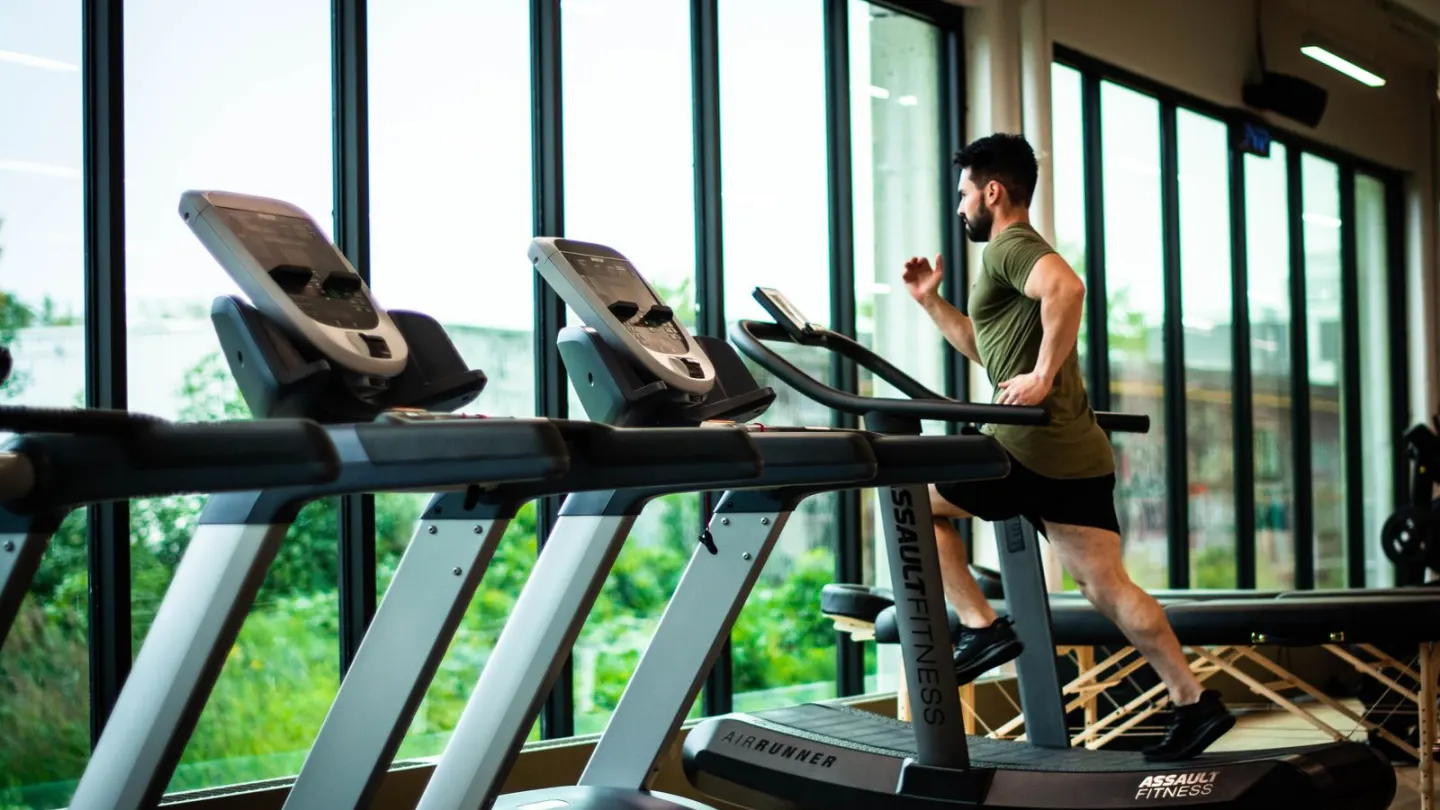
A walking pad is a low, motorised belt that sits under a high desk. You stroll while you read or take a simple call. Typing accuracy often drops. Dual tasks split attention. That is why speed must stay low. A gym run on a full treadmill is a different job. The photo many people know from a gym is not the pace for email.
WHO guidance asks adults to reduce sedentary time and to replace sitting with activity of any intensity. A slow stroll can be that replacement. It is still light work for most people. Brisk walking that raises the breath is closer to the moderate dose in NHS and CDC pages. If you cannot talk, you are going too fast for desk work.
Do not buy a pad to lose weight. Extra energy use compared with sitting is modest and easy to overstate. The honest gain is a chance to move the legs. The honest cost is space, noise, cables and fall risk.

Set the desk before you switch the belt on
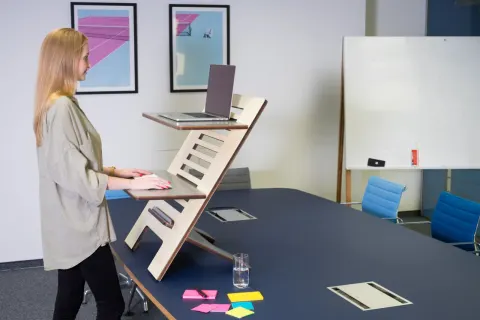
Stand first, without the belt moving. Soft knees. Keys at elbow height. Mouse beside the keys. Screen near eye level, about an arm’s length away. HSE’s standing picture is the same as sitting, only taller. If the desk cannot rise, a pad under a low table will hunch you. Skip it until the surface is high enough.
Keep a chair within a half-turn. Sitting must stay easy, or you will “push through” a wobble. Place the pad so you can step off the back or the side onto a clear floor. Do not trap yourself between a wall and a moving belt.
Cables need a plan. Power leads should not cross the step-off zone. Headphones leads should not dangle into the belt. Pets and small children should not be able to reach it. A rug that bunches is a trip. So is an anti-fatigue mat stacked on the pad. One surface only.
Read the maker’s instructions for weight limits, incline (usually none), and emergency stop. If the belt has no easy stop, it is a poor desk tool. Test the stop with a hand on the desk before you try to work.
| Check | Pass | Stop or skip |
|---|---|---|
| Pace | Slow stroll; short sentences still easy | You cannot talk, or you hold the desk to stay on |
| Desk height | Keys at relaxed elbows; screen near the eyes | You hunch over a low laptop while the belt moves |
| Floor | Clear step-off; cables tied back; chair in reach | Rugs, pets, toys, or a lead across the belt |
| Footwear | Secure, flat shoes you could walk in outdoors | Socks only, heels, or loose slides |
| Work type | Reading, simple calls, light sorting | Fast typing, precision mouse work, hot liquids in hand |
Work through a standing fit using the desk ergonomics checklist and the standing desk transition plan before you add motion. A moving floor will not fix a low screen.
Start slower than you think, then decide
Begin with the belt off. Stand and work for a few minutes. Then walk at the lowest speed for five to ten minutes. Step off. Sit. If feet, calves or the low back feel worse the next morning, you went too far. Stay at short bouts. There is no prize for a two-hour shuffle.
Keep typing and walking apart until the pace feels boring. Read while you stroll. Type while you stand still or sit. Many people never type well on a moving belt. That is fine. The pad can cover calls and inbox triage. Deep writing can stay in the chair.
Look away from the screen on a regular cadence, as in the 20-20-20 screen-break routine. A moving floor does not rest the eyes. Pair the pad with ordinary movement snacks on days you do not use it. A kettle walk still counts.

Who should skip an under desk walking pad
Skip it, or get personal advice first, if your balance is poor. The same applies after dizziness, numb feet, a recent operation, a fresh injury, or a clinician’s limit on walking. Pregnancy, some inner-ear problems, and some heart or vascular conditions can also change what a moving belt is worth. Follow your own clinician. This page cannot sort those cases.
CDC fall-prevention advice for older adults stresses strength, balance and a clear home. A hidden belt under a desk works against that if vision, balance or lighting is already a problem. Age is not an automatic ban. Unsteady gait is a strong reason to choose floor walking instead.
Wheelchair users and people who cannot walk can still vary posture, pressure and tasks. The principle is change, not a mandatory belt. A pad is one optional tool for people who already walk outdoors with ease.
Warning signs are not “getting used to it”
Mild foot fatigue that settles after you sit, and is gone the next morning, can be a normal response to a new pattern. A limp, a twisted ankle, or overnight pain means the bout was too long or the pace was too ambitious. Sit more. Or stop.
Step off and seek urgent help for chest pain, fainting, new severe breathlessness, or sudden one-sided leg swelling with warmth and pain. Sit or lie if you feel dizzy. A fall from a belt that hits the head, hip or wrist needs a prompt check. Call 999 in the UK or 911 in the US if you think it could be an emergency.
Persistent joint pain belongs with a GP, physiotherapist or physical therapist, not with a faster setting. Occupational health can advise if you want a pad at work. Many workplaces will not allow one, and for good reason: noise, space and trip risk are shared. Neighbours may also hear a cheap motor through a floor. Quiet hours matter. If the belt squeals, stop and sit. A noisy pad is not a gift to the room.
Safety rules before you stroll under a desk
- Only use pads designed for under-desk use on a level floor with clearance.
- Start at very slow speeds; typing accuracy drops as speed rises.
- Keep shoes on; avoid dangling cables into the belt.
- Do not use during complex calls that need full attention if balance feels uncertain.
- Stop for dizziness, chest symptoms, or sharp joint pain.
Dosage that stays sensible
Begin with 10–20 minutes at a conversational stroll, once or twice a day. Walking pads complement — not replace — outdoor walks and sit–stand variety. Static standing plus forced treadmill time can fatigue feet.
Ergonomics while walking
Screen still near eye level; elbows comfortable. If you lean on the desk to type while walking, slow down or stop the belt for deep typing blocks.
Making under desk walking pad survive a busy week
Attach under desk walking pad to existing breakpoints and recheck setup whenever you change chairs or rooms. Keep a minimum version for meeting-heavy days.
Persistent numbness, night pain or weakness needs clinical or occupational-health input rather than endless self-tweaks.
Revisit the key steps for Under-Desk Walking Pads: Safety, Speed and Who Should Skip Them twice this week at the doses above, changing only one setup cue between attempts.
Revisit the key steps for Under-Desk Walking Pads: Safety, Speed and Who Should Skip Them twice this week at the doses above, changing only one setup cue between attempts.
Revisit the key steps for Under-Desk Walking Pads: Safety, Speed and Who Should Skip Them twice this week at the doses above, changing only one setup cue between attempts.
Revisit the key steps for Under-Desk Walking Pads: Safety, Speed and Who Should Skip Them twice this week at the doses above, changing only one setup cue between attempts.
Revisit the key steps for Under-Desk Walking Pads: Safety, Speed and Who Should Skip Them twice this week at the doses above, changing only one setup cue between attempts.
Revisit the key steps for Under-Desk Walking Pads: Safety, Speed and Who Should Skip Them twice this week at the doses above, changing only one setup cue between attempts.
Frequently asked questions
What speed should I use on an under-desk walking pad?
Can I run on a walking pad under a desk?
Does a walking pad replace my weekly exercise?
Who should not use one?
Is a walking pad safer than a full treadmill at a desk?
Sources
- 1. Physical activity
- 2. Physical activity guidelines for adults aged 19 to 64
- 3. Adult activity guidelines
- 4. Older adult fall prevention
- 5. Workplace interventions for reducing sitting at work
- 6. Good posture when using display screen equipment
Guidance changes. Figures were checked against the sources above at the time of review; always confirm current advice with your GP, pharmacist or clinician.
Image credits
- Photo: Photo by Cesar Galeao on Pexels / Openverse
- Photo: Photo by Pixabay on Pexels / Openverse
- Photo: Photo by Ketut Subiyanto on Pexels / Openverse
Was this useful?
Anyone can react — no account needed.



Discussion
0 comments · Name and email only · Email is never shown