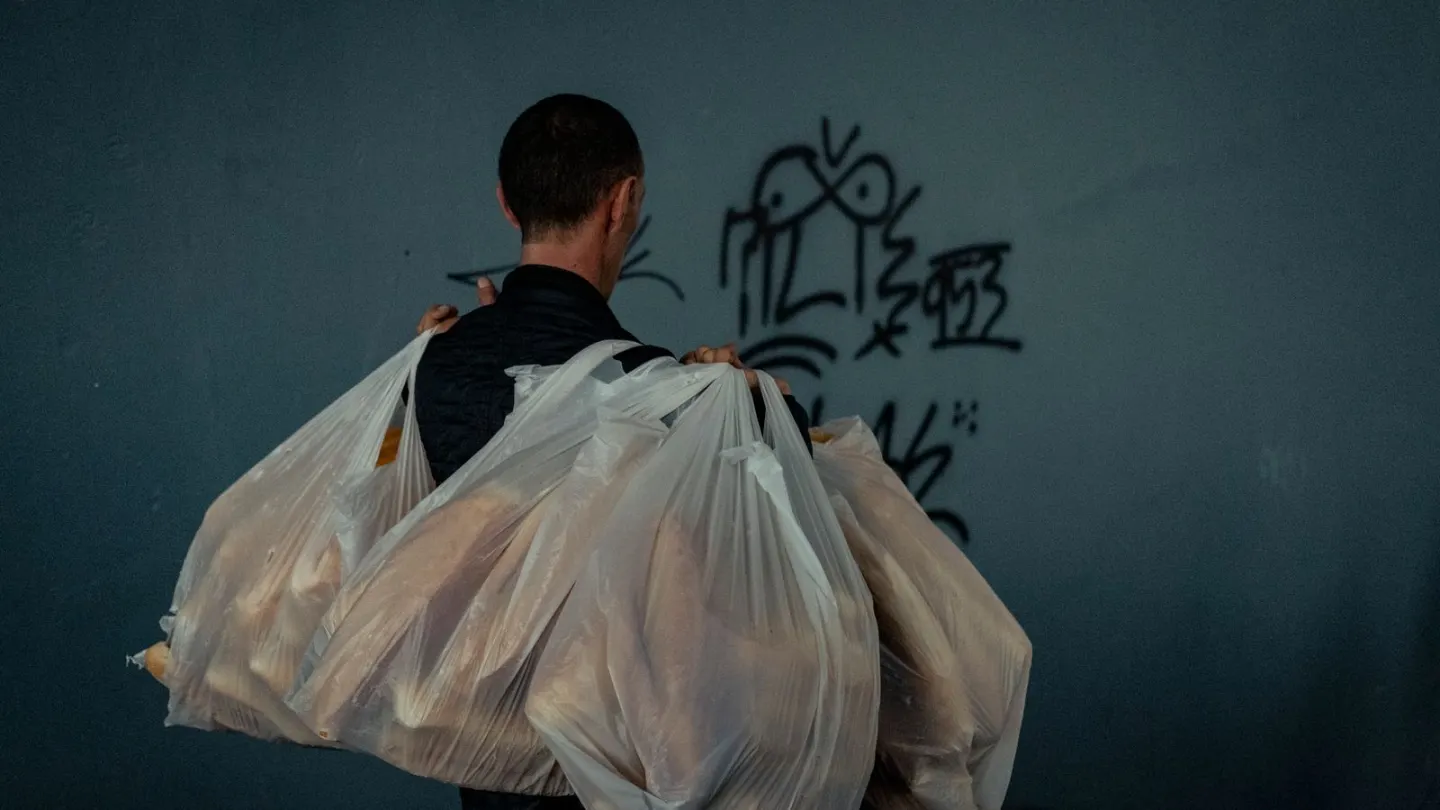
A suitcase carry with shopping bags trains grip, trunk, and a steady walk. You do not need a gym floor or farmer-walk handles.
A suitcase carry is a one-sided loaded walk. You hold a bag in one hand. You stand tall. Then you walk a short, clear path. The other hand stays empty. That uneven load is the point. Your trunk works to keep the ribs stacked. Your grip works to keep the handle still.
Shopping bags make the drill honest. They match a real errand. NHS advice asks adults aged 19 to 64 to do muscle-strengthening work on at least two days a week. The CDC gives the same two-day strength target, plus at least 150 minutes of moderate aerobic activity.
What a suitcase carry trains at home
Gyms call the two-handed version a farmer carry. A suitcase carry leaves one hand free. That extra tilt makes the side of the trunk work. It also trains the small muscles around the shoulder blade. You still walk, so the legs and hips stay in the job.
This is not a race. A slow hallway path is enough. You are practising a grocery walk, not a strongman show. The WHO adult activity fact sheet still uses the 150-minute aerobic floor and two weekly strength days. Pair the carry with a squat, a push, and a row so the week is not all grip work.
If you are new to home strength, the beginner home plan for adults over 50 shows easier standing work first. Come back to a suitcase carry when standing on one spot feels steady.
BHF notes that stronger muscles make daily tasks such as carrying shopping easier. That is the spirit of this drill. You train the errand itself, with a bag you already own.
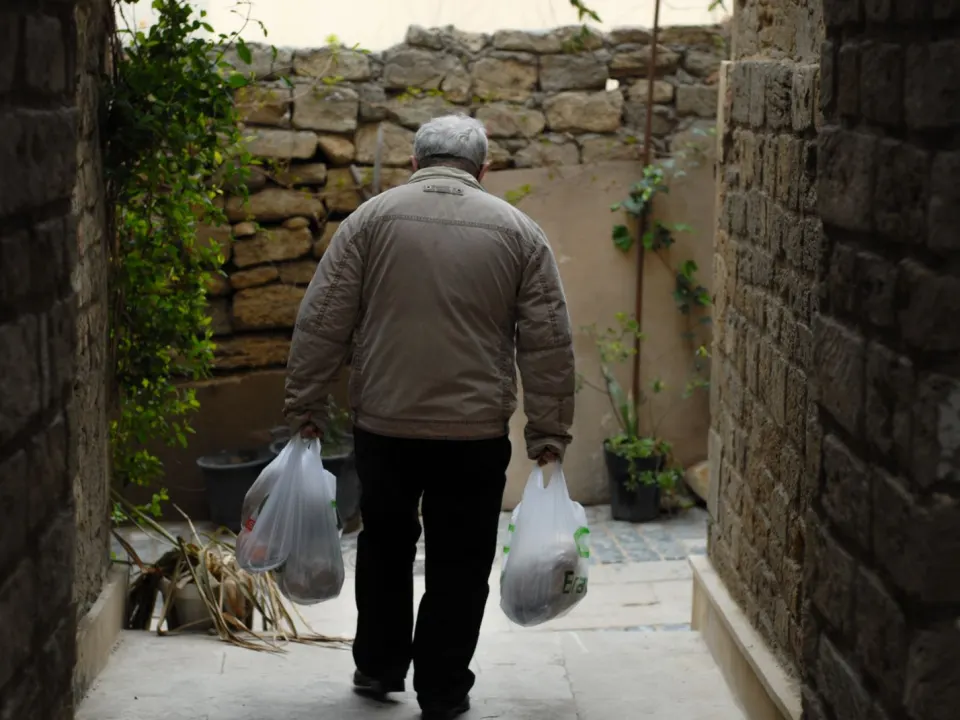
How to set up a suitcase carry with shopping bags
Clear pets, toys, and trailing cables. You need a straight walk of at least eight steps. A kitchen to hallway path is fine. Check the bag. Paper handles can cut. Thin plastic can split. A sturdy shopper with a wide handle is kinder on the fingers.
Stand beside the bag. Hinge a little at the hips. Pick it up as you would a kettlebell: back long, bag close. Do not yank from a twist. Stand tall. Soften the knees. Let the loaded shoulder sit down, not up by the ear.
Walk. Count even steps. Keep the free arm loose. Look ahead, not at the bag. At the end of the path, set the bag down with the same hinge. Switch hands. Repeat.
- Pick a load you can park. If you cannot lower the bag with control, it is too heavy today.
- Brace before you walk. Lightly tense the midriff as if someone might tap your side. Then go.
- Match the steps. A limp toward the empty side means the bag is winning. Shorten the walk or lighten the load.
- Breathe. Do not hold your breath for the whole path. Talk-pace breathing is a good check.
- Switch sides every set. Uneven work is useful. A one-sided week is not.
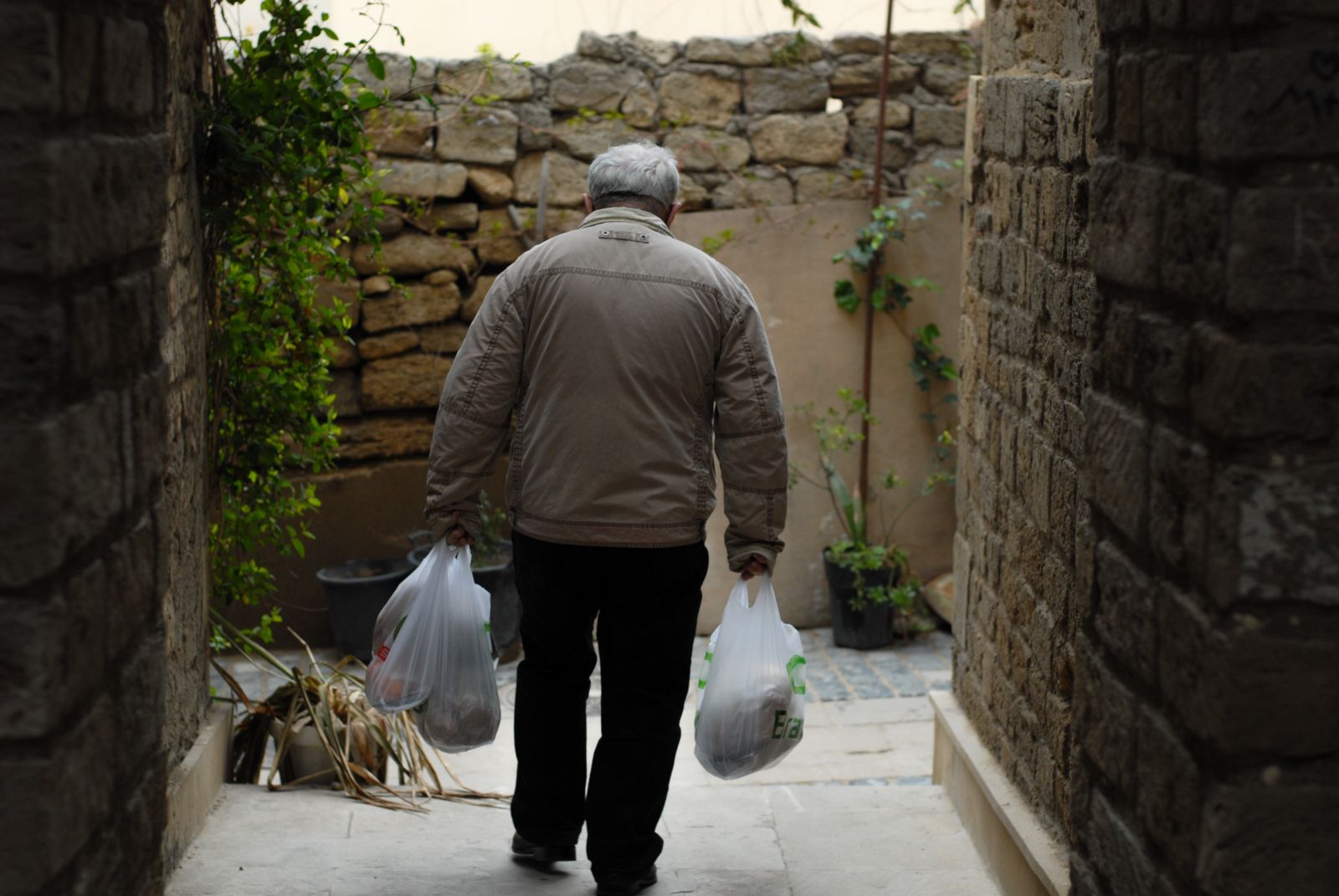
Water bottles in a tote work if groceries are light. A dumbbell in one hand is the same pattern. The bag version just keeps the skill close to real life.
A simple suitcase carry session
Warm up for three minutes. March on the spot. Circle the shoulders. Pick up an empty bag and walk four steps. Then add the real load.
NHS strength pages often use two or three sets of a move, with a load that would be hard to repeat many more times. For a walk, think in seconds rather than reps. Rest until your grip and breathing settle.
| Item | Beginner | Once the walk is smooth |
|---|---|---|
| Walks each side | 2 | 3 |
| Time per walk | 20 to 30 seconds | 30 to 45 seconds |
| Rest between sides | 45 to 60 seconds | 30 to 60 seconds |
| Days each week | 2, not back to back | 2, still not back to back |
| If the bag feels light | Add 10 slow seconds | Pause 3 seconds mid-walk |
| If the bag feels heavy | Shorten to 15 seconds | Use a lighter bag or fewer tins |
Place the carry near the end of a session, after squats or sit-to-stands. Grip work last means you still have hands for other lifts. A resistance-band full-body session can supply the pull and push if you only own bags.
Note the bag, the time, and which side felt harder. Progress means more control, not a bigger wobble. When 40 seconds feels tidy, add a tin, not a sprint. Those small jumps sit with progressive overload without heavier gym plates.
Quiet floors, common faults and safer bags
A suitcase carry stays apartment-friendly if you never dump the bag. Lower it. Park it. Stand up. Soft-soled shoes help on wood floors. If the building is strict, keep this walk and skip jumps. The no-equipment full-body circuit has other quiet options for the rest of the session.
Shrugging the loaded shoulder is the most common miss. Think “long neck” and “heavy bag, quiet shoulder.” Leaning away from the bag looks dramatic and wastes the trunk work. A fast shuffle turns the drill into a stumble. Wrist pain often means a thin handle. Wrap a tea towel around it.
Do not twist to look at a phone while you walk. Do not use a bag with a known rip. Glass jars need a firm tote, not a flimsy vest bag.
Two bags at once is a farmer carry. That version is more stable. Use it when one-sided work feels too tippy. Return to the suitcase carry later if you want the extra trunk challenge.
Who should skip or adapt the walk
If walking a straight line is already hard, skip loaded walks for now. Ask a GP or physiotherapist (US: physical therapist) about balance work first.
Stop for chest pain, faintness, unusual breathlessness, or pain that shoots down a leg. Call 999 in the UK or 911 in the US if those symptoms are sudden. Online cues cannot replace an exam.
High blood pressure that is not settled, a recent operation, or late pregnancy may need a personal plan. A suitcase carry is not treatment. It is one strength pattern. Choose a pain-free stand-in, or rest the pattern.
Shopping-bag carry doses
Hold a bag at one side, tall posture, walk 20–40 metres or 30–45 seconds, switch hands, repeat for 4–6 total lengths. Keep shoulders level; do not lean away hard from the bag.
Grip and flooring
Use bags with intact handles. Walk on a clear path. Soften the knees slightly. If the bag bangs the thigh, shorten the stride or use a slightly lighter load.
Progression
Increase time before increasing load. Then add a second lighter bag for a farmer carry. Keep one day between heavier carry sessions if forearms or traps are very sore.
Session notes specific to suitcase carry
Before you repeat suitcase carry, decide the exact surface, footwear and support object you will use. Write the first set’s intended reps or seconds on paper. After the session, record only what changed: a deeper controlled squat, a quieter footfall, a longer wall-sit, or a press-up incline that felt more stable. Those notes beat vague intentions to ‘train harder’.
If a joint feels sharper during suitcase carry than muscularly tired, shrink range or choose the regression described earlier. Home training should leave you able to climb stairs and sleep that night. Seek GP or physiotherapy advice for pain that lingers, swells, or follows a fall.
Space hard versions of suitcase carry so similar patterns are not hammered on back-to-back days. A walk, easy mobility, or an upper-body focus can fill the gap while tissues adapt.
Practical checkpoints for suitcase carry
Rehearse the main drills for suitcase carry at the exact doses already listed. Change only one variable this week — range, tempo, or support — and write down the result the next morning.
Keep safety limits visible: sharp pain, dizziness, chest symptoms, or neurological changes mean stop and seek care. Modest consistency with suitcase carry beats sporadic intensity.
If your environment changed (new chair, different floor, travel), re-check setup before blaming the programme. Small environment fixes often restore comfortable technique faster than adding volume.
One more concrete week of practice
Schedule two appointments with yourself for the skills in this article. Session one copies the doses exactly. Session two adjusts a single cue that felt weakest — depth, quiet footfall, hold time, or screen height — and keeps everything else identical.
After those two sessions, keep what was sustainable. Discard any add-on that only worked once. That is enough experimentation for one week.
Field notes that keep suitcase carry useful
Before the next session involving suitcase carry, decide the exact dose: duration, sets, portions or steps — whatever this article measures. Write it somewhere you will see at the start time. Vague intentions are how good advice becomes unused bookmarks.
Afterward, record one sentence on comfort and one number from the plan (load, minutes, fibre grams, glasses, intervals). That pair of notes is enough to spot patterns across a fortnight without building a complicated spreadsheet you abandon.
If the plan collides with the same obstacle twice — late meetings, sore knees, skipped breakfast — change the obstacle, not only your willpower. Move the slot, shorten the session, or prepare the meal earlier. suitcase carry only works as behaviour in a real week.
Share the plan with one person who will ask a kind check-in question, or book it in a shared calendar. Quiet accountability beats public pressure. Re-read the sections above after two weeks and keep only the pieces you actually repeated.
Revisit the safety notes in this article whenever suitcase carry feels rushed. Slowing the first five minutes usually saves the whole session.
Revisit the safety notes in this article whenever suitcase carry feels rushed. Slowing the first five minutes usually saves the whole session.
Frequently asked questions
Is a suitcase carry the same as a farmer carry?
How heavy should the shopping bag be?
Can I do this in a small kitchen?
How often should I practise a suitcase carry?
Do I need special farmer-walk handles?
Sources
- 1. Physical activity guidelines for adults aged 19 to 64
- 2. Adult Activity: An Overview
- 3. Physical activity fact sheet
- 4. Strength exercises you can do at home
Guidance changes. Figures were checked against the sources above at the time of review; always confirm current advice with your GP, pharmacist or clinician.
Image credits
- Photo: Photo by Zeynep Sude Emek on Pexels / Openverse
- Photo: Photo by halilibrahimxq on Pexels / Openverse
- Photo: Photo by Narmin Aliyeva on Pexels / Openverse
Was this useful?
Anyone can react — no account needed.
Discussion
0 comments · Name and email only · Email is never shown