Mental Wellbeing Science explainer
App Blocking vs Friction: Which Digital-Wellbeing Design Is More Sustainable?
Updated
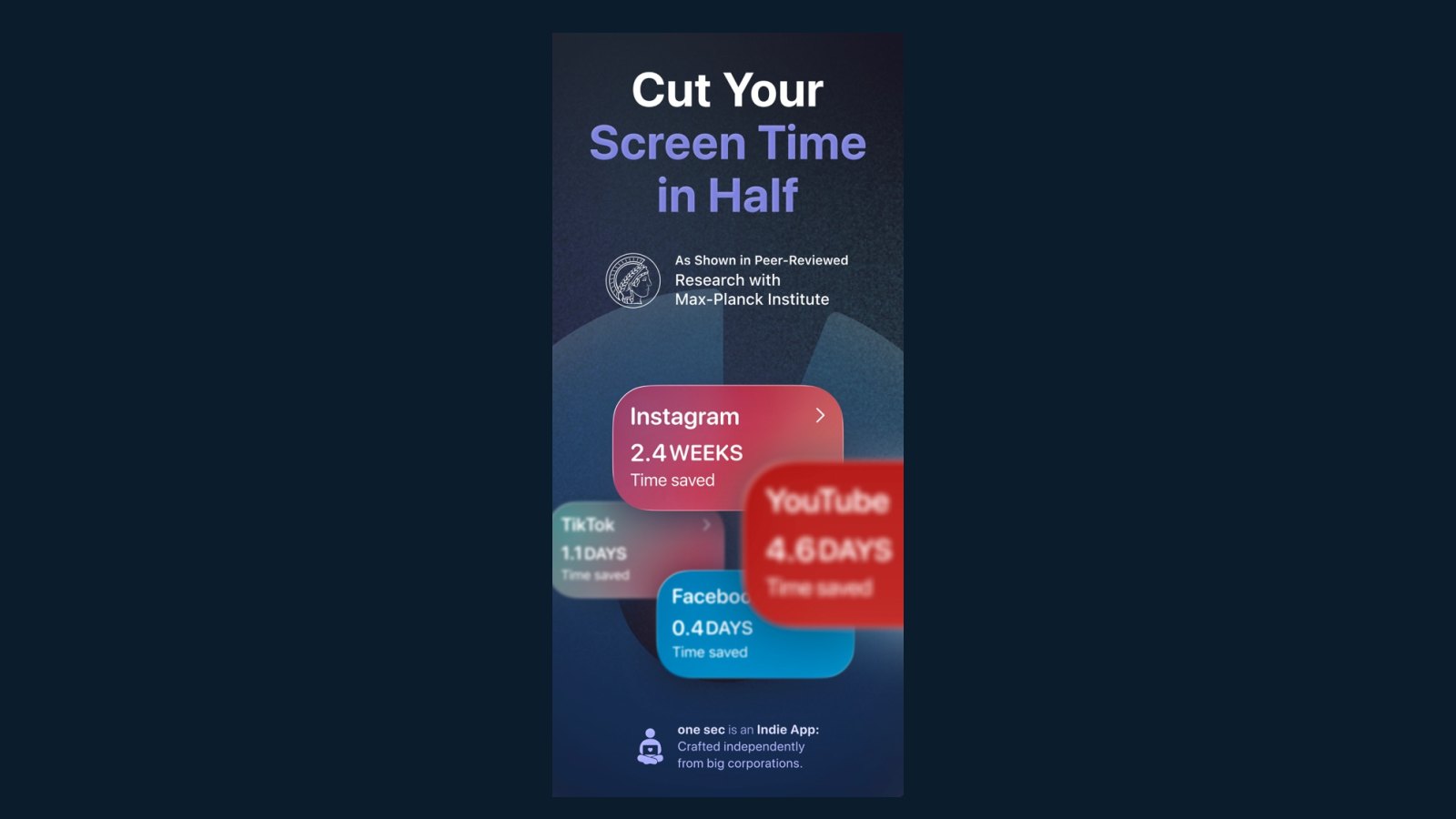
An app blocker vs friction choice is a design choice, not a brand ranking. This is a source-reviewed guide, not a hands-on lab test. Blockers hide or freeze an icon. Friction apps delay the open and ask you to continue. Sustainability here means you still use the rule next month, not that a store badge lasts.
1 of 5
Download one sec | screen time + focus on the App Store
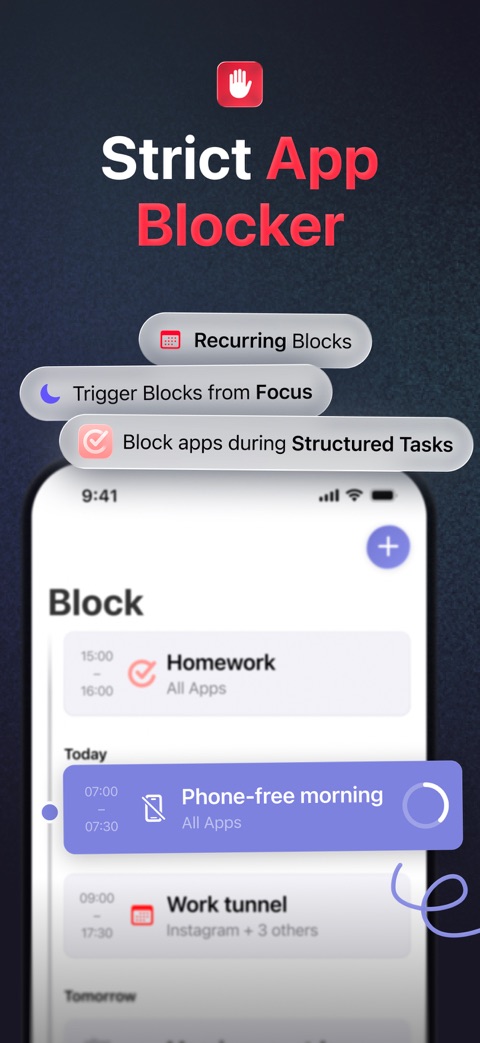
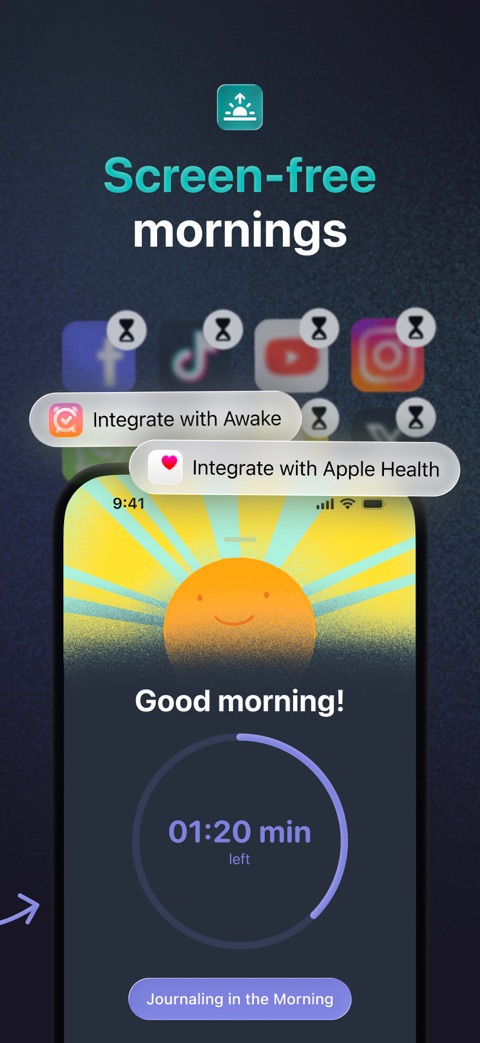
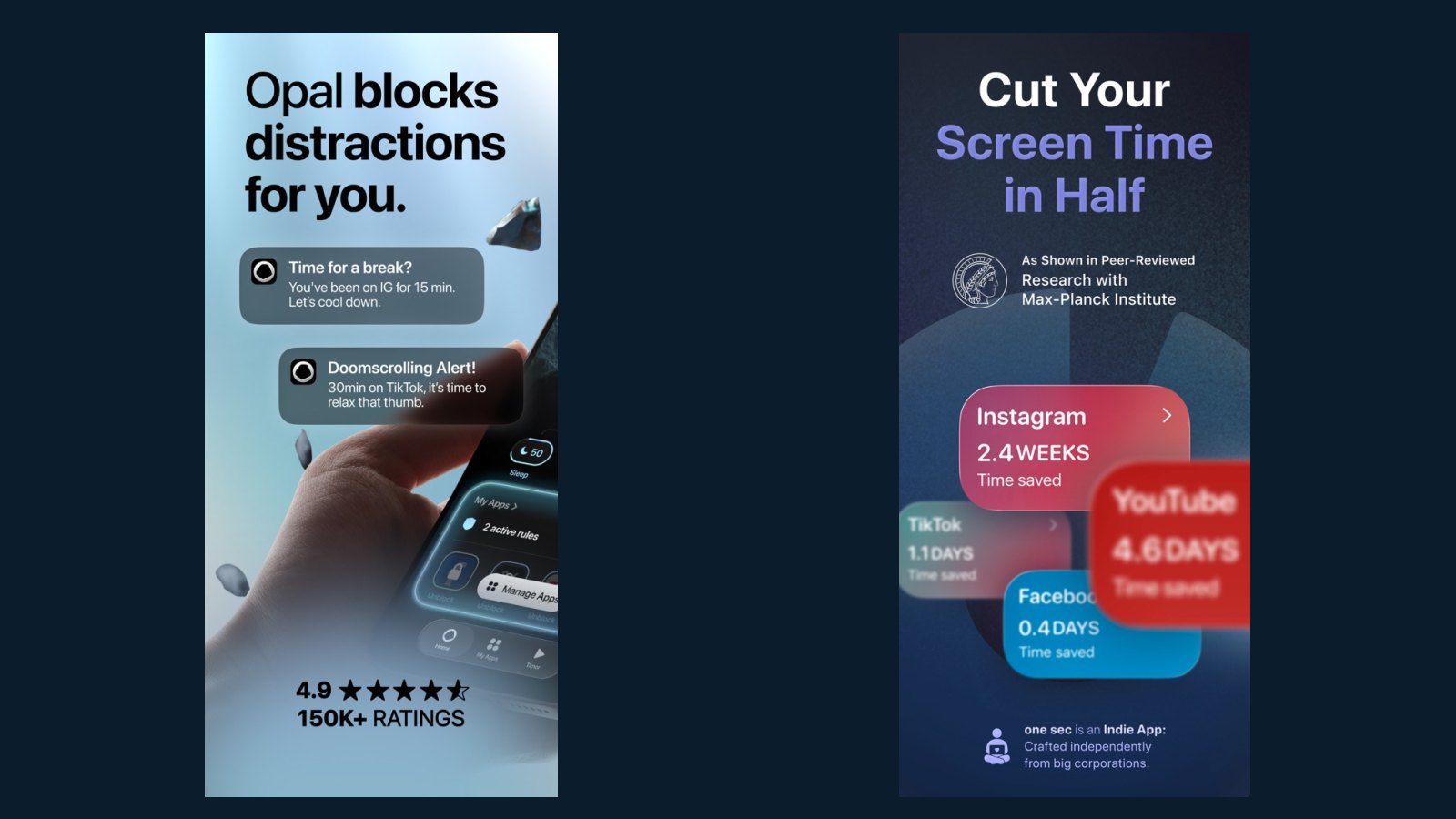
Product cells live on best screen time apps. Opal is closer to a lock. one sec is closer to a pause. Freedom leans block. Forest leans a timer you can still leave.
App blocker vs friction in plain words
A blocker uses the operating system to shield an app or site. On iPhone that often means Screen Time APIs. On Android it often means Accessibility or usage-access services. The icon greys. The tap fails. Opal’s Deep Focus copy says you cannot cancel. Freedom’s listing is the same idea across devices.
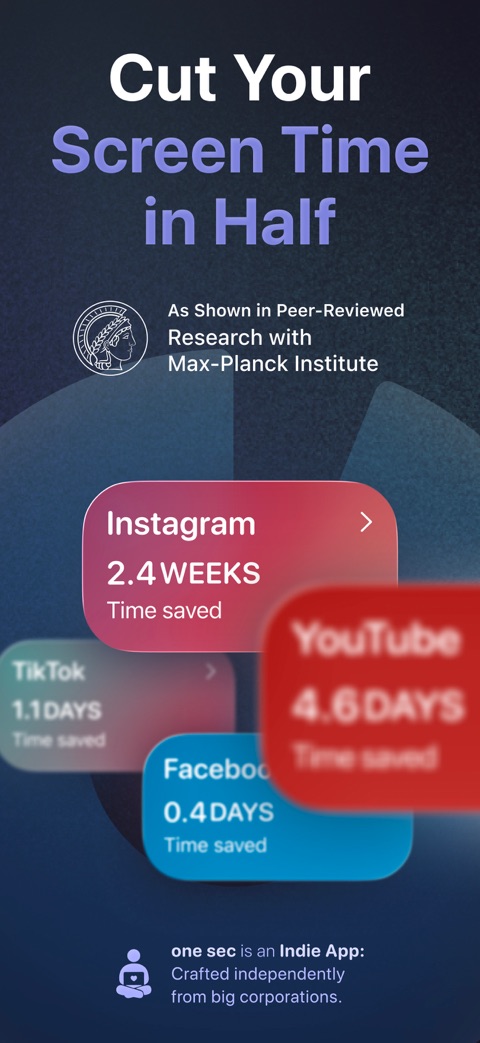
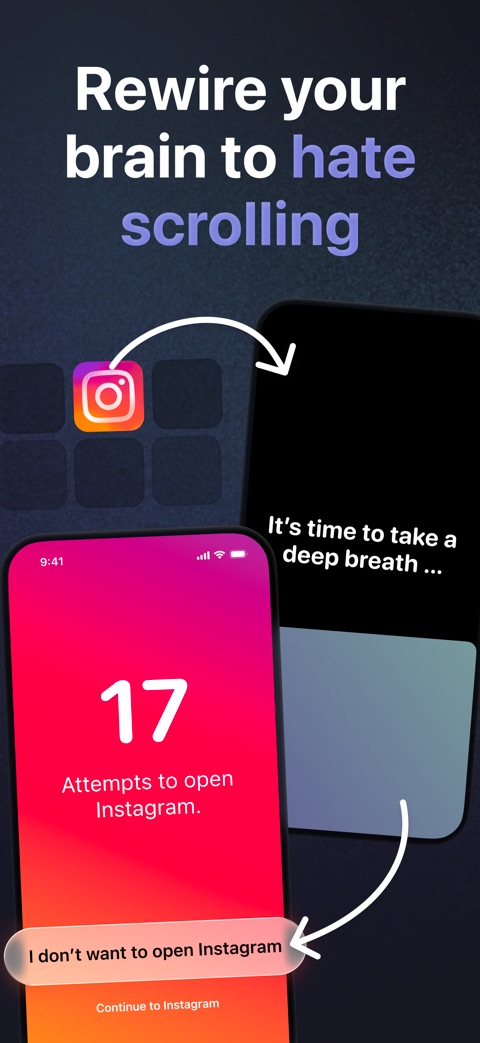
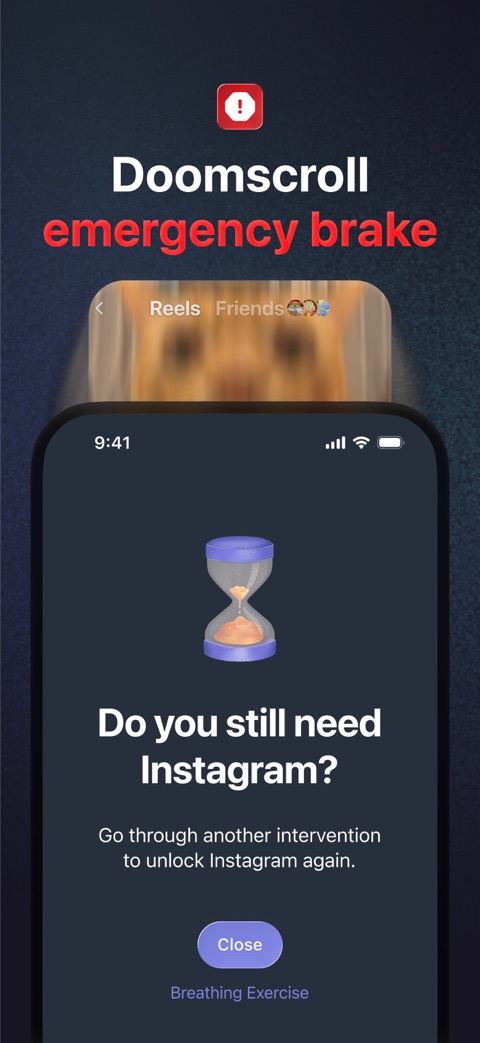
Friction leaves the app installed. one sec inserts a breath, a wait, or a task, then a button to continue or stop. Forest plants a timer you can abandon. The design bet is that a small cost will change the next impulse.
Both can sit on one phone. That still does not make this a shopping page for a third brand.
| Question or claim | Evidence source | Study type | Population | Comparator | Outcome | Key finding | Limitation | Applicability |
|---|---|---|---|---|---|---|---|---|
| Does friction reduce opens? | Grüning et al., PNAS 2023 | Field log; preregistered online experiment | 280 users, 6 weeks; N=500 online | Week 1 versus later; feature variants | Target-app openings; clip starts | 57% fewer openings; dismiss option strongest; delay helped; message did not | No field control; developer co-author; six weeks | Adults who already installed one sec |
| Must a sanction be hard? | Biedermann et al., JCAL review | Systematic review, 28 interventions | Mixed | Varied | Distraction / use | Soft awareness failed; weak sanctions were dismissed | Low confidence; small n; short runs | Study and work tabs |
| What do most tools test? | Monge Roffarello & De Russis, TOCHI 2023 | Review plus meta-analysis | 255 in the time meta-analysis | Baseline versus tool | Time on device or app | Small-to-medium time effect (g = 0.47); papers lean toward blocks | Mean ~23 days; meaning under-studied | Motivated adults |
| Do built-in limits last? | Ding et al., JMIR 2023 (citing app-limit papers) | Review of published trials | Varies | Pre–post limits | Phone and social minutes | One cited limit cut Facebook ~33% short term; total phone time did not always fall | Often the OS tool, not a paid brand | iOS or Android native limits |
| Is one design more sustainable? | No head-to-head year-long RCT we could quote | — | — | Block versus friction as assigned designs | Adherence at 6–12 months | Unverified | Gap, not a tie score | Do not buy on a “forever” claim |
How each design fails
Blockers fail when you hold the PIN, the unblock, or the “change limit” button. Opal Play reviews captured on 13 September 2026 described overlay timers they turned off and categories that snapped back. A lock you administer is still your lock.
Friction fails when the pause becomes part of the ritual. You breathe, you tap continue, you scroll. The PNAS online experiment matters here: extra words did not cut consumption. The chance to stop did. If your one sec setup hides the dismiss path, you rebuilt a soft block.
Uninstall is the shared failure. A tool you delete in week two has no sustainability story, whatever the mechanism.
What the one sec trial does and does not prove
The field log is the best named friction study we have. Openings fell. Attempts fell. People said they were more satisfied. That is not a proof that friction beats blocking for everyone. There was no randomised blocker arm. Users had already chosen the app.
The online experiment is cleaner on mechanism. Giving people a way out of the next clip cut starts more than a delay. A deliberation sentence did not. If you buy friction for the quote on the splash screen, you are buying the weakest piece.
Read the one sec review for dated prices. Read screen time app evidence for why openings are not minutes.
Why blockers still have a job
Some hours should not be a negotiation. Exams, sleep, and a paid work block are examples. Biedermann’s point on hard sanctions fits those hours. A pause that you can clear in two seconds is the wrong instrument if you already tap through every warning.
Opal, Freedom, and iOS Downtime are this family. See the Opal review and the Freedom review for platforms and fees. We still lack a year-long independent RCT that names those products and reports adherence.
Forest is a cousin, not a lock. The tree dies if you leave. That is social friction plus a timer. The JMIR review cited a small Forest-plus-Screen-Time sample (n=26). Treat that as thin. The Forest review stays on specs.
Sustainable means the rule you will not undo
Sustainability is not “I never open Instagram again.” It is “I still have a rule in week eight.” Reviews of digital self-control tools keep flagging short studies. A 23-day mean cannot crown a life design.
Pick friction if you still need the app and you open it without a reason. Pick a blocker if a reason will not appear during that hour. Pick neither if you will spend the week hunting bypasses. Shame is a poor designer.
A walk still sits outside both models. If stress is the tap’s fuel, see the stress eating practical guide for a pause that is not another icon.
Combining the two without a third logo
one sec Pro now lists Strict Block Sessions and Re-Intervention. That is friction plus a later wall. Opal lists breaks and unblocks. That is a wall plus a door. You can stack them. You do not need a new brand to do it.
Built-in Screen Time and Digital Wellbeing already offer limits and downtime. Paid apps add scheduling, sounds, and social scores. They do not add a new law of behaviour. Platform data differences are the iOS Screen Time vs Android Digital Wellbeing page.
What remains unverified
We did not find a 12-month randomised comparison of blocker versus friction as assigned designs. We did not find independent relapse curves for Opal Deep Focus versus one sec’s pause. Company “hours saved” totals are marketing, not a methods section.
Until that trial exists, the honest app blocker vs friction answer is conditional. Use a lock for hours that must stay closed. Use a pause for apps that must stay installed. Judge the pair by the rule you still keep, not by a streak gem.
Frequently asked questions
Is an app blocker more effective than friction?
Why do people tap through a pause?
Why do people undo a block?
Can I use both designs?
Does either design replace therapy?
Sources
- 1. Directing smartphone use through the self-nudge app one sec
- 2. Achieving Digital Wellbeing Through Digital Self-Control Tools
- 3. Digital self-control interventions for distracting media multitasking
- 4. Evaluating the Effectiveness of Apps Designed to Reduce Mobile Phone Use
- 5. one sec | screen time + focus
Guidance changes. Figures were checked against the sources above at the time of review; always confirm current advice with your GP, pharmacist or clinician.
Image credits
- Photo: Apple / App Store (App Store listing)
- Photo: Photo by cottonbro studio on Pexels / Openverse
- Photo: Photo by Max Vakhtin on Pexels / Openverse
- Photo: Photo by Josh Hild on Pexels / Openverse
Was this useful?
Anyone can react — no account needed.


Discussion
0 comments · Name and email only · Email is never shown