
Store pages treat a falling minute total as proof. Screen time app evidence is narrower than that graph. This is a source-reviewed guide, not a hands-on lab test. Researchers more often measure opens, overrides, short trials, and self-report. They rarely measure a year of better sleep or a calmer mood.
This page answers an evidence question. It is not a shopping list. For product cells see best screen time apps, the Opal review, and the one sec review.
What screen time app evidence actually measures
A useful trial names the object. Minutes on a device is one object. Opens of Instagram is another. Self-rated “problematic use” is a third. Satisfaction after six weeks is a fourth. These numbers do not move together.
The 2023 TOCHI meta-analysis is the widest quantitative summary we found. After dropping two outliers, the pooled effect on time was small to medium (g = 0.47) across 255 participants. The authors warn that most digital self-control papers skip theory, run short, and treat less time as the goal. That is a design choice, not a law of wellbeing.
If your job needs maps, mail, and a work chat, a raw minute drop can punish useful time. A better question is: did the minutes you kept match the reason you picked up the phone?
| Question or claim | Evidence source | Study type | Population | Comparator | Outcome | Key finding | Limitation | Applicability |
|---|---|---|---|---|---|---|---|---|
| Do digital self-control tools cut time? | Monge Roffarello & De Russis, ACM TOCHI 2023 | Systematic review plus meta-analysis | 255 people across 9 eligible time studies | Baseline versus intervention in each paper | Time on device, site, or app | Pooled Hedges’ g = 0.47 (95% CI 0.27–0.68), small-to-medium | Mean duration about 23 days; few long follow-ups; two outliers removed | Adults already willing to install a tool |
| Does a pause reduce target-app opens? | Grüning, Riedel, Lorenz-Spreen, PNAS 2023 | Field log plus preregistered online experiment | 280 field users over 6 weeks; N=500 online | Week 1 versus later weeks; feature variants online | Target-app openings; video-clip starts | 57% fewer openings; 36% dismissed after the pop-up; dismiss option strongest online | No field control; self-selected; developer co-author; opens not minutes | People who already wanted one sec |
| Is awareness enough? | Biedermann et al., JCAL systematic review | Narrative review of 28 interventions | Mixed student and adult samples | Varied by paper | Distraction and use | Awareness-only tools were barely effective; weak sanctions were dismissed | Authors rate confidence low; small n; short duration | Study and work settings with tempting tabs |
| Which commercial apps have trials? | Ding et al., JMIR 2023 | Multimethod review of 13 apps | Varies; one cited Forest study n=26 | Pre–post or named features such as greyscale | Phone minutes; some “maladaptive use” scores | 4 of 13 apps judged effective; greyscale cut about 38 minutes/day in cited work | Feature studies often use the built-in OS tool, not the store brand; small n | iOS greyscale and app limits more than a paid icon |
| Does less social time improve mood? | Manufacturer copy; public health pages | Not a single app RCT we could quote here | — | — | Depression or anxiety scores | Unverified for Opal, Freedom, or Forest as named products | Store lines about sleep or ADHD outrun the papers | Use NHS or CDC pages for mood, not a streak |
Minutes are a proxy, not a verdict
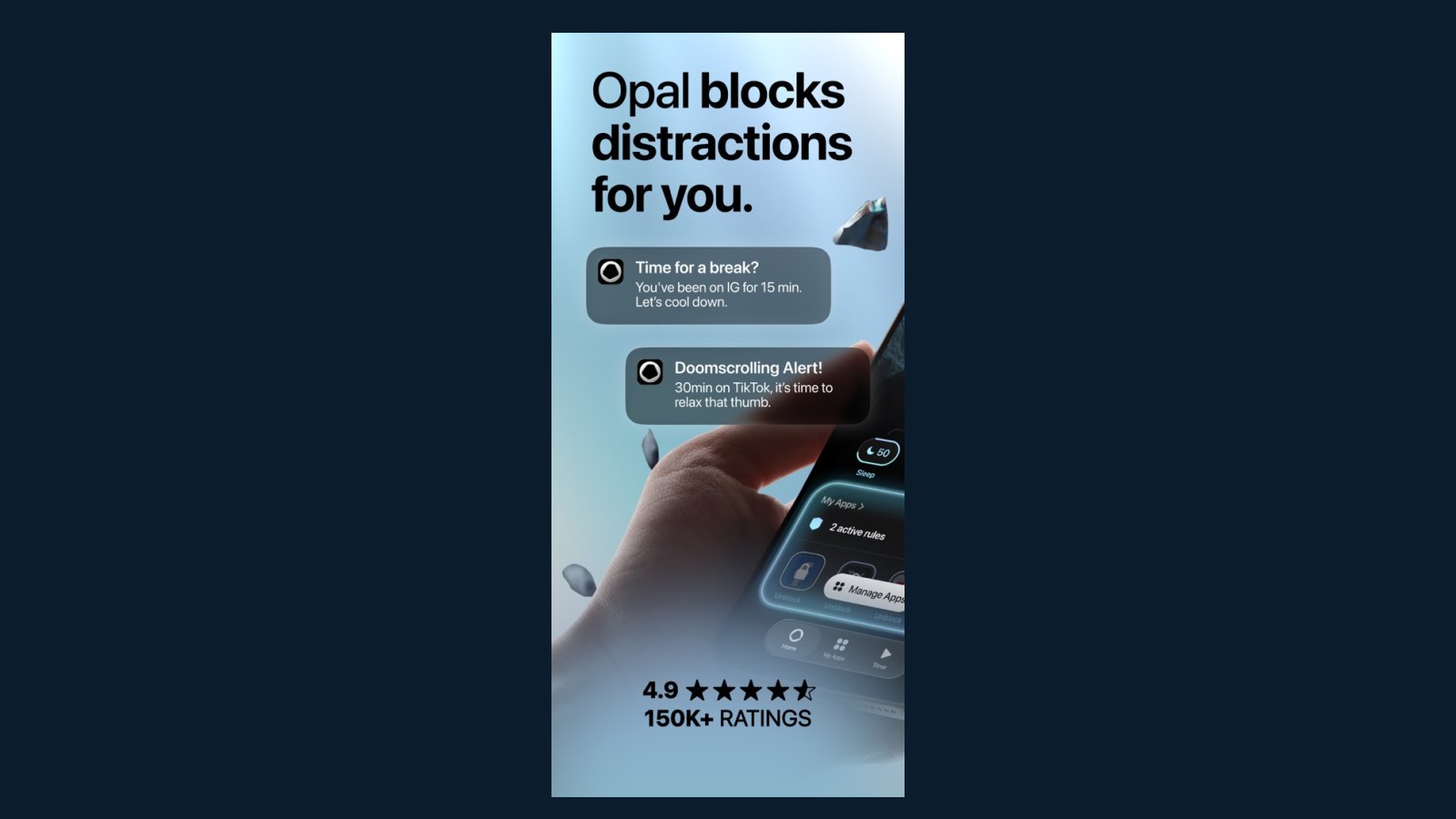
Apple Screen Time and Android Digital Wellbeing both count time an app was on screen. They do not know if that hour was a map, a video call, or a feed. Third-party blockers inherit that blur. Opal’s help page even says its iPhone total is not the same cut as Apple’s own Screen Time graph.
A 20-minute drop can be a win if those minutes were late-night scrolling. The same drop can be noise if you took a work call on speaker. Write the goal in a sentence before you watch the bar.
Ding and colleagues noted that app-limit studies sometimes cut Facebook or Instagram time without cutting total phone time. The minutes moved. The habit may have moved with them.
Opens, overrides, and the tap you still make
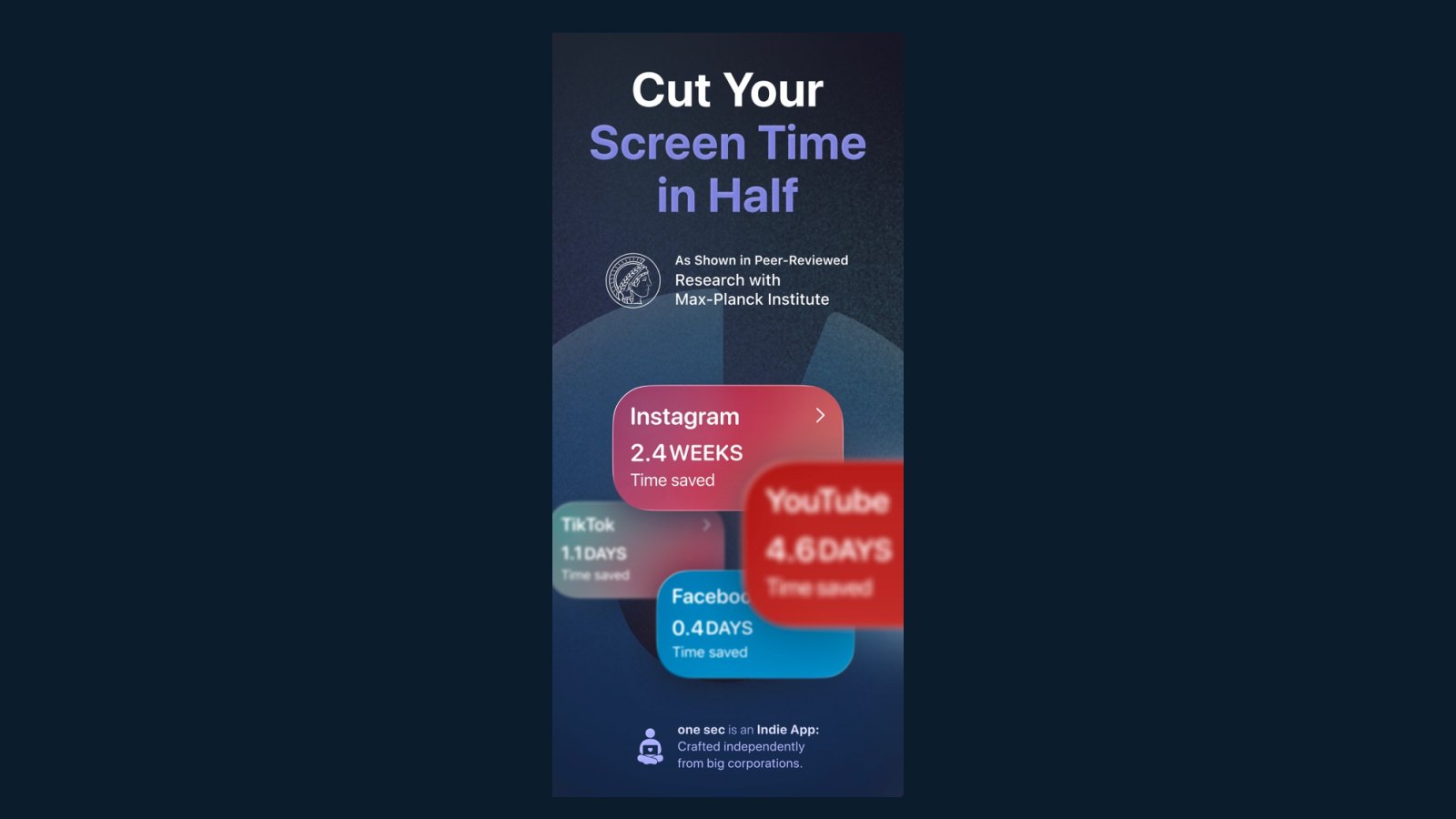
The PNAS one sec study counted opening attempts. That is closer to “Did I mean this?” than a daily hour total. A person can open a target app less often and still stay inside it longer. The paper also logged a 37% drop in attempts by week six. Habit, not only the pop-up, moved.
Overrides are the missing commercial cell. If you raise an Opal limit at 4:55 pm, the minute graph can still fall on paper while the rule failed. Biedermann’s review said sanctions must be hard to dismiss. Soft timers train the override, not the pause.
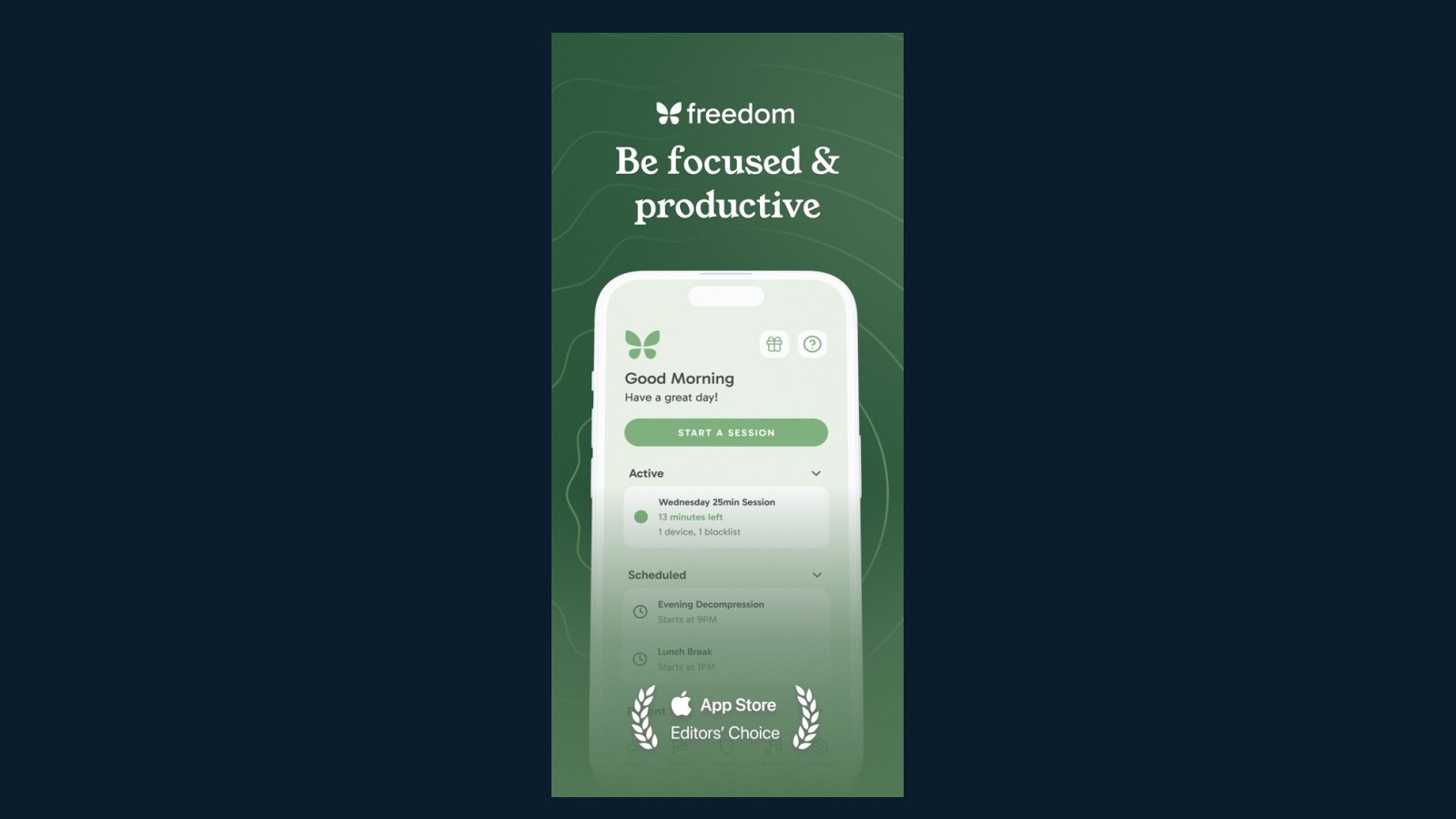
Freedom and Forest sit in the same evidence gap as most store brands. We can describe what they claim. We cannot invent a trial. See the Freedom review and the Forest review for dated specs, not for a secret score.
Mood, sleep, and what the trials skip
one sec’s store page links high social use to depression and anxiety in general language. That is not the same as a one sec depression trial. Grüning’s users reported more satisfaction with their consumption after six weeks. Satisfaction is not a PHQ-9 score.
NHS stress pages still start with sleep, talking, and breathing, not a paid shield. CDC mental-health pages still point to professional help when symptoms persist. An app can cue a walk. It cannot certify that your sleep stage improved.
If evenings end in the biscuit tin, the minute graph is the wrong instrument. Use the stress eating practical guide for the pause around food. That habit is not a screen-time trophy.
Who was studied and who was not
Field samples are people who already installed the tool. That skews toward motivated adults with time to set Shortcuts or Screen Time permissions. Children under family controls are a different legal and technical stack. Do not copy an adult g of 0.47 onto a 10-year-old’s iPad.
ADHD appears in store copy for both Opal and one sec. We found no 2026 randomised trial that treats either app as an ADHD therapy. Mention in marketing is not a clinical indication.
Work phones, shared tablets, and browsers break many logs. If the study ran on one personal iPhone for three weeks, it does not describe your Pixel plus laptop week.
How to run a fortnight test without a fake score
Days 1–3: write one goal in plain words. Example: “Open Instagram only after lunch.” Do not chase a 30% minute cut.
Days 4–10: log three numbers you can see without a vendor score: target-app opens, overrides or “ignore limit” taps, and whether the evening walk happened. Built-in Screen Time or Digital Wellbeing can supply the first two. Your feet supply the third.
Days 11–14: keep the tool only if the goal sentence is truer. Uninstall if you only learned to tap through a shield. That is screen time app evidence for your life. It is not a Vitality Ledger score. We do not publish one.
When the evidence is too thin to buy on
Skip a paid year if the only proof is a testimonial reel. Skip a “clinically proven” line that names no paper. Skip any product that says it treats depression, diagnoses ADHD, or replaces therapy. Those claims outrun this literature.
The honest remainder is modest. Some tools cut time a little, for a few weeks, in people who already wanted help. Friction that lets you dismiss the open has one named trial. Hard blocks have design logic and weaker independent product trials. Meaning — did you do the thing you said you would do — is still the outcome most papers skip.
Frequently asked questions
Is a lower screen-time number success?
Which screen-time app has the strongest trial?
Do these apps improve anxiety or sleep?
How long do the effects last?
Can a screen-time app replace therapy?
Sources
- 1. Achieving Digital Wellbeing Through Digital Self-Control Tools
- 2. Directing smartphone use through the self-nudge app one sec
- 3. Digital self-control interventions for distracting media multitasking
- 4. Evaluating the Effectiveness of Apps Designed to Reduce Mobile Phone Use
- 5. Mental health
- 6. About Mental Health
Guidance changes. Figures were checked against the sources above at the time of review; always confirm current advice with your GP, pharmacist or clinician.
Image credits
- Photo: Photo by Yan Krukov on Pexels / Openverse
- Photo: Photo by Italo Melo on Pexels / Openverse
- Photo: Photo by Max Vakhtin on Pexels / Openverse
- Photo: Photo by cottonbro studio on Pexels / Openverse
- Photo: Photo by BOO on Pexels / Openverse
Was this useful?
Anyone can react — no account needed.

Discussion
0 comments · Name and email only · Email is never shown