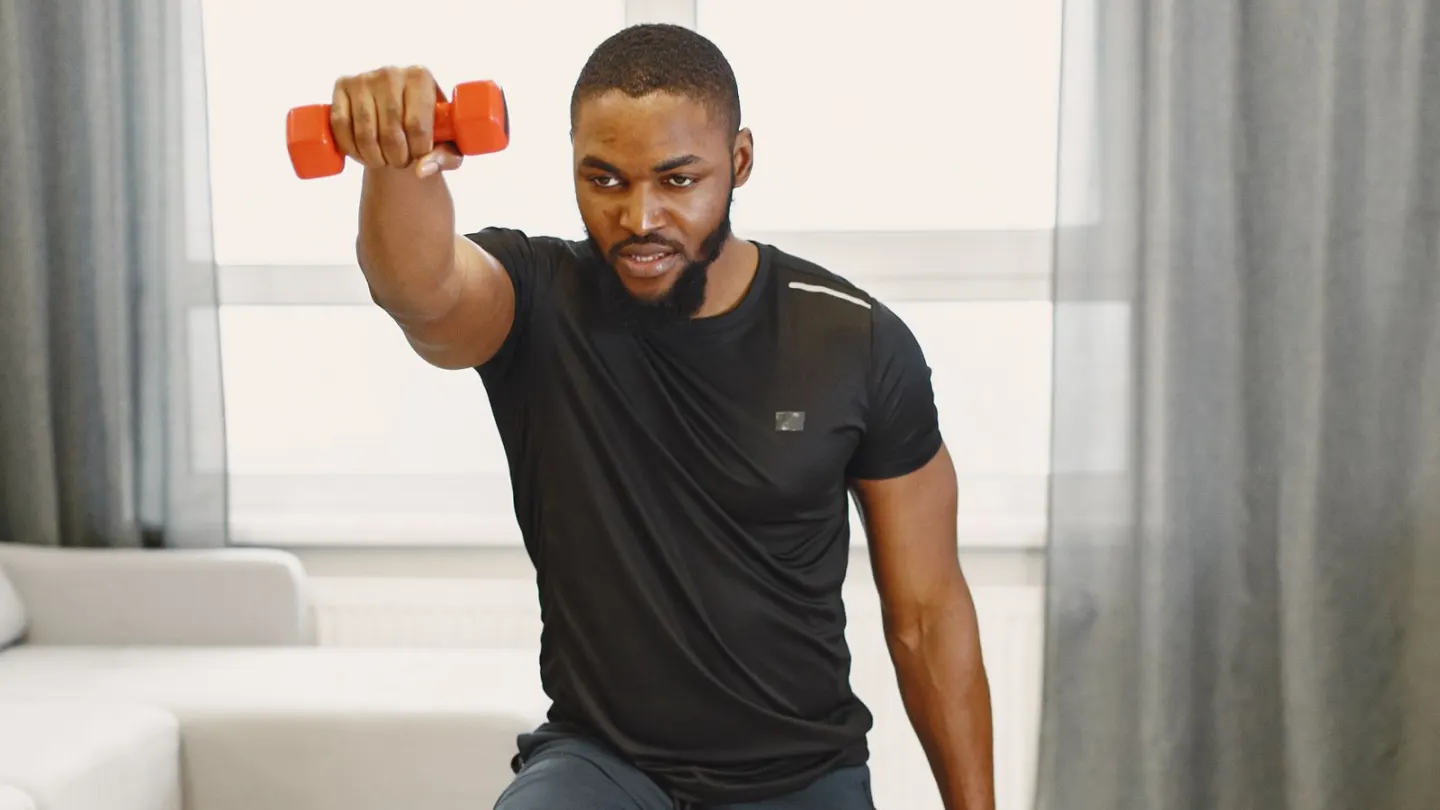
Box step downs train one leg at a time without a jump. You start on a low box, lower one foot to the floor with control, then stand back up. Height is a choice. A small step is still real work.
The move looks simple. That is the point. Box step downs load the thigh and hip of the standing leg. They also ask the knee to track over the mid-foot while you lower. NHS and CDC adult guides still want muscle work on at least two days a week. This can be one of those days.
This is a how-to for adults in a gym or a solid home step. It is not a treatment for a sore knee. If the joint locks, gives way, or will not take weight, stop and get help.
What box step downs actually train
A step-up starts on the floor. Box step downs start on the box. You own the lowering. That slow drop is the hard part for many people. Stairs in daily life often rush that same pattern.
The standing leg does the work. The free foot reaches for the floor. The hip and thigh of the standing side stay busy. The ankle has to stay steady. That mix is why a low box can still feel honest.
UK and US activity guides treat this as strength, not as a calorie trick. The NHS asks adults aged 19 to 64 to work major muscle groups on two or more days a week. The CDC uses the same two-day strength floor, plus at least 150 minutes of moderate aerobic activity. WHO uses that 150-minute aerobic floor as well.
Pair the step with a push, a row, and a walk. One leg drill cannot cover a whole week. A beginner gym workout plan shows how to place a single-leg move in a short session.
How to set up a low, stable box
Choose a box, aerobic step, or bottom stair that does not rock. The top must take your whole foot. A stack of plates on a shiny floor is a poor box. So is a chair with wheels.
Start low. If you cannot pause at the bottom without a hitch, the box is too high today. A bottom stair is often enough. Extra height is optional. It is not a score.
Stand with a rack, rail, or wall in easy reach. Wear shoes with a grip. Clear the landing spot. Pets and gym bags should not sit where the free foot will go.
Place the standing foot so the heel is on the box, not hanging off the edge. Point that knee toward the second toe. Keep the chest fairly tall. Look at the floor enough to land, not enough to fold in half.
How to do box step downs with control
Shift your weight onto the standing leg. Reach the other foot toward the floor. Let the standing knee bend. Land the free foot softly. Then press through the standing foot to return. Keep that standing foot on the box for the whole set if you can.
Count the lower. Two or three seconds is enough. A crash is not control. If you need a hop to get back up, reduce height. Hold the rail. That is support, not a cheat, while you learn.
Watch the standing knee. It should not dive inward. If it does, shorten the drop and hold the rail. If the standing heel lifts, you are too far forward. Shift the foot back on the box.
Finish one side. Rest. Then switch. If one side is clearly weaker, start with that side. Do not race the clock. Match both sides for reps, even if one side needs a rail.
A simple session you can repeat
Warm up for five minutes. March on the spot. Circle the ankles. Do six sit-to-stands. Touch the box with each foot without standing up. Then begin the working sets.
Keep the effort in a talk-test zone. You should be able to speak a sentence between sets. Mild muscle effort is fine. Sharp joint pain is not. ACSM treats regular resistance work as the useful habit. A tidy step counts when the effort is honest.
| Item | First weeks with a rail | Once the lower is quiet |
|---|---|---|
| Box height | Low aerobic step or bottom stair | Still a low box, slower lower |
| Sets each side | 2 | 3 |
| Reps per set | 6 to 8 | 8 to 10 |
| Lowering time | 2 to 3 seconds | 3 seconds, then a 1-second pause |
| Rest between sets | 90 seconds | 60 to 90 seconds |
| Days each week | 2, not back to back | 2, still not back to back |
| If it feels easy | Add 2 slow reps | Pause longer at the bottom |
| If it feels heavy | Use the rail and a lower box | Drop a set, keep the height |
Place this move near the start of a leg block, while you are fresh. Follow with a sit-to-stand or a hip hinge. Note the box height and whether you used a rail. Progress means less rail and a slower lower, not a leap to a high plyo box.
When 10 slow reps feel boring, change one thing. Add a pause. Or add a light dumbbell in the opposite hand. Do not add height and load in the same week. Our progressive overload guide explains that idea in full.
| Label | Value | Unit |
|---|---|---|
| Days each week | 2 | non-consecutive days |
| Beginner reps | 6-8 | each side |
| Lowering time | 2-3 | seconds |
Knee comfort, faults and quieter options
Knee niggles often mean the box is too high or too rushed. Stay low. Slow the drop. Keep the standing heel down. NICE guidance on osteoarthritis still puts muscle work and aerobic activity in the plan for many people with joint wear. That is not a green light to force a deep drop.
Common faults are easy to spot. The standing knee caves in. The free foot slaps the floor. The torso twists toward the working hip. The person hops back onto the box. Fix those before you add reps.
If the building is strict, this move stays quiet if you never stamp. Roll through the whole foot. Skip jumps off the box. A gym box is not a trampoline.
Judge effort with a simple scale. Leave a couple of reps in reserve on most sets. Our RPE and reps-in-reserve guide shows how to keep a set hard without grinding to a messy last rep.
Who should skip or adapt the move
If a single stair already feels unsafe, do not turn a gym box into a test. Stay with sit-to-stands. Ask a GP or physiotherapist (US: physical therapist) after falls, vertigo, recent surgery, or during late pregnancy.
Adults over 50 still benefit from single-leg work when the setup is calm. Our strength training over 50 guide puts balance and a rail in the same week. NIH pages on later-life activity still list strength and balance as two of the useful types of exercise.
Stop for chest pain, faintness, unusual breathlessness, or pain that shoots down a leg. Call 999 in the UK or 911 in the US if those symptoms are sudden. A box is not a clinic.
If you have a recent knee, hip or ankle injury, wait for personal advice. Box step downs are not treatment. Some people still find even a low step sore. Choose a pain-free stand, or rest the pattern.
Setting box height and tempo for quiet knees
Box step-downs train single-leg control while lowering force compared with deep jumping. Start with a low box — roughly mid-shin — so the working knee can bend without the hip collapsing inward. Hold a stick or wall for balance on early sets. Take three seconds to lower, tap the heel lightly, and stand without pushing off the trailing foot.
Film a side and front view. The knee should track over the second toe, the pelvis should stay level, and the torso should lean only slightly forward. If the knee caves or the hip drops, reduce height before adding load. Dumbbells can wait until bodyweight sets look identical for three sessions.
Programming step-downs around squats and runs
Place step-downs after warm-ups and before heavy bilateral squats, or on an easier lower-body day. Two to three sets of six to eight slow repetitions each side is enough for most people. Runners often use them on the day after a harder session to keep single-leg strength without another impact bout.
Sharp joint-line pain, swelling the next morning, or giving-way sensations are reasons to stop and get the knee checked. Muscle burn in the quads and glutes is expected; pinching at the front of the kneecap that worsens with depth is not a cue to push through.
Frequently asked questions
Are box step downs better for knees than jumping lunges?
How high should the box be?
Can I hold a rail or rack?
How often should I do this move?
What if my knee hurts on the way down?
Sources
- 1. Physical activity guidelines for adults aged 19 to 64
- 2. Strength exercises
- 3. Knee pain
- 4. Adult Activity: An Overview
- 5. Physical activity fact sheet
- 6. Osteoarthritis in over 16s (NG226)
- 7. Four types of exercise
- 8. Physical activity guidelines
Guidance changes. Figures were checked against the sources above at the time of review; always confirm current advice with your GP, pharmacist or clinician.
Image credits
- Photo: Photo by Gustavo Fring on Pexels / Openverse
- Photo: Photo by Victor Freitas on Pexels / Openverse
- Photo: Photo by MART PRODUCTION on Pexels / Openverse
Was this useful?
Anyone can react — no account needed.

Discussion
0 comments · Name and email only · Email is never shown