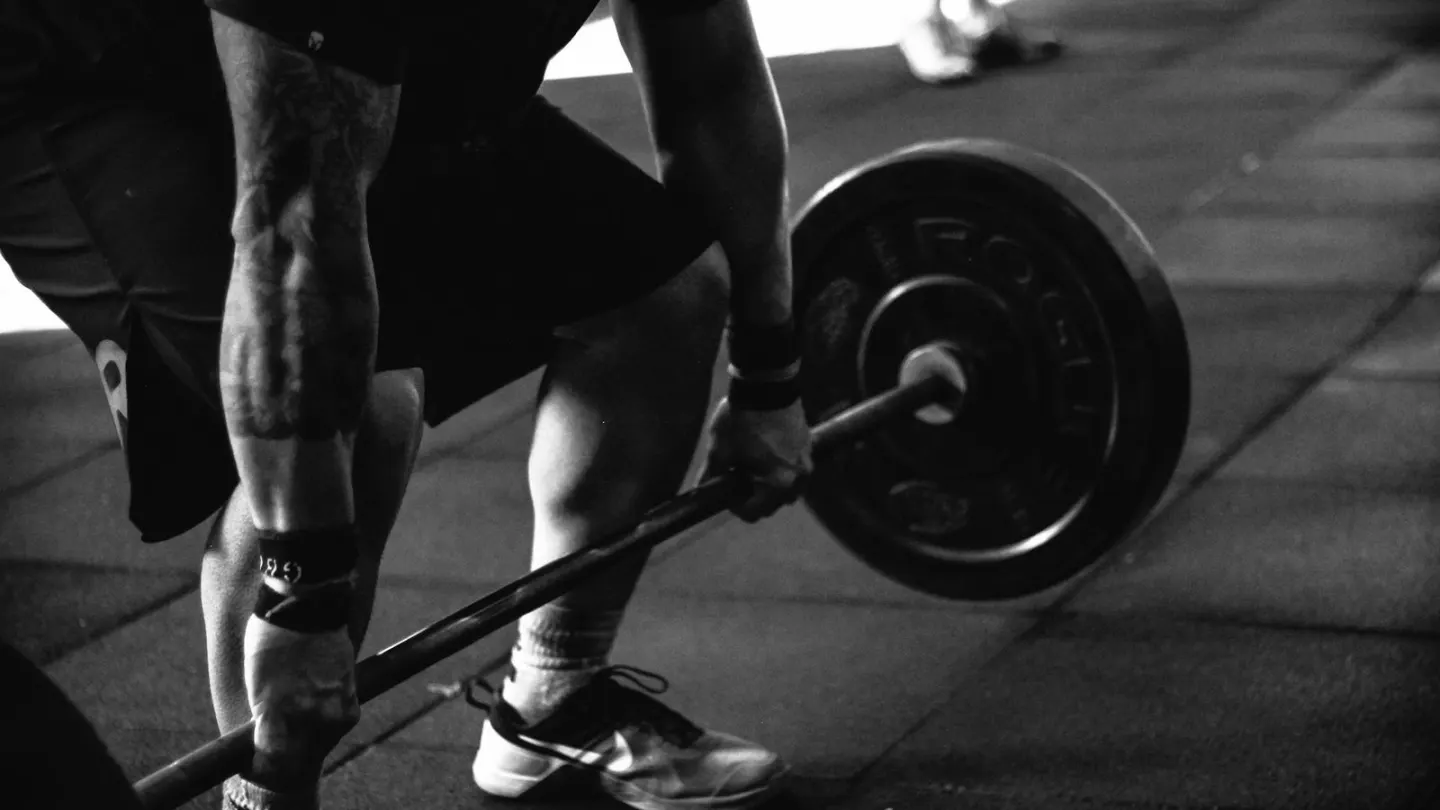
Tempo training means you count the seconds of a lift instead of rushing the reps. You still use the same exercise. You just slow the lowering, add a pause, or both. Progress can still come from more load later.
Most gym sets are raced. The bar drops. The stand is a bounce. Tempo training puts a clock on that habit. A three-second lower is still a squat. It is simply a slower squat. NHS and CDC guides still want muscle work on at least two days a week. Slow reps can be that work.
This guide is for adults who already have a simple plan. It is not a promise of extra muscle. It is a way to keep form honest when the next plate jump feels too big.
What tempo training actually changes
A tempo code is four counts. Down. Pause. Up. Pause at the top. A common start is 3-1-1-0. That means three seconds down, a one-second pause, one second up, and no rest at the top. You do not need a metronome. A quiet count is enough.
Slowing the lower increases the time the muscle stays under load. It also makes sloppy knees and a bouncing chest easier to spot. That is useful when the next dumbbell is a big jump. ACSM still treats regular resistance work, with control, as the health habit. Speed is not the main health lever.
UK and US activity guides do not ask you to lift fast. They ask you to work major muscle groups on two or more days a week. The NHS and CDC share that two-day strength floor. WHO adds the same 150-minute aerobic floor for the week. Tempo is a quality tool inside those days.
If you are still learning the gym, keep the code simple. A beginner gym workout plan can host one slow lower on two moves. The rest of the session can stay at a normal speed.

How to read a tempo code
Write the four numbers in your log. Say them in the same order every time. First number is the lowering. Second is the pause in the hardest position. Third is the lift. Fourth is the pause when the joints are straight.
Zeros mean no pause. A 2-0-2-0 set is an even two-second lower and a two-second lift. A 3-1-1-0 set spends more time at the bottom. A 4-0-1-0 set is a long lower and a fairly normal stand. Pick one code for a block of weeks.
Count in your head. Do not hold your breath for the whole lower. Breathe out on the effort of the lift. If the count makes you dizzy, the load is too heavy or the breath is too tight. Reduce the weight. Keep the count.
Adults over 50 often like a pause at the bottom of a sit-to-stand. It buys balance. Our strength training over 50 guide fits that idea. NIH pages on later-life activity still list strength and balance as two useful types of exercise.
| Code | What the counts mean | When it is useful |
|---|---|---|
| 2-0-2-0 | Two seconds down, two seconds up, no pauses | Learning control on a new move |
| 3-1-1-0 | Three seconds down, one-second pause, one second up | Stopping a bounce at the bottom |
| 4-0-1-0 | Four seconds down, fairly normal stand | When the next weight jump is too big |
| 2-0-1-0 | Two seconds down, quicker stand | Most working sets once form is tidy |
| Rest between sets | 90 seconds to 2 minutes for most work | 2 to 3 minutes when the load is heavy |
| Days each week | 2 strength days, not back to back | Matches NHS and CDC adult floors |
When slowing the rep helps
Slowing the lower helps when you cannot add load this week. Home dumbbells often jump in large steps. A slower count is a legal way to make the same pair harder. It also helps when a joint likes a smaller range. You can pause where the knee or shoulder still feels calm.
It helps coaching. A trainer can see a knee cave in a three-second lower. A rushed drop hides it. BHF strength pages still ask adults for two days of muscle work a week. They do not ask you to bounce.
It does not replace food, sleep, or a walk. It does not fix a programme that already has too many hard sets. If you already finish sessions wiped out, slow a lift and drop a set, rather than adding both.

A sample session with one tempo change
Keep your usual two strength days. Change the count on one or two moves only. Squats, sit-to-stands, rows, and presses all take a slow lower. Leave jumps and Olympic lifts at a normal speed unless a coach has taught those patterns.
Warm up as you already do. Then pick, say, a goblet squat at 3-1-1-0 for three sets of 6 to 8. Rest about two minutes. Keep the rest of the session at your normal speed. Write the code in the log beside the load.
Judge effort with reps in reserve. Stop two reps before form breaks. Our RPE and reps-in-reserve guide is the right companion here. A slow last rep that twists is still a bad last rep.
If you also walk or cycle, keep those minutes. A hybrid strength and cardio weekly plan can host slow sets on strength days and easy aerobic work on other days. Do not stack a long run on the same afternoon as a long slow squat block if you are new to both.
What tempo cannot replace
It cannot replace progressive overload forever. After a few weeks of slower lowers, you still need a path to more reps or a little more load. ACSM progression models treat control as one lever among several. Load, reps, and sets still matter.
It cannot make a dangerous setup safe. A slow bench press without safeties is still a bench press without safeties. Use a rack. Ask for a spot on heavy bar work. Slow does not mean light if the last reps are a grind.
It cannot treat injury. A four-second lower through a sharp pinch is not therapy. Shorten the range. Change the move. Get the joint checked if pain lasts. Cochrane reviews of exercise for knee osteoarthritis find that planned activity can help some people with pain. That is supervised or guided work, not a DIY max-effort tempo test.
Who should keep tempo simple
Beginners should learn the shape first, then add a two-second lower. People returning after illness should ask a clinician before hard pauses on a loaded bar. During pregnancy, keep positions you can get out of, and follow your maternity team.
If you have a heart condition, keep talking through the set. Stop for chest pain, faintness, or unusual breathlessness. Call 999 or 911 if those signs are sudden. A slow squat is still effort.
If counting makes you rush the breath, drop the code for a month. Use a simple cue instead: “lower with control.” That is still tempo, just without the four-number ritual.
How to write and use a tempo code
Tempo is usually written as four numbers, such as 3-1-1-0: three seconds to lower, one-second pause at the bottom, one second to lift, no pause at the top. The first number almost always refers to the eccentric or lowering phase. Writing the code on the programme card removes guesswork between sets.
Use slow eccentrics when technique breaks at speed, when you are rebuilding after time off, or when load is limited and you still need hard work. Keep the lifting phase crisp unless you deliberately choose a slow concentric for control. Counting softly out loud on the way down is more reliable than trusting “feel”.
A sample tempo session for the squat pattern
After warm-up sets, try goblet squats at 3-1-1-0 for three sets of eight, then hip hinges at 3-0-1-0 for three sets of six. Rest two minutes between sets. If the last two repetitions lose depth or the torso collapses, stop the set — tempo only works when positions stay honest.
Do not add tempo and a big load jump in the same week. Change one variable. People with irritable tendons sometimes do well with slow lowers and a faster, pain-free lift, but persistent tendon pain needs a clinician-guided plan rather than endless tempo experiments.
Where tempo training fits in a normal week
Schedule tempo training on days you can protect, not on the most chaotic evenings. Two quality exposures usually beat five rushed ones. If you miss a day, continue the plan rather than doubling up and irritating tissues.
Review every fourth week: keep what improved technique or comfort, drop what only produced fatigue. Share the log with a coach or clinician if progress stalls or pain becomes the main story.
Frequently asked questions
Do slow reps build more muscle than normal reps?
Should every exercise use a slow count?
How long should I stay on one tempo?
Does a pause at the bottom count as rest?
Can I use tempo on a walk or a bike?
Sources
- 1. Physical activity guidelines for adults aged 19 to 64
- 2. Strength exercises
- 3. Adult Activity: An Overview
- 4. Physical activity fact sheet
- 5. Strength exercises
- 6. Physical activity guidelines
- 7. Four types of exercise
- 8. Exercise for osteoarthritis of the knee
Guidance changes. Figures were checked against the sources above at the time of review; always confirm current advice with your GP, pharmacist or clinician.
Image credits
- Photo: Photo by Victor Freitas on Pexels / Openverse
- Photo: Photo by Mikhail Nilov on Pexels / Openverse
Was this useful?
Anyone can react — no account needed.


Discussion
0 comments · Name and email only · Email is never shown