
Phone step counter accuracy is good enough for a habit diary on a steady walk. It is weaker as an all-day medical number. This is a source-reviewed guide, not a hands-on lab test. We read named papers and public-health pages. We did not film a treadmill of our own.
What a phone step counter actually counts
Phone step counter accuracy starts with a simple fact. A phone does not see a foot. It sees motion in a pocket, a bag or a hand. Most modern handsets have an accelerometer. The operating system turns that shake into a step event. Apps such as those in our best walking apps hub read that stream, or they blend it with GPS when you start a workout.
That design has two honest limits. First, no step is counted if the phone is not moving with you. A kitchen walk while the handset charges will look like rest. Second, other shakes can look like steps. A bus ride, a pram, or a lot of typing can inflate or deflate the total, depending on the filter.
Wearables face a different filter. A watch sits on a swinging arm. It may count stirring a pot. It may miss a slow shuffle with stiff wrists. Ankle and thigh research devices sit closer to the stride. Consumer apps almost never do.

Phone step counter accuracy on lab walks versus real days
Lab papers look tidy because the task is tidy. Case, Burwick, Volpp and Patel (JAMA, 10 February 2015) asked 14 healthy adults to walk 500 and 1,500 treadmill steps with phones in pockets. Apps differed from observed counts by −6.7% to 6.2%. Clip pedometers were tighter. Wrist wearables were wider (−22.7% to −1.5%). The authors said the sample was young, healthy and small.
Hartung and colleagues (Int J Environ Res Public Health, 2020) moved 18 healthy adults through walking, arm-heavy chores and stop-start walking. Mean absolute percentage error reached 0.3% to 38.2% on continuous walking, 48.2% to 861.2% on chores, and 11.2% to 47.3% on intermittent walking. Wrist devices often treated arm work as steps. The lesson is the protocol, not a brand winner.
Chukwuemeka and colleagues (BMC Digital Health, 7 July 2025) filmed 50 students on a 30-metre walkway. Pacer’s MAPE was 9.2% at a normal pace and 5.4% at a fast pace. Google Fit was 6.6% at a normal pace. The bout was short and young. See the Pacer review. That paper does not clear StepsApp, Map My Walk or Walkmeter.

| Question / claim | Source | Study type | Population | Comparator | Key finding | Limitation | Applicability |
|---|---|---|---|---|---|---|---|
| Pocket phone vs treadmill steps | Case et al., JAMA, 2015 | Lab | 14 healthy adults | Observed steps | Apps −6.7% to 6.2%; wrist −22.7% to −1.5% | Small, young, treadmill | Steady pocketed walking |
| Chores and stop-start walking | Hartung et al., IJERPH, 2020 | Lab blocks | 18 healthy adults | Observed steps | Walking MAPE 0.3–38.2%; chores 48–861% | Not a free-living week | Do not treat housework as a test |
| 24-hour phone vs watch | Kim et al., Sensors, 2024 | Free-living 24 h | 104 healthy adults | Thigh ActivPAL | MAPE 6.4% Apple Watch 6; 10.5% Galaxy Watch 4; 29.6% phone apps | Healthy; apps not one brand | All-day phone totals need a wide bar |
| Pacer on a filmed walkway | Chukwuemeka et al., BMC Digital Health, 2025 | 30 m walkway | 50 students | Video counts | Pacer MAPE 9.2% normal; 5.4% fast | Short path; Android only | Not a week of living |
| Phones vs watches vs research wear | Eur J Prev Cardiol abstract zwag249.464 | 8 free-living days | 215 adults; 1,306 days | Thigh accelerometer | Phones bias about −3,218 steps; watches about −1,234 | Abstract, not a full paper | Older adults; totals ran low |
| Is 10,000 phone steps a rule? | NHS; CDC; Saint-Maurice et al., JAMA, 2020 | Guideline + cohort | 4,840 US adults (JAMA) | Research accelerometer; death | ~150 moderate minutes + 2 strength days. 8,000 vs 4,000 steps HR 0.49 (observational) | Not causal; not a phone app | Use minutes. Do not chase a badge. |
Phone step counter accuracy versus wrist wearables
The 2015 letter is often misread as “phones beat watches.” It showed pocketed phones beating some wrist bands on a treadmill. It did not study a phone in a handbag. Kim and colleagues (2024) flipped the story for daily life. Over 24 hours, Apple Watch 6 (MAPE 6.4%) and Galaxy Watch 4 (10.5%) sat closer to a thigh ActivPAL than smartphone apps (29.6%). A number can track your week and still sit far off a research count.
A 2024 European Journal of Preventive Cardiology abstract (215 adults, mean age 65) found consumer devices low versus a thigh accelerometer. Phones were more biased than watches. Cadence peaks were worse than daily totals. That abstract is not a full paper. The direction matches Kim: a phone left behind undercounts more than a watch that stays on.
GPS walking apps add another error family. A mapped mile can shrink in a street canyon. That is not the same bug as a missed kitchen step. The MapMyWalk review and Walkmeter review are product pages, not accuracy trials.
Why carry position matters
Hip and pocket placements see the stride. A bag on a shoulder sees less. A hand texting sees a different shake. Hartung’s group put phones at the hip and one on the calf. Wrist toys sat on the arm. The arm tasks wrecked wrist counts. If you compare a friend’s watch with your coat-pocket phone, you are comparing two sensors and two lives.
Pacer’s own Play listing, captured 13 September 2026, tells users that some phones stop counting with the screen off, and that battery cleaners can kill the process. That is an operating-system problem. It will not appear in a treadmill paper that keeps the screen awake. StepsApp’s listing leans on Apple Health and, on Android, Google Fit. Those hubs can merge a watch and a phone. They can also double-count if two writers stay on.
What 10,000 steps is not
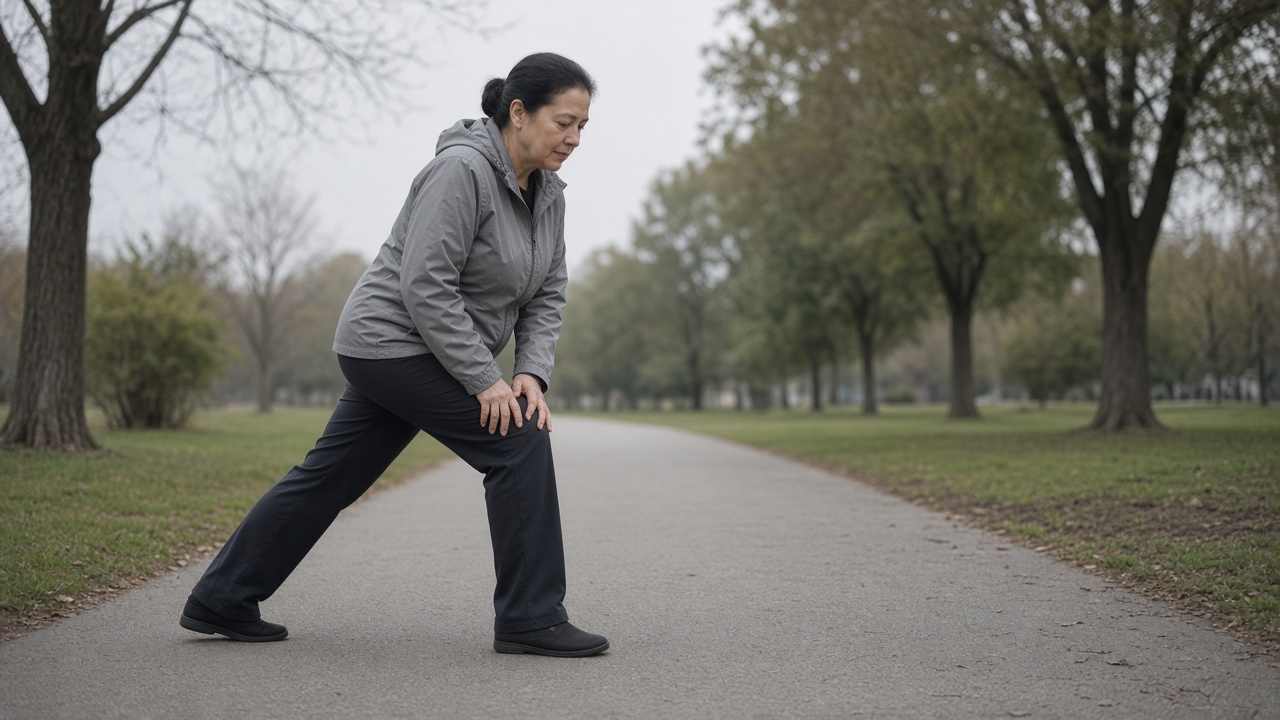
Phone apps love a round goal. Public-health pages do not require it. NHS and CDC still ask adults for about 150 moderate minutes a week, or 75 vigorous, plus strengthening on at least two days. Saint-Maurice and colleagues (JAMA, 24 March 2020) used research accelerometers in 4,840 US adults. Eight thousand steps per day was associated with lower all-cause mortality than 4,000 (HR 0.49, 95% CI 0.44–0.55) over a mean 10.1 years. The study is observational. It cannot prove that a store app lengthens life. A consumer total that sits 20% low would move you across those bins without any change in your legs.
Calories on a pedometer inherit step error. Do not eat to a phone’s leftover calories.
How to read your own number
Read phone step counter accuracy as a trend, not a clinic result. Use one device, one carry place, and look at weeks, not Tuesdays. If you switch from StepsApp in a bag to a watch, the jump may be the sensor. If you start a GPS file only on sunny Saturdays, weekday steps will look “low” for a boring reason.
Match the tool to the job. A silent phone counter fits a desk-to-shop habit. A start-stop GPS app fits a named loop. A watch fits days when the phone stays on a charger. Strength work still needs its own log. The progressive overload guide is for load and reps, not for a step ring.
Stop treating disagreement as drama. Two honest devices can differ by thousands of steps in a messy day. That is what the free-living papers show. If chest pain, faintness or sudden breathlessness appears, you do not need a more accurate counter. You need urgent care.
What remains thin
Phone step counter accuracy evidence is thin for named store apps. We did not find peer-reviewed accuracy trials that name StepsApp, Map My Walk or Walkmeter. Pacer has one short walkway paper. Most store apps have none. Older adults, slow gait, walking aids, wheelchairs and pregnancy are under-tested in the consumer-app set we read. The 2015 and 2020 lab papers used healthy, mostly young adults. Kim’s 2024 sample was healthy too.
Congress abstracts are weaker than full papers. Manufacturer “accuracy” pages are weaker still. We omitted unverified brand scores. We also omitted Play install counts that we could not see on an official badge.
The honest sentence is short. A phone can coach a walk. It cannot certify a dose. Wear the same tool. Read the trend. Keep the minutes that NHS and CDC already published.
Frequently asked questions
Is phone step counter accuracy good enough for daily use?
Is a watch better than a phone?
Why does my phone disagree with my watch?
Should I aim for 10,000 steps?
Did you test any of these apps?
Sources
- 1. Accuracy of smartphone applications and wearable devices for tracking physical activity data
- 2. Validity of consumer activity monitors and an algorithm using smartphone data for measuring steps during different activity types
- 3. Apple Watch 6 vs. Galaxy Watch 4: a validity study of step-count estimation in daily activities
- 4. Comparative validity assessment of three android step counter applications
- 5. Association of daily step count and step intensity with mortality among US adults
- 6. Physical activity guidelines for adults aged 19 to 64
- 7. What counts as physical activity for adults
Guidance changes. Figures were checked against the sources above at the time of review; always confirm current advice with your GP, pharmacist or clinician.
Image credits
- Photo: Editorial photograph / Openverse
Was this useful?
Anyone can react — no account needed.




Discussion
0 comments · Name and email only · Email is never shown