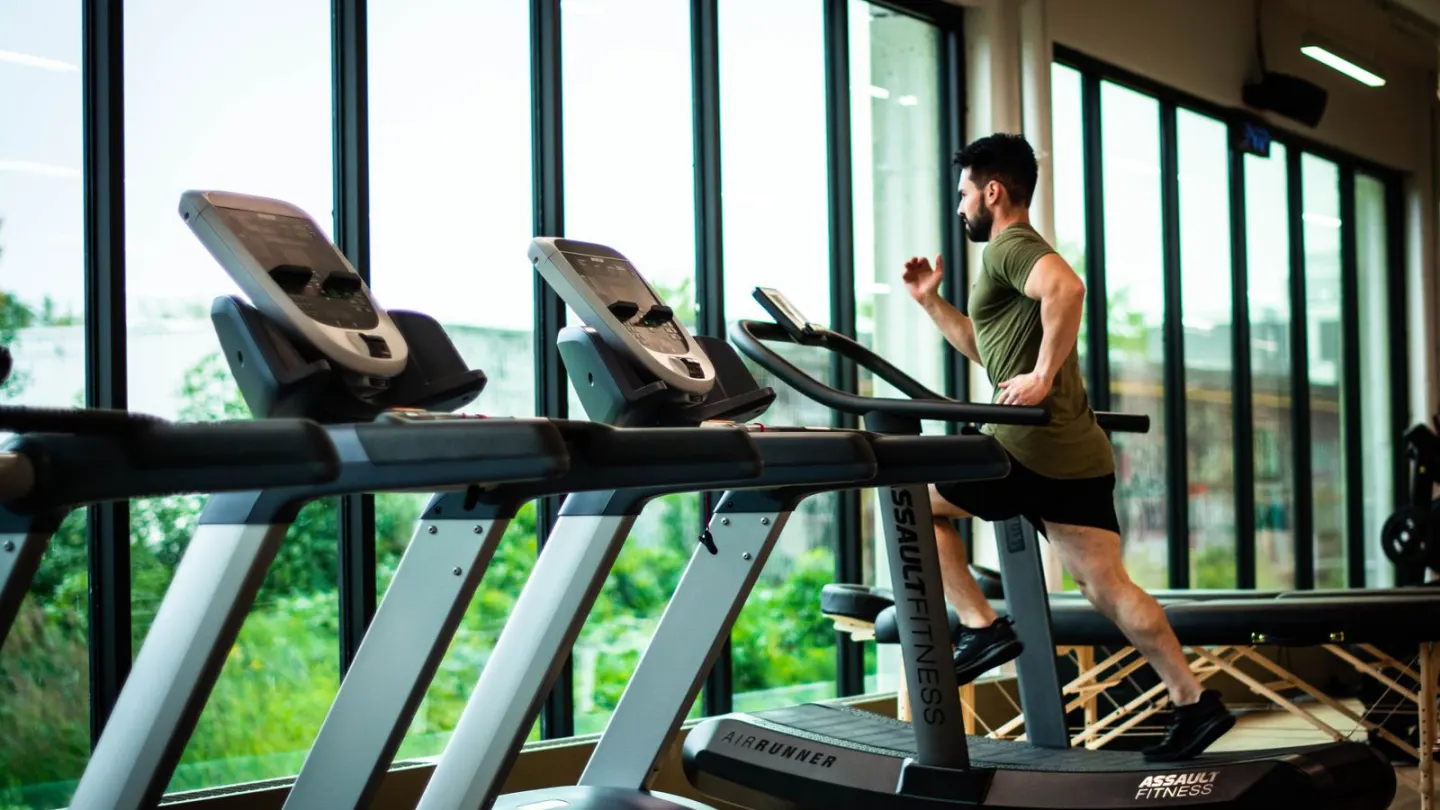
A two day training week is not a failed six-day split. NHS and CDC already ask adults for strength work on at least two days. The other days can be walks, chores, and rest.
You do not need a packed timetable to “count”. You need two sessions that work the large muscle groups. Then you need enough moderate time to reach about 150 minutes in a week. That is a talk-pace walk on most days, not a secret extra programme.
This how-to is for busy adults. It is not a contest plan. It will not promise a new body. It will show a week you can keep when work and family take the other five days.
What a two day training week can actually hold
NHS adult pages set two jobs. Do muscle work for legs, hips, back, abdomen, chest, shoulders, and arms on at least two days. Also do at least 150 minutes of moderate activity a week, or 75 minutes of vigorous activity. Spread the movement over four or five days, or every day.
CDC says the same strength floor: two or more days. To get a benefit, work until another clean rep would need help. Try 8 to 12 reps. One set counts. Two or three sets can add benefit if you recover. WHO’s adult fact sheet still sits in the same band: 150 to 300 moderate minutes, plus strength on two or more days.
A two day training week covers that strength floor. It does not replace the walks. NHS is plain that muscle work is extra to the 150 minutes. A slow bench press is not your whole heart quota. Keep the walks. Treat the gym as the strength block.
The American Heart Association uses the same mix: about 150 moderate minutes and muscle work on two days. Two honest gym days plus walking is a health week, not a lesser week.
Build two full-body sessions you can repeat
Use the same shape both days. Warm up for about eight minutes. Then hit a squat or sit-to-stand, a hinge, a push, a pull, and a carry or a brace. Two or three sets of 8 to 12 is enough. Rest two or three minutes on the hard sets. Leave when the last clean rep still looks like the first.
Day A can be a squat, a bench or wall press, a row, a split squat, and a side plank. Day B can be a hinge with a bar or a bag, a pulldown or a towel row, an overhead press with a load you can park, a step-up, and a dead bug. Swap a machine if a rack is busy. The pattern matters more than the brand of kit.
If you are new, our beginner gym workout plan uses the same full-body idea on three days. Cut it to Monday and Thursday and you already have a two day training week. People over 50 can keep the same patterns with a slower load jump. See strength training over 50 for joint-friendly swaps. Aim for 45 to 60 minutes, including the warm-up. Log the load you actually lifted.
| Piece of the week | Practical dose | Where the number comes from |
|---|---|---|
| Strength days | Two sessions that cover the large muscle groups | NHS, CDC, WHO, and AHA: at least 2 days |
| Reps and sets | 8 to 12 reps; at least 1 set; 2 or 3 sets if you recover | CDC “what counts” for adults |
| Gym time | About 45 to 60 minutes a session, including a short warm-up | Editorial time budget, not a clinical target |
| Aerobic minutes | About 150 moderate minutes, or 75 vigorous minutes | NHS, CDC, WHO, and AHA adult guidance |
| How to spread it | Walk on 4 to 5 days, or a little every day | NHS adult activity pages |
| Effort cue | You need a short rest before you repeat the move | NHS strength advice |
Add walking so the week still meets heart minutes
Two gym hours do not finish the week. A 30-minute brisk walk on five days is 150 minutes. A 25-minute loop on six days is about 150 minutes too. Talk while you walk. If you can only sing, slow down. If you cannot talk, it is vigorous, and you can count it in the 75-minute column instead.
You can walk on gym days. A 15-minute walk to the door plus a 15-minute walk home still counts. If you already run, keep one easy outing. Do not stack a hard interval on the same morning as a heavy squat. The RPE and reps-in-reserve guide helps you leave two reps in the tank when sleep was short.
Progress without a six-day split
Frequency is not the only lever. Two days a week still lets you add a little demand. When every set hits the top of 8 to 12 with the same shape, add the smallest plate, or add one clean rep next time. That is progressive overload in ordinary gym units, not a new identity.
Do not add a third hard day in the same month you also cut sleep. Two quality sessions beat three rushed ones. If a week is wrecked, keep one full-body day and walk. A backpack still works at home. The week succeeds if you can name the load for next Thursday.
Who should keep the week light
People with chest pain, faintness, uncontrolled blood pressure, a recent operation, or pregnancy need personal advice before a new lifting plan. A webpage cannot examine you. Stop and call 999 in the UK or 911 in the US for crushing chest pain, collapse, or sudden one-sided weakness.
Sore muscles that ease as you warm up are common in the first fortnight. Sharp joint pain or pain that changes your walk is not a training badge. Seek care if it does not settle. If you are returning after years off, start with sit-to-stands and wall presses. Two days is already the official strength floor.
A four-week check that is not a test
After four weeks, look at attendance first. Did both gym days happen most weeks? Then look at one lift. Did reps or load rise at a similar effort? Clothes and energy on the stairs are fair clues. Daily scale drama is not. Keep the walks. Keep the two days. Change one variable at a time.
Two full-body sessions you can repeat for months
Day 1: squat pattern 3×8, horizontal press 3×8, row 3×8–10, hinge 2×8, carry 2×30 m. Day 2: split squat 3×8/leg, overhead or incline press 3×8, pulldown 3×8–10, hip thrust 3×8, side plank 2×20–30 s. Space them — for example Monday and Thursday.
Add walking on other days toward weekly aerobic guidelines (NHS/CDC moderate-minute targets) without turning walks into hidden HIIT.
Progress one lift per session each week. With only two days, consistency beats novelty.
| Day | Content | Optional extras |
|---|---|---|
| 1 | Squat, push, pull, hinge, carry | Easy walk next day |
| 2 | Single-leg, press, pulldown, glute, core | Easy cycle next day |
| Other days | Walks / life | Not random max sports |
Progression without a six-day split
Use double progression on the main lifts. Add a third hard set only after months, not in week two.
If you miss a day, do not cram both sessions back-to-back next evening — shift the week.
Optional third day later should be easy cardio or mobility, not a surprise heavy deadlift PR party.
Adding steps without adding a third lifting day
Put a daily step or minutes floor under the week — for example a brisk 25-minute walk on non-lift days — so aerobic guidelines are not ignored.
If a third gym day appears occasionally, make it easy machines or mobility rather than a surprise heavy single.
Review every four weeks: if both lift days happen most weeks, the plan is working.
Who should modify a two-day training week
High-fatigue jobs, new parents, and people returning from illness should treat two solid days as a win.
Athletes in season may use two lifting days as maintenance while sport provides the rest.
Pain that worsens across both days needs assessment, not a third training day.
Coaching cues and checkpoints for a two-day training week
Return to the key prescriptions for a two-day training week already set out above and execute them as written for two consecutive sessions before you invent variations.
Use the checkpoints below as a quick pre-set scan for a two-day training week. If any line fails, fix that line before you add load, speed or volume.
- 1: Squat, push, pull, hinge, carry — Easy walk next day
- 2: Single-leg, press, pulldown, glute, core — Easy cycle next day
- Other days: Walks / life — Not random max sports
After those two honest sessions, change only one variable in a two-day training week: a small load jump, one extra repeat, a slightly longer interval, or one fewer accessory set. Write the change in the log before you warm up.
Stop for sharp pain, chest pain, faintness or unusual breathlessness. Call 999 or 911 for sudden severe symptoms. This article is general information, not a diagnosis or a personalised rehab plan.
Frequently asked questions
Does a two day training week still count if I only have 30 minutes?
Can the two days be back to back?
Do I need a gym for two strength days?
Will two days make me bulky?
Can I skip walking if the gym sessions feel hard?
Sources
- 1. Physical activity guidelines for adults aged 19 to 64
- 2. What counts as physical activity for adults
- 3. Adult physical activity guidelines
- 4. Physical activity fact sheet
- 5. AHA recommendations for physical activity in adults
- 6. Staying active
- 7. Physical activity guidelines
Guidance changes. Figures were checked against the sources above at the time of review; always confirm current advice with your GP, pharmacist or clinician.
Image credits
- Photo: Photo by Cesar Galeao on Pexels / Openverse
- Photo: Photo by Ivan S on Pexels / Openverse
- Photo: Photo by Karolina Grabowska on Pexels / Openverse
Was this useful?
Anyone can react — no account needed.




Discussion
0 comments · Name and email only · Email is never shown