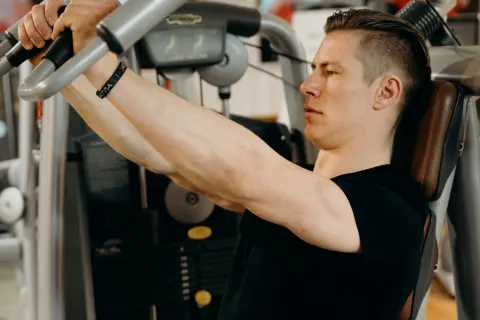
How Sports Media Still Misses Relative Energy Deficiency in Sport
REDs sports coverage still praises thinness more than fuel and recovery. A calm look at warning signs, coaching culture, and safer press habits in the...
Section
Strength, cardio and programming that fits around a job
Gym and endurance training explained without the bro-science: progressive overload, sets and reps, lifting technique, heart-rate zones and race preparation.
REDs sports coverage still praises thinness more than fuel and recovery. A calm look at warning signs, coaching culture, and safer press habits in the...
ACSM finds training to failure is not required for strength or size. Leave two or three clean reps on most sets, and keep last-rep grinds rare.
A source-reviewed look at smart trainer power accuracy: peer-reviewed KICKR and Tacx papers, manufacturer ±1–2% claims, and why two devices disagree.
A source-reviewed look at indoor cycling app setup: trainers, Bluetooth versus ANT+, pairing roles, calibration, and what studies actually measured.
An offline hiking maps guide to what downloaded tiles, phone GNSS and paper backups can do on the hill — and the failures they do not prevent.
Walking app calorie accuracy is an estimate stacked on GPS or steps. Distance can look close. Energy figures often wander. Here is what validation stu...
Walking apps motivation features can raise short-term steps in trials. Effects are modest and mixed. Here is what reviews and family-game RCTs actuall...
How many steps per day is linked with lower mortality in cohorts, but NHS and CDC still dose activity in minutes. Here is what the papers measured—and...
A source-reviewed look at phone step counter accuracy versus wearables, with dated study limits. Not a hands-on lab test.
A source-reviewed look at running apps evidence: what trials show about adherence and fitness, and what remains unproven for race day.
A source-reviewed look at running app GPS accuracy: what studies measured, where phones drift, and why instant pace is noisier than total distance.