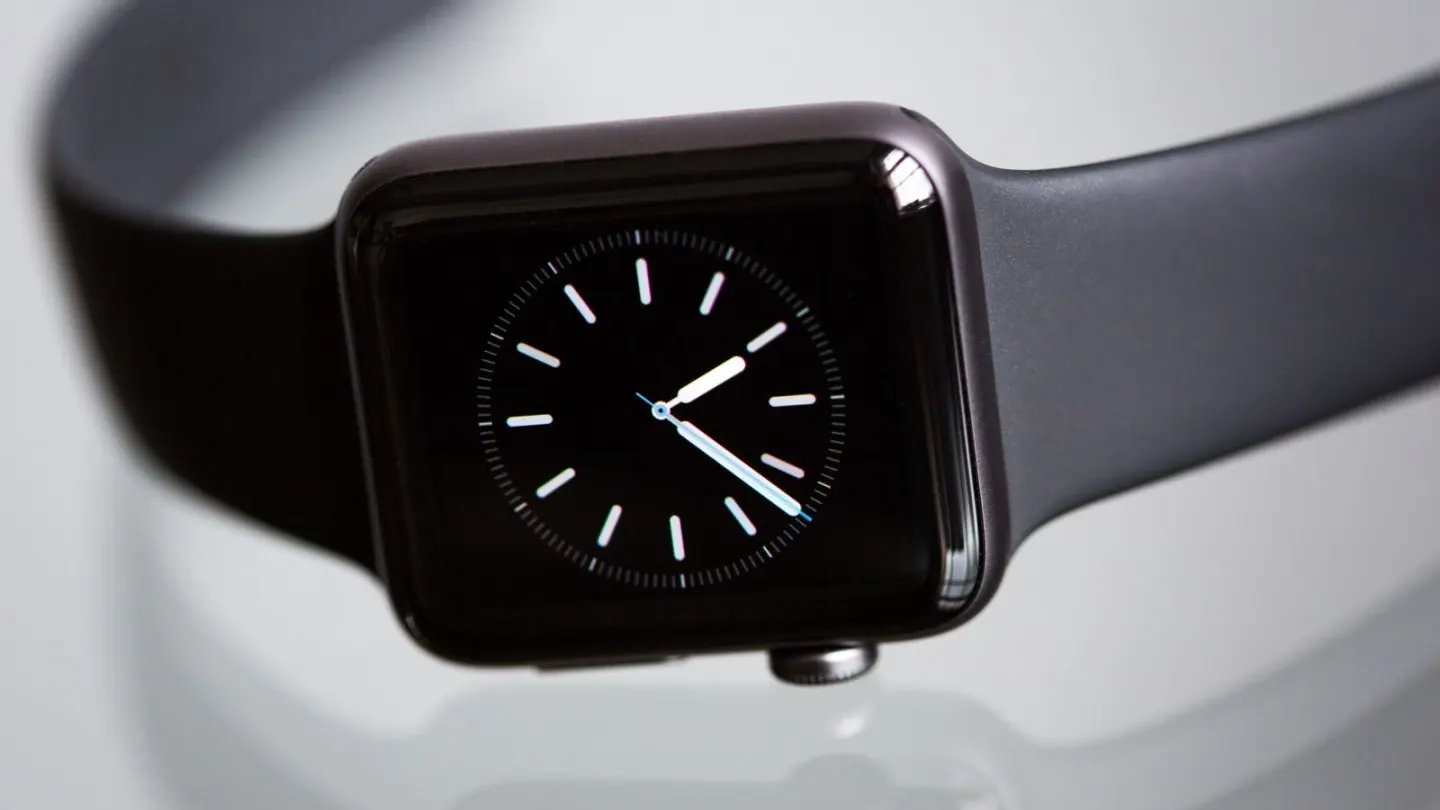
A sleep app vs wearable choice is a question about sensors, not a shopping trophy. Phones hear sound and feel the mattress. Rings and watches feel the pulse and the wrist. This is a source-reviewed guide, not a hands-on lab test.
What a sleep app vs wearable comparison can show
An app on a nightstand answers “Did I stay in bed?” and “Did the room make noise?” A watch answers “Did my wrist stay still and did my pulse dip?” Those are different questions. A clinic answers “Is this apnoea?” with brain waves, airflow, and a trained scorer.
Good evidence names the device class, the reference test, and the population. Most store pages skip that triad. This page stays with published trials, reviews, and policy notes. It is not a ranked shop. For product rows, use the best sleep apps hub.
Phone apps measure proxies, not brain waves
Most bedside apps use a microphone, an accelerometer, or inaudible sonar. They infer sleep from movement and sound. They do not record EEG.
Bosi and colleagues (Journal of Sleep Research, 2019) asked 21 healthy adults to sleep at home for two nights with portable polysomnography and four iPhone apps. Sleep Cycle ran in accelerometer mode and in microphone mode. Sense and Smart Alarm ran at the same time. All four apps correlated with time in bed. Sleep Cycle’s two modes, and Sense, were not reliable for sleep–wake detection. None of the apps scored REM. Smart Alarm did better on total sleep time and light sleep, but it still missed wake and inflated deep sleep.
That sample is small and healthy. Firmware has changed. The structural limit has not: a phone on a table cannot see cortical sleep.
Bhat and colleagues (Journal of Clinical Sleep Medicine, 2015) tested a different iPhone app, Sleep Time by Azumio, in 20 volunteers beside in-lab polysomnography. Sleep efficiency did not correlate (r = −0.127). Light sleep was underestimated by 27.9 percentage points. Deep sleep was overestimated by 11.1 points. Sleep latency was overestimated by 15.6 minutes. Epoch accuracy across stages was 45.9%. Sleep-versus-wake accuracy was 85.9%, with 89.9% sensitivity and 50% specificity for sleep. Quiet wake looked like sleep. That pattern still shows up in later wearable papers.
Wearables are stronger on duration trends, weaker on wake
Rings and watches add optical pulse, temperature, and a sensor that stays on the body. That is more physiology than a mattress bump. It is still not polysomnography.
Robbins and colleagues (Sensors, 2024) studied 35 adults aged 20–50 without a diagnosed sleep disorder. Each person wore an Oura Ring Gen3, a Fitbit Sense 2, and an Apple Watch Series 8 for one inpatient night beside polysomnography. Sleep-versus-wake sensitivity was at least 95% for all three. Stage sensitivity ranged from about 50% to 86%. Oura’s stage minutes were not statistically different from the lab for wake, light, deep, or REM. Fitbit overestimated light sleep by 18 minutes and underestimated deep sleep by 15. Apple underestimated deep sleep by 43 minutes and overestimated light sleep by 45. Total sleep time was close for the group. That is one night in healthy sleepers, not a clinic queue.
A 2025 Sleep Advances paper tested six wrist devices, including Fitbit Charge 5, Fitbit Sense, Withings ScanWatch, Garmin Vivosmart 4, Whoop 4.0, and Apple Watch Series 8, against polysomnography. Sensitivity for sleep epochs stayed above 90%. Specificity for wake ranged from about 29% to 52%. Cohen’s kappa versus the lab ran from 0.21 to 0.53 — fair to moderate. Apple Watch Series 8, Fitbit Sense, and Fitbit Charge 5 sat at the higher end of that kappa range. Light sleep and wake were the weak cells.
Kao and colleagues (2025 meta-analysis; 24 studies, 798 people using Fitbit, Apple Watch, Garmin, Whoop, and other wrist brands) found significant pooled differences versus polysomnography: total sleep time about 17 minutes shorter, sleep efficiency about 4.7 points lower, sleep latency about 2.6 minutes longer, and wake after sleep onset about 13 minutes longer. The authors said wrist metrics are not yet valid as a PSG substitute. Trends can still be useful if you read them as trends.
Evidence table
| Question | Source | Study type | Population | Reference | Outcome | Key finding | Limitation | Applicability |
|---|---|---|---|---|---|---|---|---|
| Can popular phone apps score sleep at home? | Bosi et al., J Sleep Res 2019 | Home comparison, two nights | 21 healthy adults | Portable polysomnography | Time in bed, sleep–wake, stages | Sleep Cycle (accelerometer and microphone) and Sense were not reliable for sleep–wake. No app scored REM. | Small n. 2019 builds. Healthy sleepers only. | Do not use a 2026 store graph as if it were that study — or as if it beat it. |
| Does a typical iPhone sleep app match lab stages? | Bhat et al., J Clin Sleep Med 2015 | In-lab comparison | 20 volunteers, no known sleep disorder | Polysomnography | Efficiency, stages, latency, epoch accuracy | No correlation for efficiency. Stage mix was wrong. Sleep–wake accuracy 85.9%; specificity for wake 50%. | One discontinued-style app. Tiny sample. | Shows the quiet-wake problem that still haunts motion algorithms. |
| Can phone sonar stage sleep without a wearable? | Zaffaroni et al., IEEE EMBC 2019 | Lab validation | 38 people, expert-scored PSG | Polysomnography; ResMed S+ as a second comparator | Wake, light, deep, REM | Authors reported balanced stage detection, better than typical actigraphy papers they cited, and similar to S+. | Conference paper. Phone and firmware named in methods, not today’s store SKU. Healthy-lab context. | Supports contactless motion-plus-breathing as a research class. Not a diagnosis. |
| How close are current rings and watches to PSG? | Robbins et al., Sensors 2024 | Single-night inpatient | 35 adults, 20–50, no sleep disorder | Polysomnography | Sleep–wake and stages | Sleep detection ≥95%. Oura stage minutes closest. Apple deep-sleep error 43 minutes. | One night. Healthy volunteers. Firmware dated to those models. | Duration trends look usable. Deep/REM pie charts do not. |
| Do wrist devices agree with PSG across brands? | Sleep Advances 2025, six wearables | Device-versus-PSG validation | Adults in a sleep-lab protocol (see paper for n) | Polysomnography | TST, efficiency, WASO, stages, kappa | Sleep sensitivity >90%. Wake specificity 29–52%. Kappa 0.21–0.53. | Consumer firmware changes. Light sleep remains messy. | Pick a device for trends, not for epoch-perfect staging. |
| What does the pooled wrist literature show? | Kao et al., 2025 meta-analysis | Systematic review | 24 studies; 798 users of named wrist brands | Polysomnography | TST, efficiency, latency, WASO | Significant pooled differences on all four metrics. | Mixed devices and years. Not phone-app data. | Physicians should not treat a wrist file as a lab report. |
| Can consumer tools diagnose a disorder? | Khosla et al., AASM 2018 | Position statement | Clinical policy, not a trial | Requires FDA clearance and gold-standard tests for diagnosis | Practice guidance | CSTs are not substitutes for medical evaluation. They may support a clinic talk. | 2018 text. Some later devices sought clearance for narrow claims. | Still the default rule for wellness scores and snore graphs. |
Contactless sonar sits between the two camps
SleepScore’s lineage is phone or bedside sonar, not a strap. Zaffaroni and colleagues (IEEE EMBC 2019) placed a smartphone on a table and compared inaudible sonar staging with expert PSG in 38 lab subjects. They also compared the same nights with ResMed’s S+. They reported more balanced stage sensitivity than typical actigraphy papers, and performance close to S+.
A related 2019 EMBC paper on sonar apnoea screening used 94 training nights and 68 held-out lab recordings. For AHI of 15 or more, the authors reported 94% sensitivity and 97% specificity. That is a research screener in a sleep lab, with a custom app, not a consumer claim that Sleep Cycle or BetterSleep can name apnoea from a store download.
Read those papers as proof of a sensor class. Do not read them as a 2026 App Store guarantee. Our AutoSleep review and SleepWatch review cover Watch apps that reuse Apple’s sensors. They inherit the wrist-device error bars above, not the sonar bars.
Which question should you ask the tool?
Ask a phone app: What time did I put the phone down? Did the room snore or talk? Did the alarm fire in a window? Those jobs do not need a ring.
Ask a wearable: Is my sleep opportunity shrinking across two weeks? Did travel scramble the clock? Those jobs need a sensor you actually wear. Missed nights are missing data, not “perfect sleep.”
Ask neither tool: Do I have sleep apnoea? Should I stop a medicine? Is this insomnia or depression? CDC’s adult sleep pages still set a floor of seven or more hours for ages 18–60. NHS insomnia and sleep apnoea pages start with symptoms and a clinician, not a brand.
Weight and sleep interact. That is a health topic, not an app score. See sleep and weight regulation if that is the question you actually have.
What remains thin in the sleep app vs wearable file
We did not find a large, independent randomised trial that shows buying either class shortens insomnia or lowers AHI. Validation papers measure agreement with a lab. They do not measure whether the buyer sleeps better next year.
Most wearable studies recruit healthy adults. Insomnia, shift work, pregnancy, and severe apnoea change the error. Phone studies are older and smaller. Manufacturer white papers sit outside this table unless they are the peer-reviewed papers above.
Orthosomnia — chasing a perfect score — is a clinical observation, not a reason to smash the Watch. It is a reason to hide stage charts if the number is the arousal.
How to pick a class without treating it as a coach
Write the job in one line: later alarm, quieter room, or a two-week bedtime log. Pick the class that states that job. Keep the same tool for the block so the log is comparable.
If you share a bed, a microphone hears everyone. A ring hears one finger. If you cannot wear metal overnight, a phone or an under-mattress strip is the class, not a failure of will.
If you gasp, pause, or fall asleep at the wheel, skip the shop. Book a clinician. AASM’s 2018 line still holds for wellness gadgets: they can start a conversation. They cannot finish a diagnosis.
Frequently asked questions
Is a sleep app or a wearable more accurate?
Can a phone app replace a watch for sleep tracking?
Can either tool diagnose sleep apnoea?
Why does my wearable say I slept when I was awake?
How much sleep do adults need if I ignore the app?
Sources
- 1. (Not so) Smart sleep tracking through the phone
- 2. Is There a Clinical Role For Smartphone Sleep Apps?
- 3. Sleep Staging Monitoring Based on Sonar Smartphone Technology
- 4. Accuracy of Three Commercial Wearable Devices for Sleep Tracking in Healthy Adults
- 5. Performance of consumer wrist-worn sleep tracking devices compared to polysomnography: a meta-analysis
- 6. Consumer Sleep Technology: An American Academy of Sleep Medicine Position Statement
- 7. About Sleep
- 8. Insomnia
Guidance changes. Figures were checked against the sources above at the time of review; always confirm current advice with your GP, pharmacist or clinician.
Image credits
- Photo: Photo by Torsten Dettlaff on Pexels / Openverse
- Photo: Photo by Pixabay on Pexels / Openverse
- Photo: Photo by Jean van der Meulen on Pexels / Openverse
- Photo: Photo by juliane Monari on Pexels / Openverse
- Photo: Photo by Cesar Galeao on Pexels / Openverse
Was this useful?
Anyone can react — no account needed.
Discussion
0 comments · Name and email only · Email is never shown