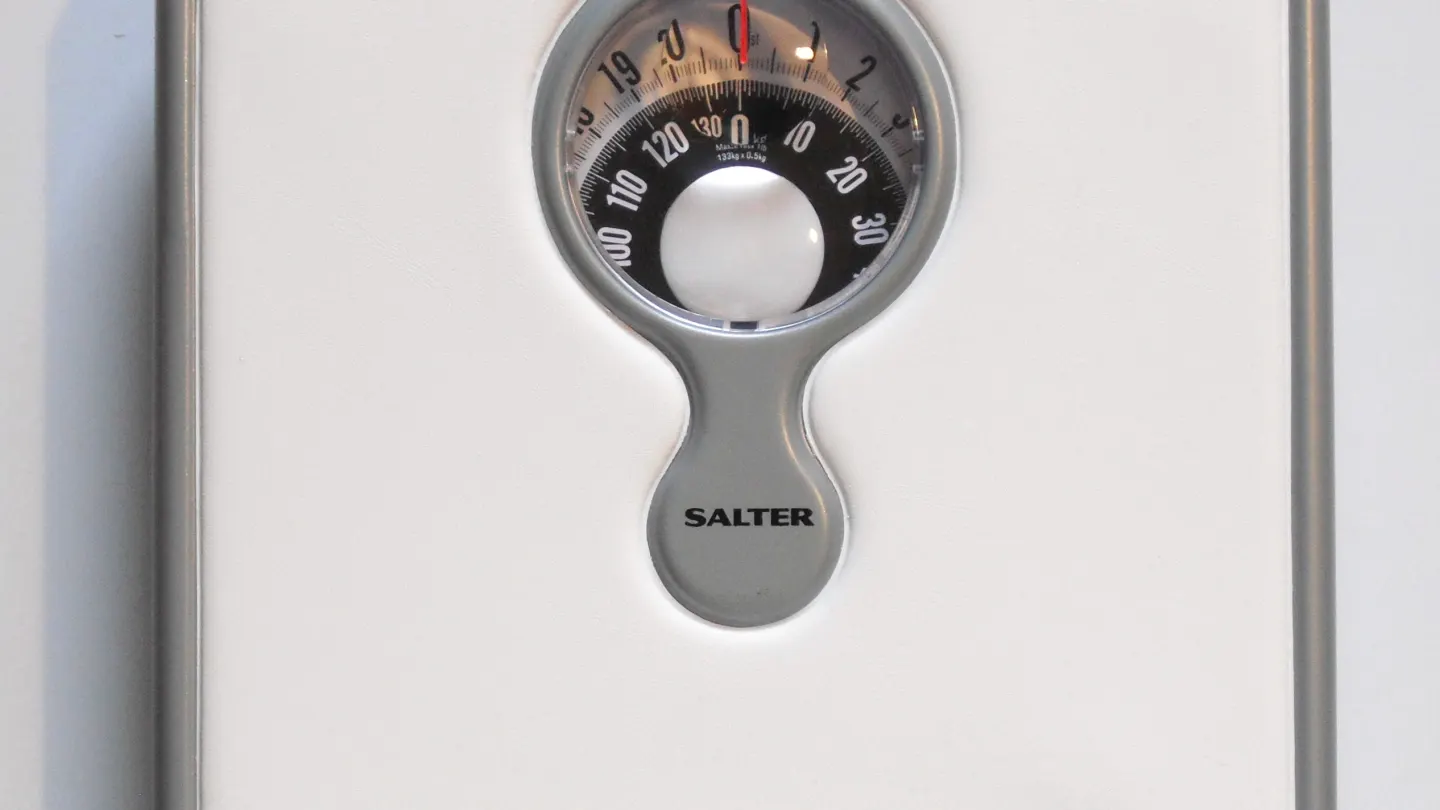
Body composition vs scale weight is the difference between “what I mass” and “what that mass is made of”. A home scale cannot split fat, muscle, bone, and water. Clinics can estimate those parts, but even those tests need context.
People treat a falling kilogram as the only success signal. That can mislead you during a strength block, an illness, or a salty week. It can also scare you when muscle and glycogen rise while waist fit improves. The useful question is which tool answers which decision.
Body composition vs scale weight: two different questions
Body composition vs scale weight starts with a plain split. Scale weight asks how many kilograms you are this morning. Body composition asks how those kilograms break into fat, lean tissue, and bone. You can use both. You should not treat them as the same exam.
CDC pages on BMI are blunt about limits. BMI is weight relative to height. It is a screening tool. It does not measure fat. For a fuller picture, CDC lists medical history, activity, sleep, blood pressure, muscle mass, and lab results. A single home number cannot carry all of that.
NIDDK makes a similar point with waist size. Extra fat around the abdomen raises the chance of weight-related problems more than fat on the hips. A man at or above 40 inches, or a woman at or above 35 inches, sits in a higher-risk band on those pages. That is a distribution clue, not a verdict on your worth.
So the comparison is practical. Use the scale to watch short-term mass. Use waist, strength, and clinic tests to watch where mass sits and what you can do. Body composition vs scale weight is a pairing, not a contest.
What the bathroom scale actually includes
Stand on a scale after a 500 ml glass of water and you have added half a kilogram of fluid. The machine is not wrong. It is complete. Gut contents after a bean stew, glycogen after 200 g cooked rice, and a high-salt ready meal all sit on the same platform as fat and muscle.
That is why a four-week lifting plan can look “stuck” at 82 kg. You might eat 150 g Greek yoghurt at breakfast and a tin of tuna with mixed beans at lunch. You might walk 25 minutes after dinner. Shirts may hang looser. The scale can still read 82.0 because water and glycogen moved in while some fat moved out. This pattern can happen. It is not a promise.
Ultra-processed meal deals can hide the opposite problem. A packaged sandwich, crisps, and a sweet drink can be easy to repeat and easy to overeat. They can also load sodium. Our NOVA ultra-processed foods guide explains the category. The scale will count every gram of that meal, including water you retain the next day.
Protein food and strength sessions change the mix more than they change the next morning. Two 40-minute sessions a week, with a rest day between them, are a common adult pattern. They will not rewrite your DEXA in ten days. They can change how stairs feel before they change the headline kilogram. See strength training after 50 if you are starting late and want a cautious dose.
| Tool | What it reports | Main limit at home |
|---|---|---|
| Bathroom scale | Total mass in kg or lb | Cannot split fat, muscle, bone, or water |
| BMI | Mass relative to height | Muscular people, older adults, pregnancy, and some ethnic groups need extra care |
| Waist size | A proxy for central fat | Tape placement errors; not a diagnosis |
| Home BIA scale | An estimate of fat percent | Drinks, food, sweat, and the menstrual cycle move the reading |
| DEXA | Fat, lean, and bone estimates | CDC: expensive and not widely available |
How clinics estimate fat, muscle, and bone
DEXA, or dual-energy X-ray absorptiometry, is the method CDC names when it wants a precise composition measure. It estimates fat mass, lean mass, and bone mineral. Hospitals use it for bone density too. It is not a weekly habit. It uses a small radiation dose and a trained operator. You should not chase a DEXA the way you chase a morning weigh-in.
Skinfold calipers and clinic tape measures depend on the person holding them. Two operators can differ. Bioelectrical impedance sends a small current through the body and estimates water, then infers fat. Gym “smart” scales use the same idea. They are sensitive to a hard workout, a sauna, or a large coffee.
NHS BMI calculators remain useful as a population screen. They are not a body-fat lab. Our BMI and waist risk guide covers why the two numbers work better together. Bring both to a clinician if you are worried. Do not diagnose yourself from a colour-coded chart on a phone.
If a coach sells a monthly DEXA package as proof you are “winning”, pause. Repeat tests only help if the machine, the time of day, and your hydration are similar. Even then, a 1% fat change on a consumer device may be noise. Function and blood markers from a real clinic still sit above a glossy printout.
Why a four-week training block can hide fat loss
Imagine an adult who adds two strength sessions and keeps the same 82 kg reading. In week one they eat a cheese sandwich meal deal. In week three they swap lunch to tuna, mixed salad, and an apple. They walk 30 minutes on three evenings. Energy intake may fall a little. Glycogen in trained muscle may rise a little. The net kilogram can be near zero while waist drops 2 cm. That is a reason to keep both tools. It is not a guarantee you will see the same split.
Protein timing is ordinary food, not a powder cult. Two eggs on toast, a 150 g pot of yoghurt, or 120 g cooked lentils each supply a useful chunk. Spread them across the day. The everyday protein guide lists amounts in kitchen terms. Extra scoops will not force the scale to tell a better story.
Illness, new medicines, thyroid disease, and menopause can all change mass and where fat sits. Those are clinical conversations. Do not treat a stubborn kilogram as proof you lack discipline. Do not treat a falling kilogram as proof you are healthy if fatigue, swelling, or breathlessness is new.
A practical home dashboard that does not need a DEXA
Once a week, weigh in the morning. Once a month, measure waist after a normal breath out. Once a week, note a 1.5 km walk time or how many controlled sit-to-stands you can do in 30 seconds. That is enough for most people who are not in a clinic study.
Review the dashboard every four weeks, not every shower. Ask three questions. Did the plan happen on most days? Did clothes or waist move in a direction you and your clinician wanted? Did mood, sleep, and hunger stay tolerable? “No clear change” is information. It may mean more time, a different dose, or a medical check.
Skip extra gadgets until those basics are stable. A second scale in the office will only add arguments. A daily BIA percent will only add mood swings. Body composition vs scale weight becomes useful when you assign each tool a job and stop asking the bathroom tile to be a lab.
Behaviour examples you can try without miracle claims
Approaches related to body composition scale weight are more useful when they name behaviours, not guaranteed kilogram outcomes. Weight changes slowly for most people, fluctuates with fluid and hormones, and responds differently across ages, medicines and health conditions. Aim for patterns you can repeat on an ordinary Tuesday — not a transformation promise.
Concrete behaviour examples (pick one or two, not all):
- Protein-forward breakfast: eggs on toast, Greek yoghurt with fruit, or tofu scramble — then notice afternoon snack urgency for a week.
- Fibre swap: keep the meal you already like; add beans, veg or whole grains so the plate is more filling without a dramatic “diet overhaul.”
- Liquid audit: list weekday drinks; replace one sugary or alcoholic item with water, tea or a smaller pour, three days this week.
- Walk anchor: ten minutes after lunch or dinner on workdays; mark it on the calendar like a meeting.
- Kitchen default: put washed fruit or pre-cut veg at eye level; move ultra-palatable snacks out of easy reach if that reduces autopilot eating.
None of these “melt fat” on a schedule. They change the environment and the average day, which is how sustainable weight-related habits usually work.
How to judge progress without chasing the scale alone
| Signal | What to notice | Caution |
|---|---|---|
| Weekly average weight | Trend over 3–4 weeks if you choose to weigh | Daily swings are mostly fluid; do not punish a single morning |
| Waist or how clothes fit | Same method, same time of day | Not everyone should focus on measurements — skip if it harms mood |
| Energy and training | Can you complete planned walks or sessions? | Persistent exhaustion means the plan may be too aggressive |
| Hunger and mood | Manageable appetite, not constant preoccupation | Obsession, secrecy or compensatory purging needs clinical help |
If you have a history of disordered eating, are pregnant, underweight, frail, or living with a condition where weight loss is not appropriate, do not start a deficit because an article suggested it. Ask a clinician what “healthy” means for you. Stigma in healthcare is real — you can ask for respectful, behaviour-focused care and a second opinion if needed.
Activity that supports weight-related goals without burnout
Walking and everyday movement (NEAT) change weekly energy use more reliably for many people than occasional heroic cardio. Strength training helps preserve muscle during weight loss phases when protein and recovery are adequate. Cardio is excellent for heart health; it is not a licence to ignore food patterns or sleep.
Plateaus happen. Before cutting more food, check sleep, stress, step count accuracy, weekend intake, and whether the plan was realistic. Sometimes maintenance for a few weeks is the productive move. Rapid regain after crash dieting is common — another reason to prefer steady behaviours over extremes.
Safety boundaries for any weight-related plan
Stop and seek care if you notice fainting, chest pain, severe dizziness with exertion, signs of an eating disorder, or mood collapse tied to restriction. Children, teens, and people with certain chronic illnesses need specialist guidance — adult internet plans do not transfer safely. No article can guarantee weight loss, a clothing size, or disease reversal.
Medical note. This article is general information, not a diagnosis or a personal treatment plan. It does not replace advice from a GP, pharmacist, registered dietitian, physiotherapist, or other qualified clinician. Seek urgent help for severe, sudden, or rapidly worsening symptoms. UK readers can use NHS 111 for urgent advice; US readers can use local urgent care or emergency services when needed.
Frequently asked questions
Can a home scale measure body fat accurately?
If the scale is stable, has nothing changed?
Should athletes ignore BMI?
How often should I pay for a DEXA scan?
Sources
- 1. CDC: About Body Mass Index
- 2. NIDDK: Am I at a Healthy Weight?
- 3. NHS: Calculate your body mass index
- 4. NHLBI: Aim for a Healthy Weight
Guidance changes. Figures were checked against the sources above at the time of review; always confirm current advice with your GP, pharmacist or clinician.
Image credits
- Photo: Photo by Simon Speed on Wikimedia Commons / Openverse
- Photo: Photo by Ahimsa - OM on Pexels / Openverse
- Photo: Photo by Thirdman on Pexels / Openverse
Was this useful?
Anyone can react — no account needed.




Discussion
0 comments · Name and email only · Email is never shown