Mental Wellbeing Science explainer
Digital Alcohol-Reduction Programs: What Outcomes Have Been Studied?
Drink-less apps sell a quieter week. Alcohol reduction app evidence is thinner than the store copy. This is a source-reviewed guide, not a hands-on lab test. The papers below measure self-reported drinks, not a lab ethanol test.
NICE NG183 (2020) already treats digital tools as an adjunct for cutting alcohol, not a stand-alone service. Effectiveness, it says, is variable. That line still holds after the 2024 Drink Less trial.
What alcohol reduction app evidence can answer
The honest question is narrow. In people who already want to drink less, does a digital programme change self-reported weekly units compared with a webpage, a wait-list, or nothing?
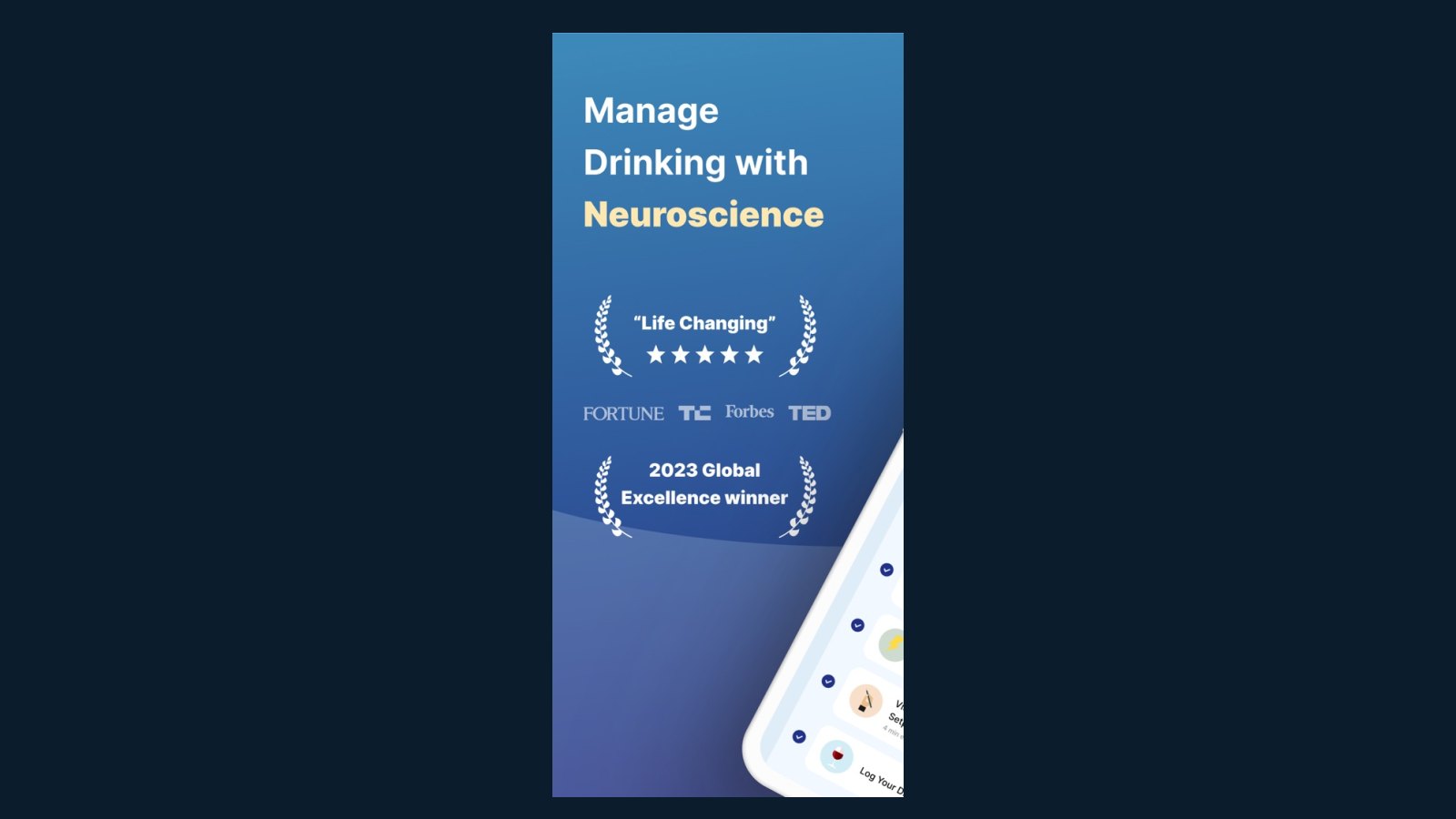
It cannot tell you whether a paid US coaching app matches Drink Less. We found no independent RCT of Reframe in the sources we fetched on 13 September 2026. Manufacturer lines such as a 25% cut are marketing until a named trial appears.
It also cannot tell you whether an app is safe if you are dependent. That is a separate page: alcohol reduction app safety. NHS pages still say you should get medical help before you stop suddenly if withdrawal has already shown up.
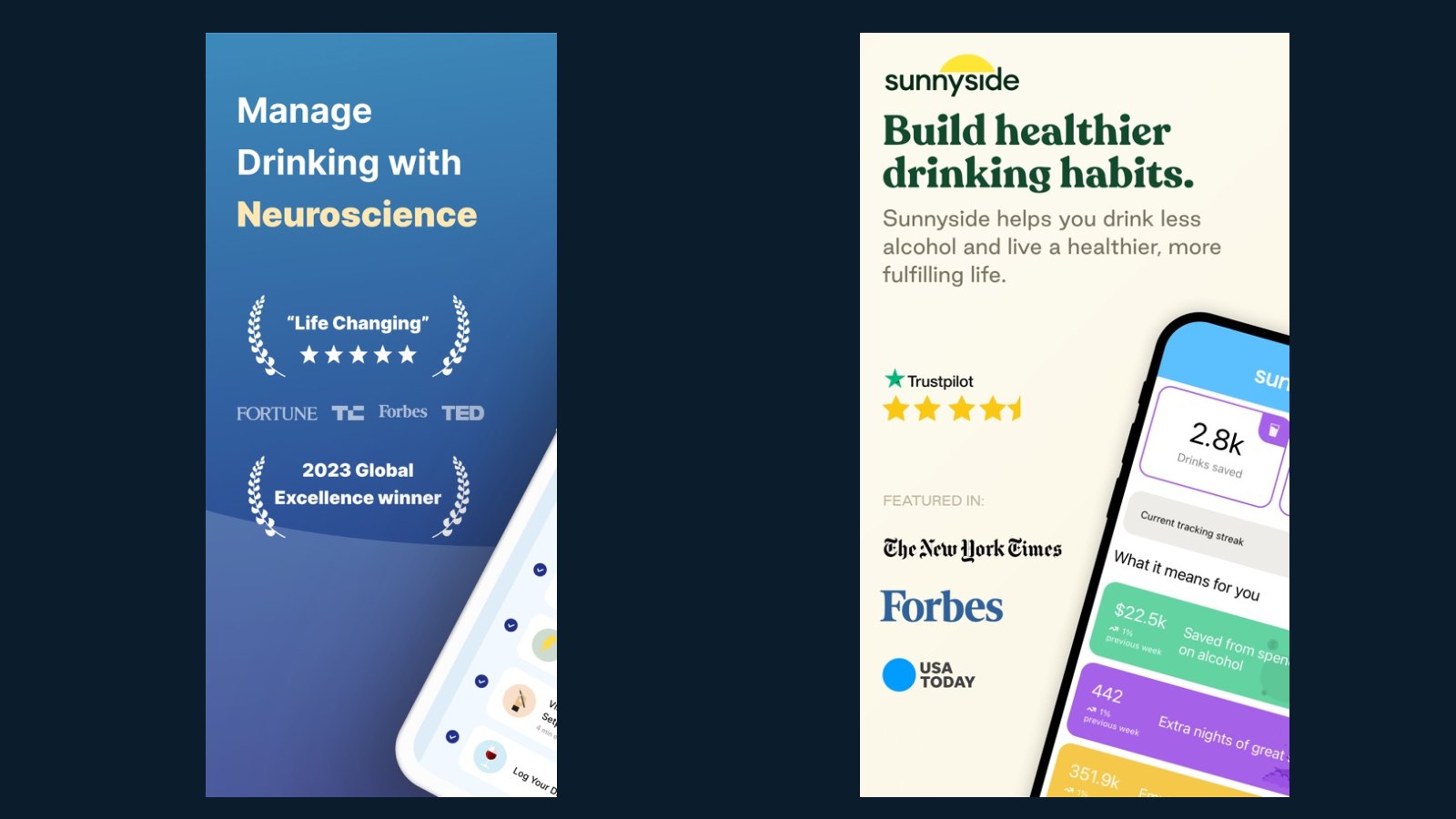
Commercial reviews of Reframe and Sunnyside sit under the best stress apps hub. This page stays with outcomes that have a citation.
| Question / claim | Evidence source | Study type | Population | Comparator | Outcome | Key finding | Limitation | Applicability |
|---|---|---|---|---|---|---|---|---|
| Does Drink Less beat NHS digital advice? | Oldham et al., eClinicalMedicine, 2024 | Double-blind RCT (ISRCTN64052601) | 5,602 UK adults, AUDIT ≥ 8, motivated to cut down | NHS alcohol advice webpage | Weekly UK units at 6 months | Primary ITT: −0.98 units, not significant. Multiple imputation: −2.00 units (95% CI −3.76 to −0.24) | Missing data not completely at random; self-report | Increasing- and higher-risk UK drinkers, not dependent inpatients |
| Do digital programmes cut grams per day? | Sohi et al., ACER, 2023 | Systematic review and meta-analysis | 80 RCTs (35 new since Kaner 2017) | No, minimal, or face-to-face care | g/day, drinking days, HED, AUDIT | −4.12 g/day; −0.17 drinking days/week; −1.11 HED occasions/month; AUDIT −3.04 | Not preregistered; mix of web, SMS, and apps | General and student samples with hazardous use |
| What did Cochrane find in 2017? | Kaner et al., Cochrane, 2017 | Systematic review | Digital alcohol interventions | Usual digital care and other controls | Weekly consumption | About 23 g (2.9 UK units) less per week in the Drink Less paper’s summary of Kaner | Mostly websites; one student app in Sweden | Population prevention, not withdrawal care |
| What did engaged Sunnyside members report? | Vadhan et al., ACER, 2024 | Observational growth models | 46,411 members who tracked at least once | No randomised control | Self-reported drinks/week over 12 weeks | 33% lower weekly drink counts; steeper drop in early weeks | Self-selected; company-affiliated; retention fell by week 12 | People who already joined and logged; not proof of cause |
The Drink Less trial in plain numbers
Recruitment ran from 13 July 2020 to 29 March 2022. People needed an AUDIT score of 8 or more, UK residence, motivation to cut down, and a willingness to use a digital tool. They were not a hospital detox cohort.
Six-month follow-up reached 79% in the app arm and 80% in the NHS-page arm. The conservative analysis treated missing people as unchanged drinkers. That is a tough test. It did not clear the pre-set bar. The Bayes factor was 1.17, which the authors called insensitive.
Education, occupation, and income differed among people who vanished. That is why the team also ran multiple imputation, as planned. Two extra UK units a week is a small public-health shift. It is not a promise that your Friday will match the mean.
A 2018 factorial trial of Drink Less modules (Garnett et al.; 672 people) found no main effects on weekly consumption. Some module pairs helped. Enhanced self-monitoring was used more and rated more helpful. That is a design note, not a 2026 store score.
What the wider digital reviews add
Sohi’s 2023 update searched MEDLINE from January 2017 to June 2022. Sixty-six trials reported quantity. Twenty reported frequency. Twenty-six reported heavy episodic drinking. Nine reported AUDIT scores. The gram-per-day figure is the headline. Converted roughly, 4.12 g is a little over half a UK unit (8 g) per day — about four units a week if the mean holds. That conversion is ours. The paper reports grams.
Students showed cuts in quantity, frequency, and heavy episodes, but not in grams per drinking day. The review excluded phone calls with a live clinician. It also excluded two digital tools compared with each other and no control. Many commercial “versus” blogs would fail that rule.
Kaner 2017 remains the Cochrane backbone. The Drink Less authors noted that only one app RCT in that review was a Swedish student study. The evidence base is still web-heavy. Apps are easier to market than to randomise.
Observational Sunnyside and untested Reframe
Vadhan’s 2024 paper analysed people aged 21 and over who chose Sunnyside, completed a baseline, and logged at least one drink. At baseline, 64.3% said they usually drank seven days a week. Weekly drinks fell most in the first weeks, then slowed. The 33% figure is a modelled drop among people who kept tracking.
Cutback Coach, Inc. affiliation appears on the author list. The journal paper is still useful. It shows what engaged members reported. It does not prove the app caused the drop. People who stay in a tracker are not the same as people who delete it in week two.
We did not find a peer-reviewed Reframe RCT in the PubMed-style sources we opened for this page. If one exists and is indexed later, it belongs in a revision. Until then, treat “neuroscience-backed” copy as branding.

What remains unverified
We did not verify App Store ratings for drink-less brands on this evidence page. Those cells belong on the entity reviews. We did not verify prices. We did not install the apps.
We also did not verify how many commercial storefront apps have any trial at all. The Drink Less paper said that, as of its 2024 search, no other UK general-population alcohol-app RCT existed. That claim is the authors’, dated to their February 2024 PubMed search.
Self-report can drift. People please the diary. Missing weeks get filled with hope. That is why Oldham’s baseline-carried-forward result matters as much as the imputed one.
How this sits beside clinical care
NICE NG183 tells people to seek a clinician if they have health concerns while using a digital tool. It also prefers an expert-assessed source when one exists. Drink Less was built in UK academic groups and tested against an NHS page. That is a higher bar than a lifestyle coach with no protocol paper.
If you are cutting down because stress eating and evening drinks travel together, the stress eating practical guide is the food half. It is not an alcohol treatment.
If shakes, sweats, or a racing heart appear when you skip a day, stop using the app as your plan. Read the safety piece. Call a GP or NHS 111 in the UK, or a clinician in the US. Emergency signs — seizure, confusion, hallucinations — are 999 or 911.
Frequently asked questions
What is the strongest alcohol reduction app evidence right now?
Did digital programmes only help students?
Is Sunnyside’s 33% figure a trial result?
Has Reframe been tested in an RCT?
Can an app replace alcohol treatment?
Did you use these apps?
Sources
- 1. Effectiveness of a smartphone app (Drink Less) versus usual digital care
- 2. Digital interventions for reducing alcohol use in general populations
- 3. Personalised digital interventions for reducing hazardous and harmful alcohol consumption
- 4. Self-reported alcohol consumption during participation in a text messaging-based online drinking moderation platform
- 5. Behaviour change: digital and mobile health interventions (NG183)
- 6. A smartphone app to reduce excessive alcohol consumption: factorial RCT
Guidance changes. Figures were checked against the sources above at the time of review; always confirm current advice with your GP, pharmacist or clinician.
Image credits
- Photo: Photo by Pixabay on Pexels / Openverse
- Photo: Photo by Chevanon Photography on Pexels / Openverse
- Photo: Photo by picjumbo.com on Pexels / Openverse
- Photo: Photo by RDNE Stock project on Pexels / Openverse
- Photo: Photo by Max Vakhtin on Pexels / Openverse
Was this useful?
Anyone can react — no account needed.

Discussion
0 comments · Name and email only · Email is never shown