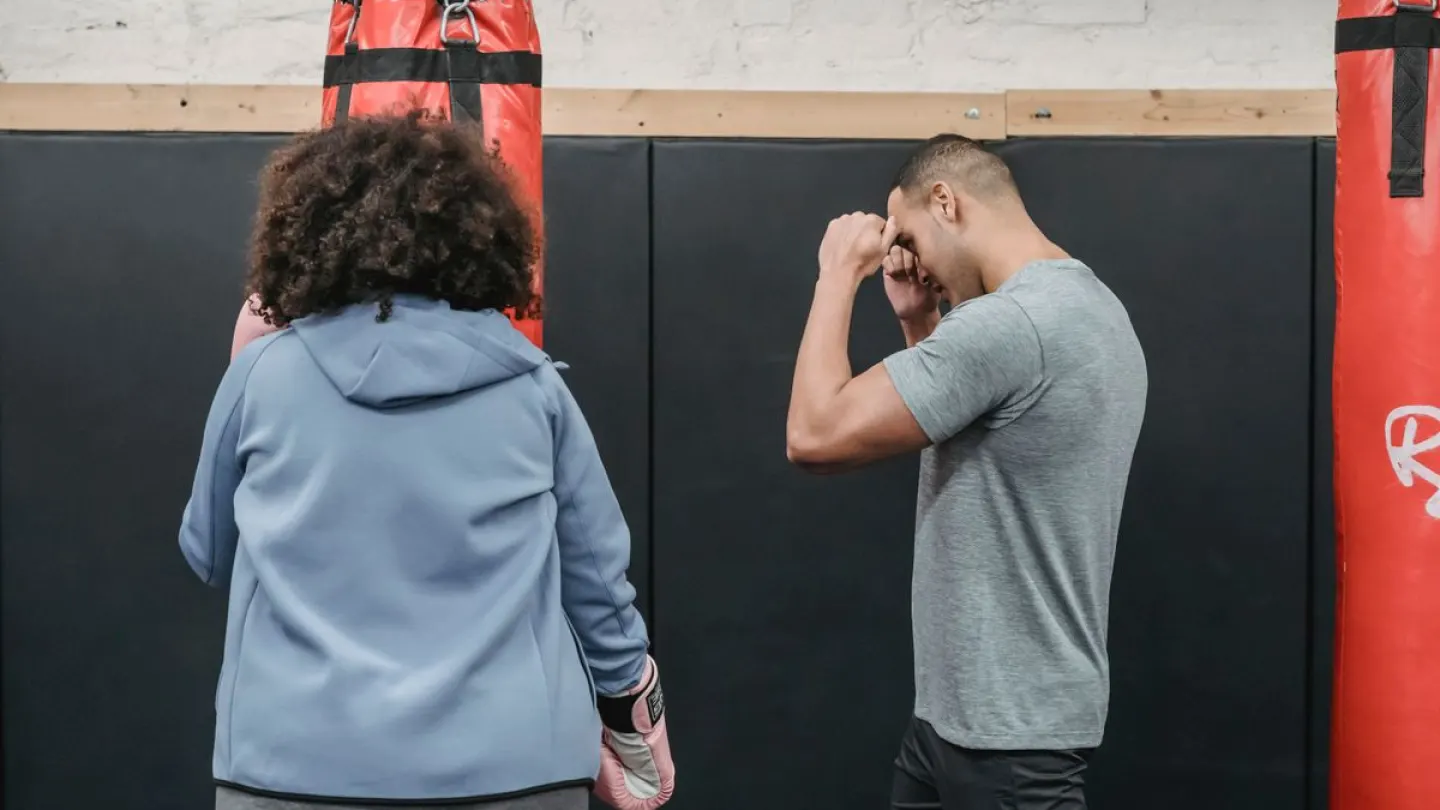
Face pull technique is how you draw a rope toward your face on a cable, with high elbows and a quiet neck. Desk hours round the shoulders forward. This pull practises the opposite path. It is a small gym drill, not a posture cure.
You stand or kneel. A rope sits at about face height. You pull the ends apart as they reach your ears. The rear shoulders and the muscles around the shoulder blades share the work. NHS and CDC adult guides still want muscle-strengthening work on at least two days a week. A tidy face pull can be the shoulder piece of that week.
This is a how-to for healthy adults. It is not treatment for a frozen shoulder or a torn cuff. MedlinePlus describes rotator cuff problems as common shoulder injuries. If you already have sharp pain, numbness, or a weak arm, get personal care first.
Why a desk day asks for rear-shoulder work
Hours at a keyboard can leave the upper back feeling folded. A face pull is one way to train the muscles that draw the shoulder blades back and the arms out. It does not undo eight hours of sitting on its own. Breaks, a walk, and a taller chair setup still matter.
NHS shoulder-pain pages start with staying active in ways you can tolerate, plus care when pain is new or severe. A gym cable is not a clinic. If night pain, fever, or a sudden loss of lift shows up, seek care.
CDC muscle-strengthening advice still lists shoulders among the major groups. A press covers the front. A face pull covers more of the back of the shoulder. Pair both in a week. Add 150 minutes of moderate aerobic activity, such as brisk walking, as the CDC and WHO both describe.
If you are over 50, keep the stack light. The strength training over 50 guide is a calmer on-ramp. A band pull-apart at home is a fair cousin when the cable is busy.
How to set face pull technique on a cable
Clip a rope to a pulley at about nose to forehead height. Take an end in each hand. Step back until the cable is taut with the arms long. Soften the knees. Brace the midriff. Keep the chin slightly tucked, as if holding a peach under it.
Pull the rope toward your face. Let the hands finish near the ears or temples. The elbows stay high, in line with the shoulders, not down by the ribs. Pause for a second. Return until the arms are long. Do not let the stack yank you forward.
A common picture is a row to the belly. That is a different drill. Face pull technique keeps the path at face height. If the rope slides to the chest, raise the pulley or think “show the logo on your sleeves to the floor.”
- Set the height. Face height, not hip height.
- Use a light stack. You should finish 10 reps with two left in reserve.
- Keep the neck quiet. Do not poke the chin at the rope.
- Spread the rope. The hands finish apart, not stacked.
- Lower under control. ACSM health notes still favour a slow lift and lower, about two seconds each way.
Rope height, elbows and a slow return
If the pulley is too low, you will row. If it is too high, you may shrug. Face height is the landmark. Kneeling can help if you are tall and the pulley will not rise enough.
Elbows that drop turn the move into a biceps curl. Elbows that fly behind the head can irritate some shoulders. Stop when the upper arms are about in line with the torso. A small external turn of the hands — thumbs pointing back — is a coaching cue, not a medical rule.
Leave two reps in reserve. Our RPE and RIR guide explains that buffer. A face pull that needs a lean is too heavy. Take a plate off. The rear shoulder is a small muscle group. It does not need a hero stack.
If the neck takes over, lower the effort and think “shoulder blades toward the back pockets.” You do not need a burn in the neck for the set to count.
A simple face-pull session for office weeks
Warm up for four minutes. Walk. Circle the shoulders. Pull a light band apart ten times if you have one. Then rehearse two slow face pulls with the smallest plate that still keeps the cable taut.
CDC muscle-strengthening pages describe 8 to 12 repetitions per set, with at least one set and two or three sets for more benefit. Place this drill after heavier presses, or at the end of an upper-body block, while you are still fresh enough to keep the elbows high.
| Item | First weeks | Once the pull is smooth |
|---|---|---|
| Sets | 2 | 3 |
| Reps per set | 8 to 10 | 10 to 12 |
| Pause at the face | 1 second | 2 seconds |
| Return time | 2 seconds | 3 seconds |
| Rest between sets | 60 to 90 seconds | 45 to 90 seconds |
| Days each week | 2, not back to back | 2, still not back to back |
A hybrid strength and cardio week can hold the walking minutes around this drill. Do not add a heavy upright row on the same day if this pattern is new. Write the plate number. When 12 slow reps feel dull, add the smallest plate and return to ten.
That small jump is progressive overload without a contest. Change one thing at a time. Keep the neck quiet as the load rises.
Common faults, desk tweaks and who should skip
Leaning back is the usual miss. The stack moves. The rear shoulder does less. Stand as if a wall is behind you. Shrugging the shoulders to the ears is the next miss. Think “long neck.”
A rope that slaps the face often means you pulled too fast. Slow down. Wrist pain can mean a narrow grip on a thick rope. Use two handles if the gym has them. Check the clip and the cable before you pull. Our gym safety guide starts with the same look-twice habit.
Desk tweaks still help. Raise the screen. Keep the mouse close. Stand for a phone call. A face pull does not cancel a hunched afternoon. It is one short set in a gym hour.
Skip the drill if you have been told to avoid pulling after surgery, or if the shoulder feels unstable. A recent dislocation, a sudden weak lift, or pain at night deserves a clinician, not a heavier plate. MedlinePlus lists warning signs that belong in a clinic, not in a comment thread.
Stop for chest pain, faintness, unusual breathlessness, or pain that shoots down an arm. Call 999 in the UK or 911 in the US if those symptoms are sudden. Online cues cannot replace an exam.
A desk-week face-pull session for rear shoulders
Set a rope at upper-chest to face height. Step back so the cable is taut at long arms. Pull toward the face, elbows high, ending with the rope beside the ears and hands split apart. Example: face-pull 3×12–15 at RPE 8 after pressing days, or as a warm-up 2×15 light.
Pause one second in the contraction without cranking the neck forward. Return slowly.
Office weeks that include lots of keyboard time often benefit from face-pulls two to four times weekly at modest loads.
| When | Sets × reps | Load feel |
|---|---|---|
| Warm-up before press | 2 × 15 | Light |
| After push day | 3 × 12–15 | Moderate |
| Desk reset day | 2 × 15 | Light pump |
| Rehab-inspired* | As prescribed | Clinician-led |
Common faults
Turning it into a heavy upright row with shrugged traps — lighten and lead with the elbows.
Low elbows that make it a random biceps curl — raise the elbow path.
Neck craning toward the rope — keep the skull quiet over the spine.
Pairing face-pulls with desk breaks
On heavy keyboard days, do a light band pull-apart set at lunch and keep cable face-pulls in the gym after presses.
Small daily doses beat a once-monthly huge burnout set.
Neck pain that radiates or includes neurological symptoms needs clinical assessment.
Who should skip or regress face-pulls
Sharp shoulder pain, numbness or tingling into the hands needs assessment — do not yank through neurological symptoms.
If the cable station forces an awkward smash into a busy aisle, use band pull-aparts as a stand-in.
Post-surgery shoulders follow the surgeon or physiotherapist’s timeline, not a blog.
Coaching cues and checkpoints for cable face-pull technique
Return to the key prescriptions for cable face-pull technique already set out above and execute them as written for two consecutive sessions before you invent variations.
Use the checkpoints below as a quick pre-set scan for cable face-pull technique. If any line fails, fix that line before you add load, speed or volume.
- Warm-up before press: 2 × 15 — Light
- After push day: 3 × 12–15 — Moderate
- Desk reset day: 2 × 15 — Light pump
- Rehab-inspired*: As prescribed — Clinician-led
After those two honest sessions, change only one variable in cable face-pull technique: a small load jump, one extra repeat, a slightly longer interval, or one fewer accessory set. Write the change in the log before you warm up.
Stop for sharp pain, chest pain, faintness or unusual breathlessness. Call 999 or 911 for sudden severe symptoms. This article is general information, not a diagnosis or a personalised rehab plan.
Frequently asked questions
Is a face pull a row?
Should I kneel or stand?
How heavy should the cable be?
Can this fix desk posture?
How often should I practise face pulls?
Sources
- 1. Physical activity guidelines for adults aged 19 to 64
- 2. Shoulder pain
- 3. Shoulder pain
- 4. Adult Activity: An Overview
- 5. What Counts as Physical Activity for Adults
- 6. Rotator cuff injuries
- 7. Physical activity fact sheet
- 8. Resistance Training for Health
Guidance changes. Figures were checked against the sources above at the time of review; always confirm current advice with your GP, pharmacist or clinician.
Image credits
- Photo: Photo by Julia Larson on Pexels / Openverse
- Photo: Photo by Kampus Production on Pexels / Openverse
- Photo: Photo by Pixabay on Pexels / Openverse
Was this useful?
Anyone can react — no account needed.


Discussion
0 comments · Name and email only · Email is never shown